Blog

  • Munk Debate Featuring Former Israeli Leaders Draws Protests and Criticism Over Exclusion of Palestinian Voices

    Munk Debate Featuring Former Israeli Leaders Draws Protests and Criticism Over Exclusion of Palestinian Voices

    Introduction

    A major debate convened by the Munk Debates — featuring prominent former Israeli officials — was met with vocal protests, impassioned chants, and accusations of war crimes. Held under the banner of “Be it Resolved, it is in Israel’s national interest to support a two-state solution,” the event ignited deep controversy for notably excluding Palestinian perspectives. Demonstrators rallied under Palestinian flags, challenging the legitimacy of the debate and demanding representation of those most directly impacted. Police intervened and dispersed the gathering, but not before the protestors underscored their objections in stark terms.

    Protests Erupt Over Closed Door Format

    Demonstrators Speak Out

    Before the debate commenced, a crowd of protesters assembled, hoisting signs and Palestinian flags. Their unified message was clear: the debate should not proceed without Palestinian representation. One protester, Trevor Miller, described the gathering as “unacceptable,” condemning the event’s format. “We are here to speak out for the people of Palestine, everyone who suffers under imperialism,” Miller declared, underscoring the conviction driving the demonstration. The protest was passionate but ultimately short‑lived, as law enforcement moved in to break up the crowd.

    Accusations of War Crimes and Systemic Silencing

    Many protesters framed the debate as symbolic of broader systemic issues: the marginalization of Palestinian voices, and the perceived normalization of policies they consider complicit in what they described as war crimes. The chants and placards reflected a growing frustration — not just with the debate’s content, but with the process itself, which denied agency to those most impacted. For critics, the event exemplified a troubling tendency to foreground Israeli political elites while sidelining Palestinians altogether.

    Debate Format: Two‑State Solution Under the Microscope

    The Munk Debate was structured around one central motion: “Be it Resolved, it is in Israel’s national interest to support a two-state solution.” On one side of the debate were former Israeli officials advocating a prompt adoption of the two‑state framework. On the other side, speakers opposed the resolution, arguing against its political feasibility or wisdom under current circumstances.

    Proponents of the Two‑State Solution

    Among those arguing in favour were two veteran Israeli statespersons:

    • Ehud Olmert, former Prime Minister, former Finance Minister, and ex‑Mayor of Jerusalem, whose experience spans decades of Israeli politics and diplomacy.

    • Tzipi Livni, who previously served as Israel’s Justice Minister and Foreign Minister, and has long been engaged in efforts toward peace negotiations and two‑state frameworks.

    Both offered a clear rationale for supporting rapid movement toward a Palestinian-Israeli two‑state agreement. Citing demographic realities, international pressures, and long‑term security concerns, they argued that a two‑state solution remains the most viable path forward to preserving Israel’s character as a democratic and Jewish state — while addressing Palestinian aspirations for self-determination. They emphasized urgency: without meaningful negotiations and compromises, Israel risks further isolation, internal unrest, and existential long-term perils.

    Opposing Voices: Caution or Conscience?

    Challenging the motion were:

    • Michael Oren, former Israeli ambassador to the United States and ex‑Deputy Minister during former Prime Minister Benjamin Netanyahu’s second term.

    • Ayelet Shaked, Israel’s one‑time Justice Minister and Interior Minister, known for her staunch national‑security stance and advocacy for a unified Israel.

    Their opposition was rooted in concerns over security, territorial integrity, and pragmatic realism. They argued that the current conditions — ongoing violence, mutual mistrust, and political fragmentation within Palestinian leadership — rendered a two‑state agreement unworkable for now. According to them, supporting the motion prematurely could jeopardize Israel’s national security, weaken its strategic position, and risk creating a hostile neighbor state. They urged caution: better to preserve control and security than rush into an uncertain and potentially dangerous agreement.

    The Controversy Over Excluding Palestinian Voices

    Organizers’ Defense and Backlash

    In response to mounting criticism, organizers of the Munk Debate defended their decision not to include Palestinian voices. They argued that the format — a debate between two viewpoints on the motion — was designed to highlight conflicting visions within Israeli political leadership, rather than present a comprehensive regional dialogue. In their view, the event was not a negotiation or mediated peace process, but an internal deliberation over Israel’s interests. As such, they claimed that it was appropriate to limit the discussion to Israeli perspectives.

    Yet this explanation did little to appease critics. Opponents charged that by excluding Palestinians altogether, the debate effectively silenced those most affected by its outcome. To many, this was not an abstract political discussion but a conversation with real, far‑reaching consequences for millions of Palestinians whose lives, rights, and futures hang in the balance. Critics argued the format ignored basic principles of fairness, representation, and legitimacy — especially in a debate about Palestinian statehood and sovereignty.

    The Moral and Political Implications

    The uproar surrounding the debate went beyond partisan disagreement. For protestors and supporters of Palestinian rights, the issue was not simply about which Israeli perspective prevailed — but about who gets a seat in conversations that shape policy, treaties, and human lives. By allowing former Israeli officials to debate the fate of Palestinian homeland without any Palestinian voice present, organizers risked appearing hypocritical at best, callous at worst.

    Such events — when they proceed without inclusive representation — can feed into broader narratives of marginalization, inequality, and systemic denial of Palestinian agency. In the eyes of many observers, the exclusion of Palestinian voices undermined both the legitimacy of the debate and the sincerity of any resulting recommendations or conclusions.

    The Aftermath: Divided Reactions and Broader Implications

    Domestic and International Reactions

    The rapid police intervention and the high‑profile nature of the speakers ensured the debate and its controversy quickly gained media coverage and public attention. For pro‑Israel advocates supporting the two‑state solution, the debate’s format — even without Palestinian participation — offered a window into competing Israeli strategies and possible future policy directions. It underscored fractures within Israeli political thought: some leaders pushing for compromise, others resisting any territorial concession.

    Conversely, activists, human rights advocates, and Palestine solidarity groups condemned the debate as flawed and ethically unsound. To them, it was not a genuine platform for peace — but an exercise in power dynamics, where Israelis discuss the future of Palestine without any Palestinian input. Their protests — though short‑lived — sparked larger conversations about representation, legitimacy, and the role of public discourse in conflict resolution.

    Impact on the Two‑State Discourse

    The event also reignited larger debates about the viability of the two‑state solution itself. Proponents argued that internal Israeli consensus — or at least serious deliberation — might advance the prospects of policy shifts. The participation of former leaders gave weight to the idea that even Israel’s own political elite sees value in revisiting long-stalled negotiations.

    On the other hand, opponents renewed their warnings: without addressing core issues such as security, border control, settlements, refugees, and mutual trust, any agreement — even if intellectually appealing — remains fraught with danger. Their stance reinforces skepticism toward bilateral agreements conducted without broad-based support, especially if one side remains unrepresented.

    Conclusion

    The Munk Debate’s recent session became far more than an academic exercise or political conversation — it transformed into a flashpoint embodying decades‑long tensions, deep moral questions, and urgent demands for justice. While organizers defended the decision to restrict the debate to former Israeli leaders, the backlash exposed a critical fault line: the exclusion of Palestinian voices from discussions about their own future. As such, the debate illustrated how format and composition can shape not only the content, but the legitimacy of public discourse.

    For many, the protest outside the venue was a powerful reminder that any meaningful debate on statehood, sovereignty, and peace cannot omit the voices of those whose lives are on the line. Until Palestinian perspectives are given a platform equal in weight and visibility, events like this — no matter how high‑profile or intellectually rigorous — may continue to provoke anger, resentment, and accusations of injustice. The controversy surrounding this debate underscores a simple but vital truth: lasting solutions to the Israeli‑Palestinian conflict require inclusivity, representation, and the willingness to listen.
  • Eglinton Crosstown LRT Could Open in Early 2026, Says Doug Ford

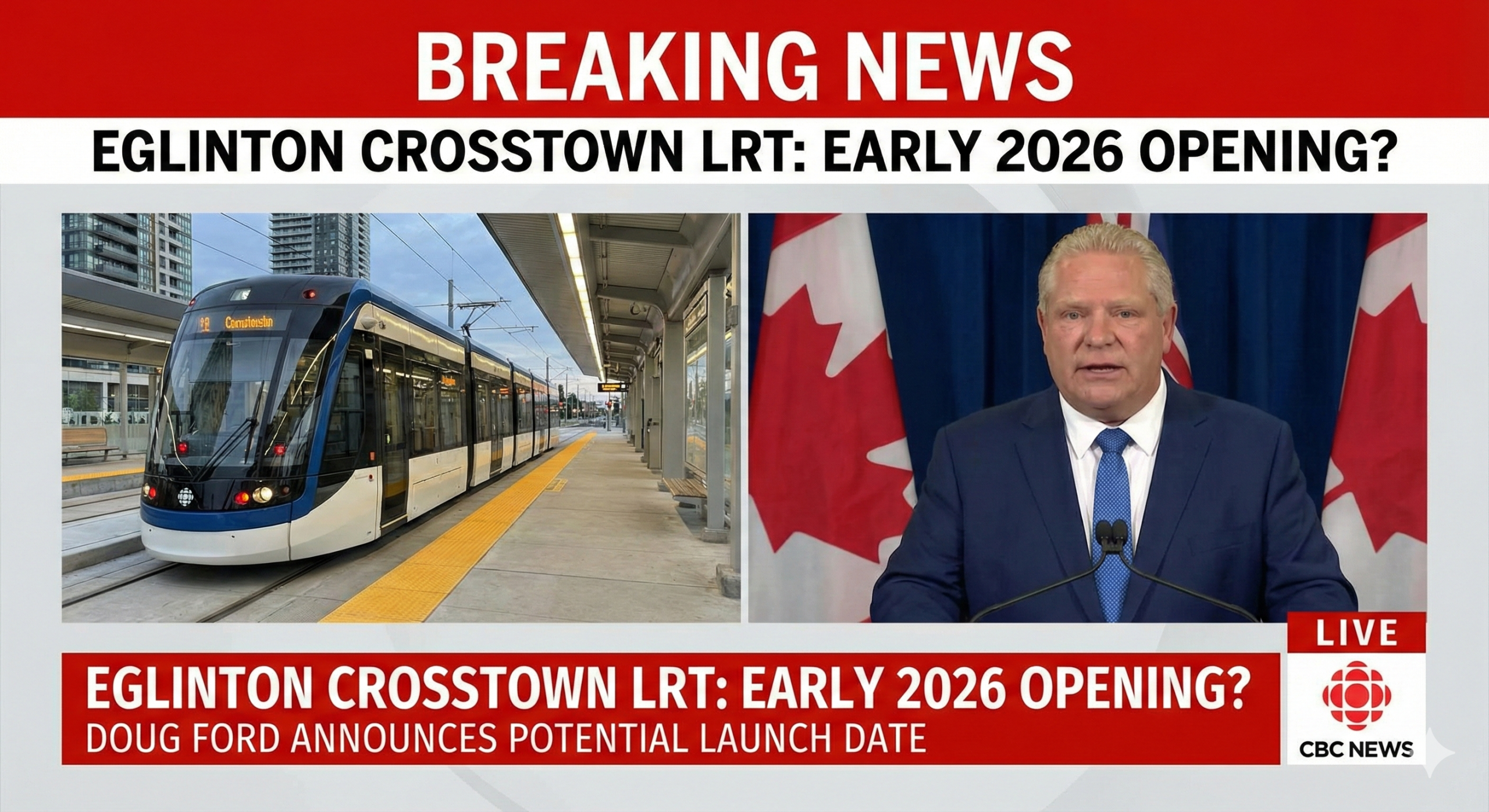
    Eglinton Crosstown LRT Could Open in Early 2026, Says Doug Ford

    “Substantial Completion” Marks a Key Milestone

    Provincial officials announced on December 5, 2025 that the Eglinton Crosstown LRT has reached “substantial completion,” clearing the way for public operation. This milestone comes after more than a decade of construction and delays — and signals that the 19-kilometre, 25-station light rail project is ready for handover to the Toronto Transit Commission (TTC) for final preparations.

    At a recent event for another transit line, Premier Ford said that the Crosstown LRT could open in 2026 — or, as he put it, “very soon after.” This marks a shift from earlier targets, which had hoped for an opening by late 2025.

    What “Substantial Completion” Actually Means

    Final Testing Phase Completed

    Officials say the final stage of testing — including weather simulations and heavy-use trials — has been completed successfully. Engineers reportedly ran the system at “full capacity,” including trains operating 16 hours a day and covering over 11,000 kilometres per week, to ensure the network performs under real-world conditions.

    With this completed, the TTC is now set to take “full operational control” of Line 5, giving them authority to finalize opening schedules and staffing.

    What Riders Can Expect

    Once launched, the line is planned to operate initially from 6:00 a.m. to 11:00 p.m. daily, with trains arriving every 4 minutes and 45 seconds at peak times.

    Over the first six months, service will gradually ramp up: it will shift to a broader schedule of 5:30 a.m. to 2:30 a.m., and peak-period frequency may improve to about every 3 minutes and 30 seconds.

    The route will run from Mount Dennis in the west to Kennedy station in the east — offering connections to several existing subway lines, GO Transit services, and numerous bus routes, which aims to significantly cut cross-city travel times.


    Why the Opening Has Been So Delayed

    The project — which began construction in 2011 — was originally slated to open in 2020.  Since then, a string of complications — from construction setbacks to Covid-19 disruptions to technical problems during testing and commissioning — have pushed the date back repeatedly.

    In mid-2025, officials admitted that completing the line by fall was increasingly unlikely. Interim TTC leadership acknowledged the next few months of testing and commissioning would determine an actual launch timeline.

    Still, some problems persisted well into construction’s final phases — including technical issues with signalling, braking systems, and HVAC, all of which had to be corrected before any approval for public service.

    Given the long and troubled history, many had grown skeptical of optimistic opening dates — yet the substantial completion announcement marks a critical turning point.


    What Comes Next: TTC to Decide Official Launch Date

    With the line now technically complete, responsibility shifts to the TTC to schedule an official opening. The agency has not yet provided a firm date, but Premier Ford’s remarks and provincial officials’ statements suggest that service could begin in early 2026.

    Officials have emphasized that while they want to open the line soon, they are prioritizing safety and reliability over speed — a lesson learned from earlier rail-transit failures elsewhere.

    Once operational, the new line could significantly improve cross-city connectivity, relieve pressure on existing transit routes, and offer faster travel for thousands of riders between suburban, midtown and downtown areas.


    What This Means for Toronto Commuters

    • Faster, more reliable transit: The Crosstown LRT promises to cut travel times across east–west corridors of midtown Toronto, connecting major neighbourhoods without relying solely on buses.

    • Expanded network integration: With 25 stations and connections to other subway and GO-Transit lines, the line will offer seamless transfers across the greater Toronto area.

    • Improved transit capacity just in time: Opening in early 2026 — during a period of growing population and commuter demand — could ease congestion on overcrowded bus and subway routes.

    • Phased ramp-up to full service: Riders should expect limited hours and frequency at first, with gradual expansion over the first six months.

    That said, some uncertainty remains. The TTC must still finalize staffing, scheduling, safety protocols, and public communication. And while officials have pledged readiness, actual service depends on successful final inspections and logistics coordination.


    Conclusion: A Long-Delayed Project Nears the Finish Line

    After more than 14 years, countless delays, and repeated promises, the Eglinton Crosstown LRT is finally on the verge of becoming a reality. With substantial completion declared and control handed to the TTC, what remains is a matter of timing — not construction.

    Premier Ford’s assurance that the line will likely open in early 2026 suggests the wait may soon be over. For Toronto commuters, that could mean a new era of faster, more efficient transit across midtown and beyond.

  • New Peel Hub “The Circle” in Mississauga Aims to Support Vulnerable Communities

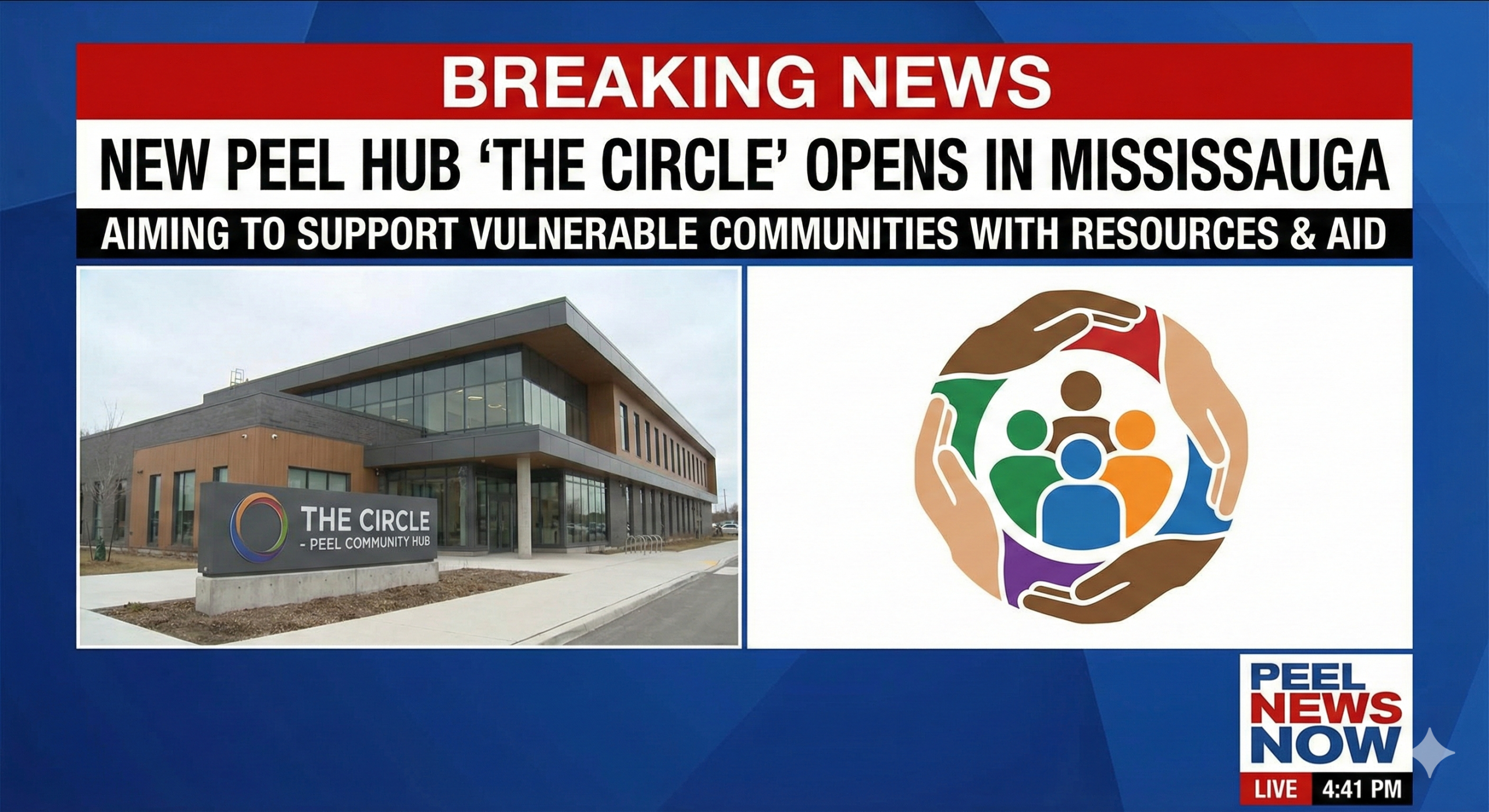
    New Peel Hub “The Circle” in Mississauga Aims to Support Vulnerable Communities

    A New Lifeline for Those in Need

    A new social-services facility, known as The Circle, has opened in Mississauga — and community leaders say it could become a vital resource for residents facing hardship. According to recent media coverage, the hub is designed to offer a broad array of services to vulnerable populations, including survivors of intimate partner violence and victims of human trafficking.

    “The Circle” represents a concerted effort by authorities and social-service agencies in the region to provide a safe, integrated space where people can access help, healing, and support. Its launch comes at a time when the need for such resources is growing across the broader Peel Region.

    What The Circle Offers: Support, Safety & Accessibility

    Comprehensive Services Under One Roof

    The hub is designed as a central point of contact for individuals needing help. Among the services it offers are support for those impacted by intimate partner violence (IPV) and sex trafficking — two issues that have surged in many parts of Peel Region in recent years.

    By bringing together multiple support services under one roof, The Circle aims to reduce complexity and provide easier access. This co-location model is especially beneficial for people in crisis who might otherwise struggle to navigate different agencies spread across the city.

    Targeting the Most Vulnerable

    One of The Circle’s key missions is to support individuals and families who face overlapping challenges — from violence and homelessness to trafficking and systemic marginalization. For many, this hub offers a hope of safety and a path to recovery.

    In doing so, The Circle builds on recent expansions in Peel’s social-support network, including other hubs aimed at youth, newcomers, and marginalized communities.

    Context: Growing Need and Regional Response

    The Pressure on Peel’s Existing Support Systems

    The demand for social services in Peel Region has risen sharply. In response, agencies have increasingly moved to consolidate support under centralized hubs — intended to offer wrap-around care rather than fragmented or isolated services.

    For example, the Safe Centre of Peel — a collaborative of multiple partner agencies serving survivors of intimate partner violence — recently announced plans to open a second location in Mississauga, co-located with the headquarters of Peel Children’s Aid Society (Peel CAS).

    These efforts reflect the urgency of the region’s social-support challenges, including housing insecurity, violence, and the need for accessible services for those fleeing unsafe situations.

    A Model for Inclusion and Stability

    The Circle joins other emerging hubs in the region, such as the Black Health and Social Services Hub Peel (BHSS Hub), which was recently re-located to better serve Black, African, and Caribbean communities across Peel.

    By offering culturally responsive care, mental-health services, housing support, and resource navigation, hubs like The Circle and BHSS Hub aim to reduce barriers for marginalized populations — including newcomers, racialized communities, survivors of violence, and those at risk of homelessness.

    What This Means for the Community

    Easier Access for Those in Crisis

    For individuals dealing with intimate partner violence, trafficking, or homelessness, navigating multiple agencies can be overwhelming. With The Circle’s integrated approach, people can access a range of services — from counselling and crisis intervention to housing support — in a single, welcoming location. This streamlined access may make the difference between getting help and falling through the cracks.

    A Step Forward in Social Infrastructure

    The launch of The Circle is not just about one building — it symbolizes a broader shift in how social services are delivered in Peel: from fragmented, reactive efforts to coordinated, preventive, and trauma-informed care. If successful, it could improve outcomes for countless residents, reduce strain on emergency services, and build stronger community resilience.

    Filling Gaps, Addressing Inequities

    Hubs like The Circle are especially important for people who face multiple, intersecting challenges — such as survivors of violence who may also be experiencing poverty, housing instability, or mental-health issues. By providing culturally safe and accessible support, these hubs help address systemic inequities that disproportionately impact marginalized communities.

    Challenges Ahead — And What Will Matter Most

    While The Circle’s opening is a positive step, the success of such a hub depends on several crucial factors: sustained funding, effective outreach, trust-building within communities, and coordination among partner agencies. Without these, vulnerable individuals may remain underserved.

    There is also the challenge of ensuring confidentiality, safety, and dignity for people seeking help — especially survivors of trauma. Trust and community awareness will be critical for the hub to truly fulfill its mission.

    Finally, keeping services responsive to evolving needs — from mental health to housing, from newcomer settlement to anti-trafficking work — will require ongoing collaboration, flexibility, and community-informed decision-making.

    Conclusion: A Beacon of Hope — If It Fulfills Its Promise

    The Circle in Mississauga represents a much-needed investment in social infrastructure for Peel Region. For many residents — survivors of violence, people fleeing exploitation, newcomers, and those facing hardship — it offers a ray of hope: a centralized, supportive space where help is both accessible and compassionate.

    With careful planning, community engagement, and sustained support, The Circle could become a model for how cities respond to social vulnerability — not with scattered services, but with dignity, integration, and real opportunity for change.

  • Toronto Public Health Urges Doctors: Prioritize Flu Shots as Cases Surge

    Toronto Public Health Urges Doctors: Prioritize Flu Shots as Cases Surge

    Rising Flu Activity Raises Alarm

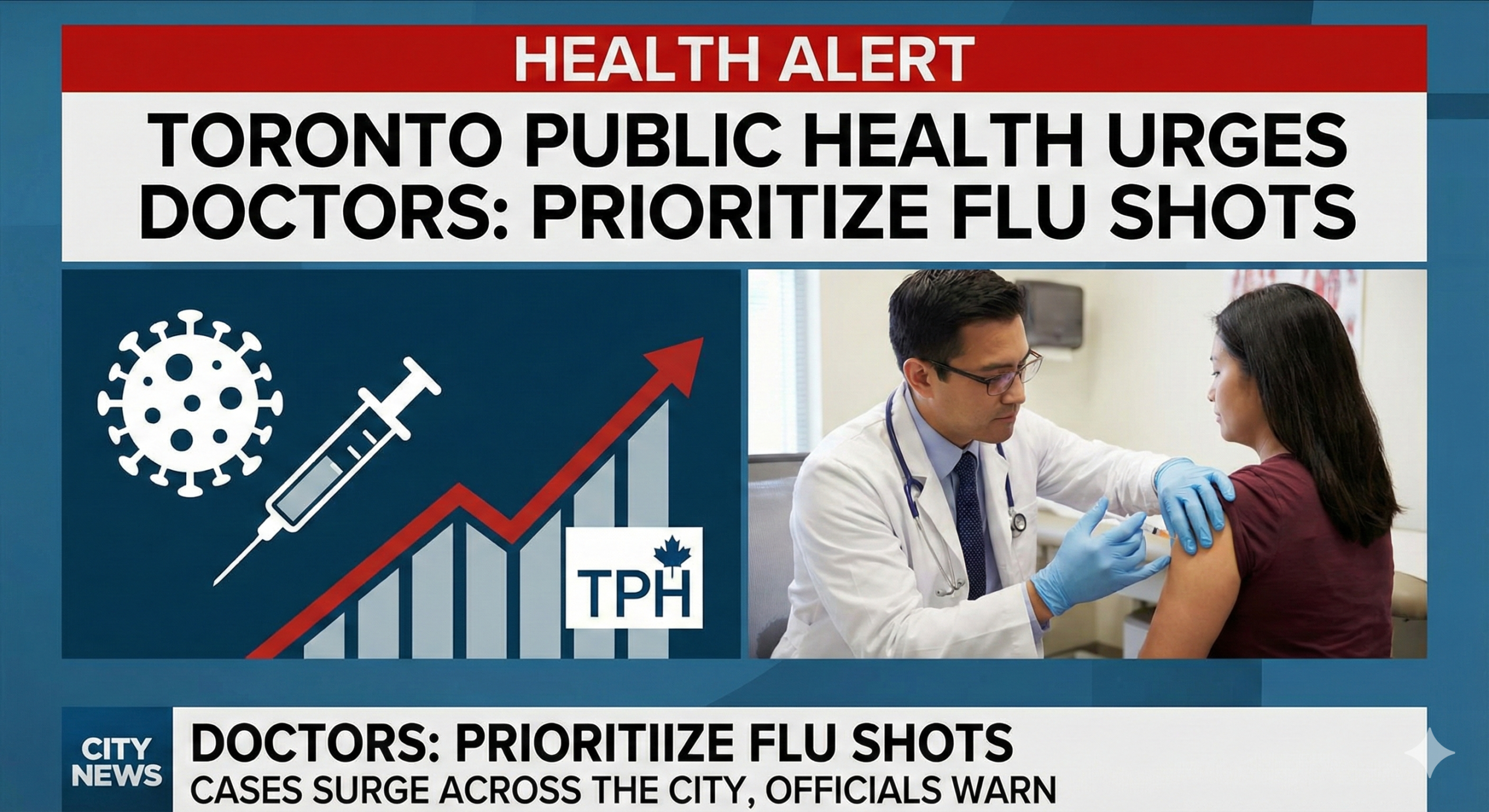
    Toronto Public Health (TPH) is urging physicians across the city to accelerate influenza vaccinations for their patients, citing a noticeable uptick in flu cases in Toronto and throughout Ontario. According to a weekly e-newsletter sent out Friday, the public health unit cautioned that flu activity is expected to peak by late December or early January — underscoring the urgency of immunizing unvaccinated individuals, especially those at higher risk of severe illness.

    Because it takes nearly two weeks for flu vaccine protection to build, TPH is calling on healthcare providers to act now.

    Why Vaccination Matters — Even in a “Mismatch” Year

    Dominance of H3N2 and the Risk It Poses

    The strain currently circulating widely is Influenza A (H3N2). This year, however, the virus has undergone mutations since the vaccine was formulated, a phenomenon known as antigenic drift. As a result, the match between the vaccine and the circulating virus is less than ideal.

    Whenever such a mismatch occurs, questions arise about how effective the vaccine might be. It’s a valid concern — past seasons have shown that protection against H3N2 tends to be lower compared to other influenza types.

    Yet, the Vaccine Still Provides Valuable Protection

    Public-health experts emphasize that even a mismatched flu shot remains the best defense against serious illness, hospitalization, and death.

    According to a recent analysis, seasonal flu vaccines — even when mismatched — can significantly reduce the risk of severe outcomes. This is particularly important for vulnerable groups: older adults, people with chronic conditions, and children.

    As one expert put it bluntly: “If there’s ever a year to get a flu vaccine, this is the year.”

    What This Means for Patients: Who Should Get Vaccinated Now

    High-Risk Populations Are a Priority

    TPH specifically urged doctors to act quickly when scheduling flu shots for:

    • Older adults

    • People with underlying health conditions (e.g., chronic respiratory illness, immunocompromised individuals)

    • Anyone who has not yet been vaccinated this season

    Timing is essential: since immunization needs about two weeks to provide protection, receiving the shot before the flu activity peaks could significantly reduce the risk of severe illness or hospitalization.

    Even Healthy Adults Should Consider Getting Vaccinated

    While older and vulnerable individuals are top priority, public-health guidance stresses that everyone six months of age and older — without contraindications — should be offered the flu vaccine annually.

    Projects from other countries suggest that vaccination remains a worthwhile step even if circulating virus strains don’t match perfectly with the vaccine.

    Why This Season is Especially Concerning

    New Variant & Early Surge

    Health experts around the world are closely monitoring a variant of H3N2 — known as “subclade K” — which has drifted antigenically from the H3N2 strain used in this season’s vaccines.

    Some regions in the Northern Hemisphere, including Canada, are already witnessing earlier and sharper increases in flu cases than typical for this time of year.

    What a Mismatch Means (and Doesn’t)

    A “mismatch” doesn’t render the vaccine useless, but it does lower its effectiveness — particularly against mild to moderate infection. The flu shot may still significantly reduce the risk of severe disease, hospitalizations, and death, which is especially important during busy winter months when healthcare systems are often under pressure.

    Moreover, infection outcomes tend to be worse in older adults and people with chronic health issues because immune response to vaccines typically diminishes with age.

    What Experts and Public-Health Officials Recommend

    • Get vaccinated as soon as possible. Even if the vaccine isn’t a perfect match, it remains the best tool to prevent serious illness.

    • Target high-risk individuals first. Doctors should prioritize seniors, people with chronic illnesses, immunocompromised patients, and all unvaccinated individuals.

    • Continue other preventive measures. Good respiratory hygiene, staying home when sick, and avoiding crowded indoor spaces can help curb spread, especially during a year when vaccine protection may be reduced.

    • Plan for possible peak later this month or early January. With case numbers rising already, early vaccination is critical to ensure protection by the time flu activity peaks.

    Conclusion: Better to Be Protected Than Vulnerable

    As flu activity rises in Toronto and across Ontario, the call from Toronto Public Health is clear: now is the time for doctors — and the public — to treat influenza vaccination as a top priority. Even in a season marked by viral mutation and vaccine mismatch, the flu shot remains the most reliable defense against severe disease, hospitalization, and complications.

    With flu-season peak expected in the coming weeks, every vaccine administered now can make a real difference — especially for the elderly, the chronically ill, and those yet unprotected. Take the shot. It could be the best shield you have.

  • Frank Gehry Dies at 96: Remembering the Toronto-Born Visionary Who Redefined Modern Architecture

    Frank Gehry Dies at 96: Remembering the Toronto-Born Visionary Who Redefined Modern Architecture

    Introduction: A Trailblazer Whose Structures Changed the World

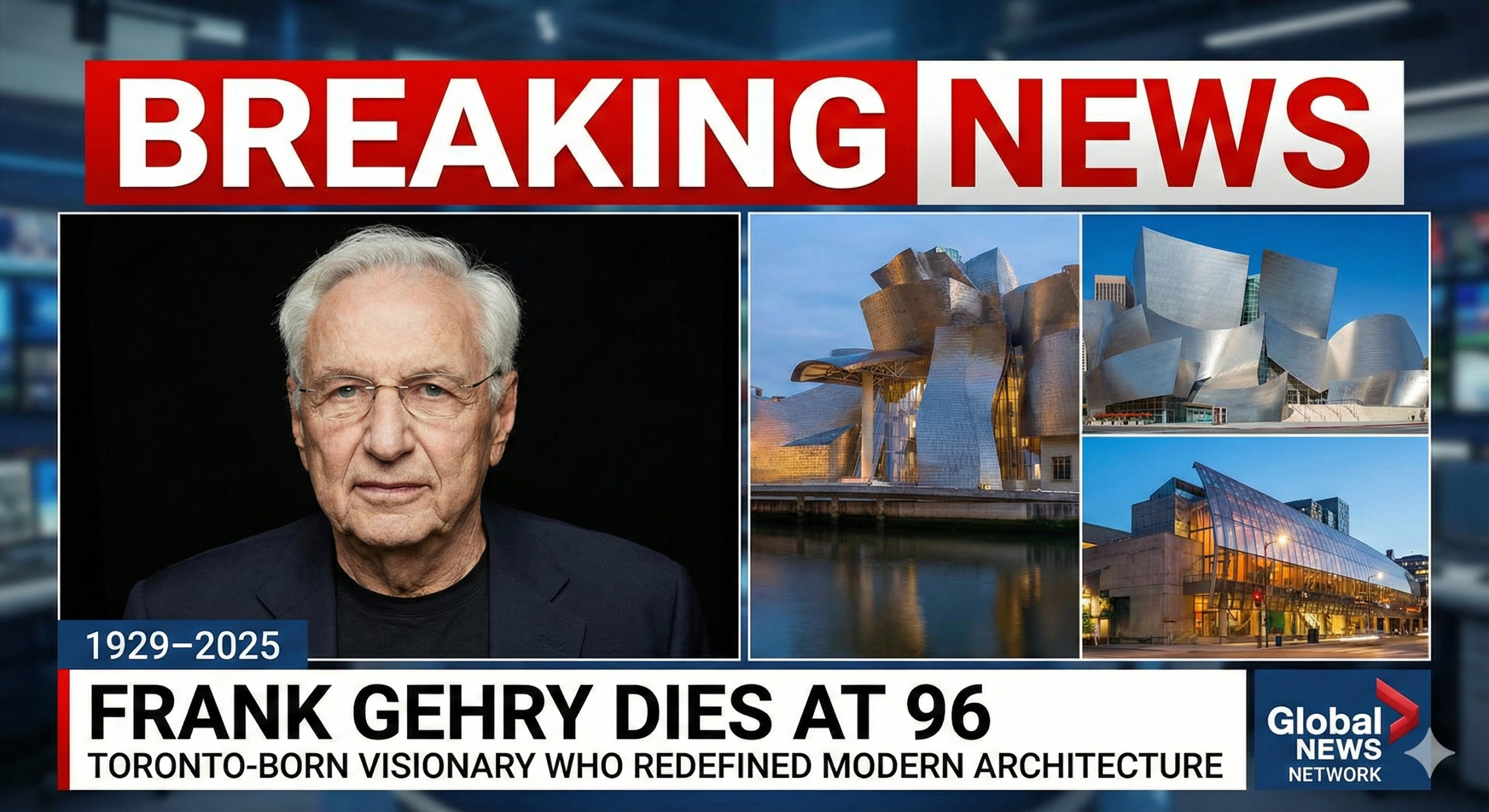
    Frank Gehry, the groundbreaking architect whose daring imagination reshaped skylines across the globe, has died at the age of 96. Known for his sculptural, unconventional approach to design, Gehry transformed architecture into an expressive art form, pushing boundaries in ways few could imagine, let alone execute. From Toronto to Spain, California to beyond, his buildings stood as unmistakable signatures of originality and bold innovation.

    Gehry passed away on Friday morning at his home in Santa Monica, California, after a brief illness, according to Meaghan Lloyd, chief of staff at Gehry Partners, LLP. His death marks the end of an extraordinary chapter in architectural history, yet his influence will continue to rise through the twisting steel, flowing glass, and daring silhouettes he left behind.

    Gehry’s Most Recognizable Works: Icons of a Radical Vision

    Throughout his remarkable career, Gehry designed some of the world’s most celebrated cultural, commercial, and institutional buildings. His work includes Toronto’s 2008 redesign of the Art Gallery of Ontario (AGO), Spain’s world-famous Guggenheim Museum Bilbao, the Walt Disney Concert Hall in Los Angeles, and Facebook’s headquarters in Menlo Park, California.

    These structures were more than functional spaces — they were artistic statements. Often described as chaotic, futuristic, or defiant of traditional form, Gehry’s designs commanded attention and curiosity. His buildings did not simply blend in with the urban environment; they redefined it.

    While other architects sought uniformity or classical symmetry, Gehry leaned into experimentation. Curves collided with jagged edges. Steel shimmered unnaturally under shifting sunlight. Walls bent where walls were never expected to bend. His creations forced people to stop, look, and reconsider what architecture could be.

    Even outside professional circles, Gehry became a cultural icon. He was immortalized as a cartoon version of himself in an episode of The Simpsons, a rare honor that underscored how deeply his work had penetrated mainstream consciousness.

    Inspiration and Early Influences in Toronto

    A Childhood of Creativity Shaped by Family

    Born Frank Owen Goldberg on February 28, 1929, in Toronto, Gehry was the child of Polish immigrant parents. His early life was deeply rooted in family, and it was his grandparents who would have the most lasting impact on his creative path.

    His grandmother, Leah, played a particularly influential role. She would scatter bits of scrap wood — oddly shaped pieces from a nearby furniture shop — across her kitchen floor. She encouraged the young Gehry to arrange them into imaginary towns, bridges, and structures before placing the wood into the stove.

    Years later, Gehry would reflect on those playful afternoons as the spark that ignited his lifelong passion. As quoted in the 2015 biography Building Art: The Life and Work of Frank Gehry by Paul Goldberger, he described the experience as “the most fun I ever had in my life,” realizing that it gave him “a licence to play.”

    Those moments of unstructured creativity laid the foundation for an architect who would spend his career ignoring limits and embracing imagination.

    Early Exposure to Architecture

    As a teenager, Gehry attended Friday lectures at the University of Toronto, where he developed a fascination for speakers who challenged convention. He later came to believe that one such lecturer was Alvar Aalto, the acclaimed Finnish modernist architect known for breaking architectural rules and blending natural elements with functionality.

    This early admiration for unconventional thinking shaped Gehry’s approach to design, reinforcing his belief that architecture could be emotional, expressive, and disruptive in the best possible way.

    A New Life in the United States

    Relocation to Los Angeles

    In 1947, Gehry moved with his family to Los Angeles. Although Toronto shaped his early identity, it was the sprawling urban canvas of Southern California that would ultimately allow his career to flourish. He became a U.S. citizen three years later and began pursuing a formal education alongside his creative experimentation.

    During his early years in the United States, his life was far from glamorous. By day, he worked as a truck driver. At night, he took sculpture classes at a local school. His determination eventually led him to earn an architecture degree from the University of Southern California.

    His path was anything but linear, reflecting the same unpredictability found in his designs.

    Personal Struggles and Name Change

    In the mid-1950s, Gehry changed his last name from Goldberg, a decision influenced by concerns raised by his first wife. She feared the family’s Jewish surname might expose their children to antisemitism. Though Gehry later expressed regret over changing his name, it marked another turning point in a life shaped by circumstance and compromise.

    Those early years were financially challenging. He juggled ambition with responsibility, struggling to support his family while trying to break into the architectural world. He briefly served in the U.S. Army and later studied urban planning at Harvard University before deciding to leave the program.

    Despite the instability, these experiences forged his resilience — a quality that would define his long and sometimes controversial career.

    Facing Criticism and Standing Firm

    Throughout his life, Gehry faced harsh criticism for his designs. His unconventional forms were often misunderstood or dismissed as impractical, chaotic, or visually jarring. Yet he accepted criticism as a normal part of his profession.

    In 2012, while presenting an early concept for a trio of proposed condominium buildings in Toronto, Gehry addressed his critics openly. He recalled the skepticism surrounding the Guggenheim Museum in Bilbao, Spain, a project that was once so unpopular it provoked intense hostility.

    “In Bilbao, Spain, they wanted to shoot me when they saw the design,” he said. “Now they get $500 million a year in revenue to the city.”

    He also remembered how the Walt Disney Concert Hall in Los Angeles had once been mocked as resembling “broken crockery.” Over time, however, that same building became one of the city’s most beloved landmarks.

    For Gehry, ridicule was temporary, but artistic integrity was permanent.

    The Toronto Connection: A Lasting Influence on His Hometown

    Despite spending most of his professional life in the United States, Gehry maintained a strong connection to Toronto. His redesign of the Art Gallery of Ontario in 2008 stands as one of the city’s most significant architectural transformations.

    The structure’s sweeping wooden staircase, dramatic glass façade, and thoughtful integration of old and new elements created a space that is both modern and deeply respectful of its surroundings. It remains a point of pride for the city and a testament to Gehry’s enduring bond with his birthplace.

    Additionally, a trio of proposed condominium towers in Toronto’s entertainment district reflected his ongoing interest in shaping the city’s skyline. Though they faced public criticism and underwent design changes, the project underscored his lasting relevance in Canadian architectural discourse.

    A Relentless Drive To Keep Creating

    Even in his later years, Gehry refused to slow down. In a 2017 conversation with CBC Radio’s Ideas, he reflected openly on aging and mortality, yet emphasized his determination to keep working.

    While others might have chosen retirement, Gehry remained deeply engaged with his craft. Design, to him, was not simply a profession — it was his reason for living.

    That unrelenting drive, combined with a fearless approach to originality, is what allowed him to remain relevant across multiple generations of architects.

    Conclusion: A Legacy Written in Steel, Glass, and Courage

    Frank Gehry’s passing at 96 marks the end of a revolutionary life, but his legacy will endure in the physical form of the cities he helped reshape. His architecture challenged norms, stirred debate, and inspired countless artists, designers, and dreamers to take creative risks.

    From a boy playing with wooden scraps on a Toronto kitchen floor to a global icon who redefined modern design, Gehry’s life was a testament to imagination, perseverance, and the power of unconventional thinking.

    Though the man is gone, his buildings — bold, twisting, gleaming — will continue to speak for him. They will stand as monuments not only to his genius, but to the idea that art and architecture can be limitless when fear is left behind.

  • From Community Pride to Neglect: How a Parkdale Greenspace Fell Into Disrepair

    From Community Pride to Neglect: How a Parkdale Greenspace Fell Into Disrepair

    Introduction: A Vision That Slowly Faded

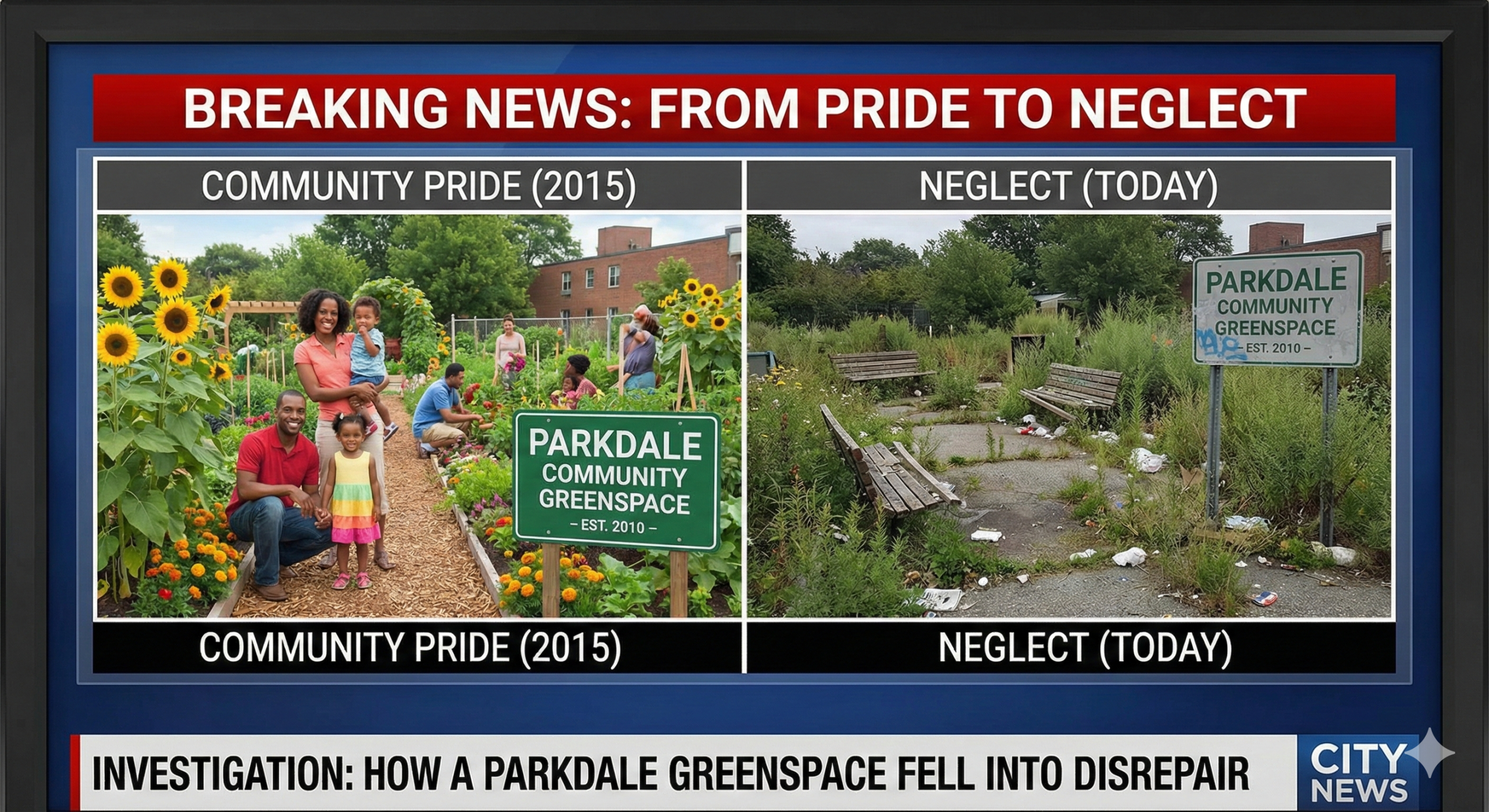
    What was once imagined as a modest yet meaningful tribute to the Parkdale community has gradually transformed into an overlooked and deteriorating stretch of land. Nestled along Lansdowne Avenue, just south of Dundas Street, a narrow strip of greenspace sits beside the Lansdowne railway underpass. For nearby residents, it tells a quiet but troubling story—of urban neglect, broken promises, and the slow disappearance of civic pride.

    Originally designed as part of an underpass revitalization project in the early 1990s, the strip of land was meant to beautify a forgotten corner of Parkdale and offer a small, calming green passageway within the busy city landscape. Today, however, community members describe it with far less flattering terms, calling it a “wasteland” and even a “garbage dump.”

    Local residents and members of the Parkdale Residents Association (PRA) say the city has failed to adequately maintain the area. Despite repeated concerns, they claim little has changed, and the condition of the greenspace continues to worsen.

    The Original Purpose of the Parkdale Underpass Project

    In or around 1993, the City undertook a beautification initiative as part of a broader underpass revitalization plan. According to a plaque still visible near the site, the improvements were formally dedicated by then-Mayor June Rowlands to both the Parkdale community and the people of Toronto.

    At the time, the transformation was significant. Concrete planters were installed along the slender stretch of land. A row of locust trees was planted, neatly arranged to add greenery and structure to the space. Decorative lighting was added to improve visibility and aesthetics, and a staircase was constructed to connect pedestrians from the top of the underpass down to street level.

    For many residents who remember that period, the change was dramatic and positive. The once-undistinguished strip of grass became a symbol of care and investment in the community—a small but powerful reminder that even overlooked spaces could be transformed with purpose and attention.

    Ric Amis, chair of the Parkdale Residents Association and a long-time resident of the neighborhood, recalls the early days clearly.

    “When it was brand new, it looked gorgeous,” he said, reflecting on the revitalization project that once filled the area with pride and potential.

    A Gradual Decline Into Disrepair

    Over the years, however, the narrow parcel of land appears to have slipped off the city’s radar. According to Amis and other residents, regular maintenance—such as grass cutting, tree trimming, and waste removal—has either become inconsistent or completely stopped.

    What was once carefully landscaped is now overgrown and littered with debris. The grass, in some sections, has grown as high as a person’s thigh. Locust tree branches extend outward unevenly, hanging low and untrimmed. The concrete planters, once intended to house plants and flowers, now serve a very different purpose.

    “It’s a wasteland for Tim Hortons coffee cups,” Amis remarked. “It’s just a garbage dump.”

    Discarded items litter the ground: old signage, plastic bags, dog feces left behind in tied bags, broken bottles, and even abandoned bike tires. The accumulation of trash has not only taken away from the visual appeal of the area but has also created concerns about hygiene and safety.

    Residents who pass through or near the underpass now avoid looking toward the strip altogether. For many, it represents a stark contrast between what was promised and what remains.

    Community Frustration and Concerns

    Members of the Parkdale Residents Association say they have raised concerns with the city multiple times. However, they feel that action has either been delayed or insufficient. The small size of the greenspace—approximately a block long and only about two metres wide—makes the lack of maintenance even more puzzling to residents.

    “It’s not a massive park or a complex facility,” Amis noted. “It’s a relatively small stretch of land. There is no reason it should be in this condition.”

    Beyond appearance, there are real concerns about public safety and environmental health. Overgrown vegetation can attract pests and create hiding spots for discarded sharp objects or hazardous materials. Broken bottles or hidden debris pose a risk to children, pedestrians, and pets. During rainy seasons, clogged or poorly maintained areas can also contribute to drainage issues.

    Residents believe that the neglect sends an unfortunate message about whose neighborhoods are valued and cared for. For a community that has long years of history, cultural significance, and resilience, the condition of this greenspace feels like abandonment.

    The Emotional Impact on Long-Time Residents

    For long-term Parkdale residents, this is not just about untidy grass and trash; it’s also about lost identity and fading memories. The revitalization project of the 1990s represented an era when public spaces were invested in and community spirit was celebrated.

    Seeing it crumble evokes frustration and disappointment, particularly for those who remember its original state.

    “It was meant to be part of Parkdale’s pride,” said one resident who has lived in the area for decades. “Now it just reminds you of what the city lets fall apart once the ribbon-cutting is done.”

    This emotional response highlights an important issue facing many communities: time-limited attention from authorities. Once a new project is launched and celebrated, long-term care and consistent monitoring often become an afterthought.

    The City’s Position and Assessment of the Site

    In response to the growing concerns, the city has confirmed that it has assessed the location and is currently mapping out potential next steps toward a cleanup and restoration. While details on timelines and budgets have not yet been made public, officials have acknowledged the complaints and verified that they are reviewing the condition of the site.

    For residents, this acknowledgement is only the first step. What they want now is action—concrete plans for cleaning, landscaping, and long-term maintenance that prevents the space from falling into disrepair again.

    The local community hopes the city will not only clean the area but also reassess its purpose. Could the space once again serve as a welcoming green corridor? Could it incorporate low-maintenance plants, community art, or seating? These are questions residents are eager to explore if they are given a voice in the decision-making process.

    A Chance for Renewal and Reconnection

    Despite the present condition of the greenspace, many residents remain hopeful. History proves that the area can be transformed. With planning, consistency, and respect for the community, the neglected strip of land could once again become a meaningful part of Parkdale’s urban landscape.

    The situation also opens a broader conversation about how cities manage small public spaces. While major parks and downtown areas often receive attention and funding, smaller neighbourhood spaces are just as important. They contribute to mental well-being, community connection, and neighborhood identity.

    The Parkdale strip may be narrow, but its significance—past, present, and future—is anything but small.

    Conclusion: Remembering the Past, Demanding a Better Future

    The once-proud greenspace along Lansdowne Avenue stands as both a reminder of thoughtful urban design and a warning about the consequences of neglect. What began as a tribute to Parkdale and the greater Toronto community has, over time, become a symbol of abandonment in the eyes of local residents.

    As the city considers its next steps, the community is watching closely. They are not simply asking for the removal of trash or the trimming of grass. They are asking for recognition, respect, and a renewed commitment to preserving the spaces that give their neighborhood character and dignity.

    Whether this neglected strip of land will return to its former beauty remains to be seen. But one thing is certain: Parkdale’s residents are no longer staying silent about the places that matter most to them.

  • Transit Union and City Councillor Demand Public Inquiry into LRT Collision and Test-Pause

    Transit Union and City Councillor Demand Public Inquiry into LRT Collision and Test-Pause

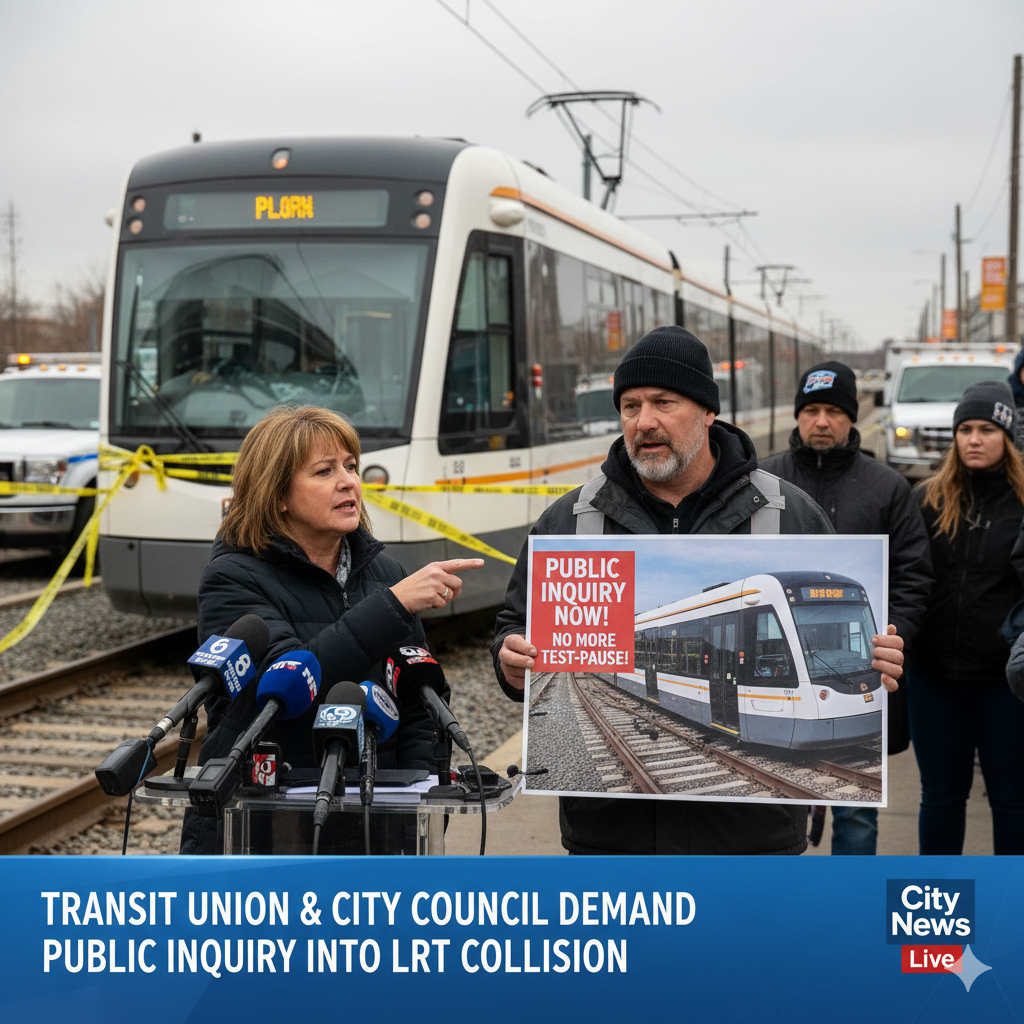
    A growing chorus of transit workers and politicians is calling for a public, independent inquiry into the recently paused testing of the Eglinton Crosstown LRT — following a collision between vehicles in October. They argue that transparency and accountability are essential before the line is finally opened to the public.


    What Happened: Collision and Testing Suspension

    • According to official statements, a 30-day “revenue service demonstration” (RSD) for the Eglinton Crosstown LRT began on October 7, 2025. This test is meant to simulate full service — with trains running the entire 19-kilometre, 25-station route — but without passengers.

    • On October 16, just over a week into testing, two LRT vehicles reportedly collided inside the yard at the Mount Dennis maintenance facility.

    • Following the incident, the province announced the RSD would be paused while safety reviews and investigations took place.

    • As of late 2025, the transit authority reports the LRT has now passed its final operating test and the line is moving toward “substantial completion.”


    Who’s Calling for an Inquiry — and Why

    Councillors and the Transit Union Speak Out

    • Josh Matlow, a Toronto city councillor, joined by ATU Local 113 (the union representing thousands of transit workers), held a news conference calling for full transparency about what went wrong.

    • Their demand: a public inquiry that would investigate the October collision, the reasons behind the test suspension, and the broader history of delays and cost overruns on the LRT project.

    Voices of Concern Among Riders and Advocacy Groups

    • TTCriders, a transit advocacy group, has also called the incident a “betrayal of public trust,” demanding full disclosure of what caused the collision and how future safety will be ensured.

    • Citizens and transit users, many of whom have waited for years for this LRT line to open, are among those calling for accountability before the system goes live.


    What’s at Stake: Trust, Safety, and Accountability

    Safety First — Why the Pause Matters

    Project officials have repeatedly stressed that the system must be safe before passengers are allowed aboard. In earlier testing phases, they uncovered system issues — including vehicle reliability and signalling software flaws — which delayed the project’s opening several times.
    once the line is operational? That uncertainty is fueling demands for transparent investigation.

    Years of Delays, Cost Overruns, and Limited Transparency

    The Eglinton Crosstown LRT has suffered from a long history of delays and cost escalations since construction began in 2011. Initially slated for completion in 2020, the opening has been postponed multiple times.

    Transparency has long been an issue: many critics argue that oversight has been weak, and that the public and city officials have been left in the dark about serious project problems. Calls for independent reviews and inquiries go back years.

    Opening the LRT without fully explaining past failures — and without clear assurances that safety issues are fully addressed — risks eroding public trust and undermining confidence in the system before it even begins operation.


    What Do Supporters of an Inquiry Want to Know?

    A public inquiry or transparent investigation could shed light on:

    • The exact technical and human causes of the October collision. Was it a signalling error? A procedural mistake? A mechanical or software failure?

    • Whether the yard safety systems (especially the automatic train control / signalling systems) are reliable enough for daily public use.

    • What other issues have been uncovered during testing (historical and current) — including reliability, vehicle availability, track alignment, signalling flaws — and how they’ve been addressed.

    • Which institutional or contractual failures — in project management, oversight, or public-private partnership arrangements — contributed to past delays, cost overruns, or safety problems.

    • Steps to ensure transparency and accountability for future major transit projects, including clearer communication with workers, riders, and the public.


    What Has the Official Response Been So Far?

    • Metrolinx — the provincial transit agency responsible for building and commissioning the Eglinton Crosstown — has stated that the RSD was paused after the incident, in the name of safety, but has not publicly released detailed findings about the collision.

    • As of December 2025, Metrolinx says the final operating tests have been completed and the system is entering “substantial completion.”

    • Despite the calls from councillors, unions, and advocates, the province has not yet launched a full public inquiry.


    Why a Public Inquiry Matters — Beyond This Single Incident

    Some may view the October collision as a technical hiccup — but many believe it represents systemic failure: a pattern of delays, shrinking transparency, and repeated safety or reliability issues across one of Toronto’s most ambitious — and troubled — transit projects.

    If no comprehensive review is conducted:

    • Lessons may not be learned, leaving future riders and workers vulnerable

    • Public trust in transit authorities may erode, undermining confidence when the system finally opens — or in future projects

    • Weak oversight and lack of accountability could become a norm for public-private partnership projects

    By contrast, a transparent inquiry could force stakeholders — agencies, contractors, government — to be honest about past mistakes, fix systemic problems, and rebuild confidence in public transit delivery.


    Conclusion: A Critical Moment for Toronto’s Transit Future

    As the Eglinton Crosstown LRT nears operational readiness, the pressure on authorities is growing. For many, this isn’t just about one collision or one line — it’s about whether major transit infrastructure in Toronto (and Ontario) can be built safely, reliably, and with full accountability.

    The calls for a public inquiry come from city councillors, transit unions, advocacy groups, and concerned riders: all demanding that before the first passenger boards, there must be clarity, transparency, and honesty about what went wrong, why it happened, and how it will be prevented in future.

    Whether the provincial government — or transit agencies like Metrolinx — respond with openness will likely shape not just the fate of Eglinton, but the broader trust in public transit moving forward.

  • It’s Very Heartwarming”: Toronto Blue Jays’ George Springer Teams Up with Make-A-Wish Canada to Support Critically Ill Children

    It’s Very Heartwarming”: Toronto Blue Jays’ George Springer Teams Up with Make-A-Wish Canada to Support Critically Ill Children

    In a world that often feels full of bad news, stories of kindness, generosity, and compassion stand out and remind us of the good that still exists. One such heartwarming story is the recent partnership between Toronto Blue Jays star George Springer and Make-A-Wish Canada, a well-known charitable organization dedicated to bringing hope and joy to children with critical illnesses.

    George Springer, one of the most recognizable faces in Major League Baseball, has now stepped beyond the baseball diamond to help raise funds and awareness for children who are going through some of the hardest battles of their lives. His involvement with Make-A-Wish Canada has been described as “very heartwarming,” and for good reason — it is about bringing smiles, making dreams come true, and reminding seriously ill children that they are not alone.

    This initiative is not just about money. It is about emotions, hope, encouragement, and the power of dreams.


    Who is George Springer?

    George Springer is a professional baseball player who plays for the Toronto Blue Jays, one of Canada’s most famous and loved sports teams. Known for his powerful hits and strong performance on the field, Springer has become a fan favorite in Toronto and beyond.

    But his impact is not limited to home runs and runs batted in. Like many athletes who understand the privilege and platform they have, Springer has consistently shown that he wants to give back to the community — especially to those who need it the most.

    That is exactly what he is now doing through his work with Make-A-Wish Canada.


    What is Make-A-Wish Canada?

    Make-A-Wish Canada is a charitable organization that helps grant wishes to children who are living with critical or life-threatening illnesses. These wishes can include:

    • Meeting a favorite celebrity or athlete

    • Going on a dream vacation

    • Getting a special toy, game, or experience

    • Doing something they have always dreamed about

    For many of these children, the experience of having their wish granted becomes a source of joy and strength during a very difficult time. Doctors, families, and the children themselves often say that a granted wish can lift spirits, improve emotional well-being, and provide something positive to look forward to during treatments such as chemotherapy, surgery, or long hospital stays.

    Make-A-Wish Canada cannot do this alone. The organization relies heavily on donations and fundraising to carry out its mission — which is why George Springer’s support is so meaningful.


    What Is This Fundraising Initiative About?

    According to the report by CBC’s Greg Ross, George Springer has partnered with Make-A-Wish Canada to raise funds for critically ill children.

    This means that through special events, campaigns, public support, and possibly even donations connected to baseball games or merchandise, money will be raised that goes directly toward granting wishes and supporting sick children and their families.

    Having a famous athlete like Springer involved helps in many ways:

    1. More visibility – People pay attention when a sports star is involved.

    2. More donations – Fans and supporters are more likely to contribute.

    3. More hope – Children feel inspired seeing someone they admire supporting them.

    Springer’s involvement also shows fans that kindness and generosity are just as important as athletic talent.


    Why This Is So Important

    Children with critical illness go through things that most adults cannot even imagine. Many of them:

    • Spend long periods in hospitals

    • Are unable to attend school or play with friends

    • Face painful treatments and uncertainty

    • Experience emotional fear and exhaustion

    Their parents, siblings, and families also suffer as they watch their child fight such a difficult battle.

    Make-A-Wish tries to bring joy into these tough lives. The wish experience can:

    • Give children something positive to focus on

    • Provide emotional strength

    • Create beautiful family memories

    • Reduce stress and fear

    When George Springer helps raise money, he is not just writing a cheque. He is giving children moments of happiness, families moments of relief, and memories that last forever.

    That is why people are calling this act “very heartwarming.”


    The Connection Between Sports and Hope

    Professional athletes have a unique place in society. They are often seen as heroes, role models, and inspirations — especially by children.

    Many young children battling serious illness are huge sports fans. Meeting a player like George Springer, receiving a message from him, or even knowing that he cares about their happiness can make an enormous emotional difference.

    For a child who might never get the chance to attend a game at a stadium, who might be unable to leave the hospital, or who feels scared about the future, something as simple as a message of encouragement from a sports star can bring incredible joy.

    This is where the partnership between sports and charity becomes so powerful. It combines the excitement of baseball with the compassion of humanity.


    Reaction from the Public

    Although the short report does not include many public comments, it is easy to imagine that fans of the Blue Jays and supporters of Make-A-Wish have welcomed this news with positivity.

    In a world that often feels divided and full of stress, a story like this:

    • Brings people together

    • Encourages kindness

    • Reminds us to care for the vulnerable

    • Shows that fame can be used for good

    Many parents and families of sick children are likely feeling grateful that someone with influence and resources is choosing to stand by them in their times of struggle.


    What This Teaches Us

    Even if we are not famous baseball players, we can all learn something from George Springer’s actions.

    This initiative teaches us:

    1. Kindness matters – One act of generosity can impact many lives.

    2. Status should be used for good – When you are in a position to help, you should.

    3. Children deserve joy – No matter how sick they are, they deserve happiness.

    4. Community support is essential – Everyone can contribute in their own way.

    You do not have to be rich or famous to help someone. Even small actions, donations, kind words, or volunteer work can help improve someone’s life.


    Looking Ahead

    As the fundraising campaign continues, we can hope that:

    • Thousands of dollars will be raised

    • Many wishes will be granted

    • Children will get to experience moments of happiness

    • Families will feel supported

    • The community will be more united

    George Springer’s partnership with Make-A-Wish Canada will likely inspire other athletes, celebrities, and organizations to step up and do similar acts of kindness.

    Step by step, person by person, the world can become a little better — and this is a shining example of that.


    Final Thoughts

    In the end, this story is not really about baseball. It is not about home runs, trophies, or championships. It is about heart.

    It is about a man using his influence to bring happiness to children who are facing the hardest challenges of their young lives. It is about reminding these children that they matter, that they are seen, and that they are loved by people they may never even meet.

  • Garbage Truck Driver Killed by His Own Vehicle in Scarborough: A Detailed Explanation of the Tragic Incident

    Garbage Truck Driver Killed by His Own Vehicle in Scarborough: A Detailed Explanation of the Tragic Incident

    A heartbreaking and shocking workplace accident took place in Scarborough, Toronto, early on Tuesday morning, leading to the death of a senior garbage truck driver. The man, who was 66 years old, was struck and killed by the very truck he had been operating. Toronto police and the Ontario Ministry of Labour are now actively investigating the circumstances surrounding the fatal incident.

    This tragic event has drawn attention to the serious risks faced by sanitation workers, the importance of workplace safety protocols, and the deep emotional impact such incidents have on families, co-workers, and entire communities.

    In this detailed report, we will carefully walk through everything that is known about the case so far, explain why it matters, and explore the larger work-safety issues connected to this tragedy.


    When and Where Did the Incident Happen?

    According to a news release from the Toronto Police Service, the deadly incident occurred at 8:34 a.m. on Tuesday morning in the area of Middleport Crescent and Pennyhill Drive in Scarborough. This is a residential area where garbage and recycling collection normally takes place during the morning hours.

    Residents in the area were likely going about their normal day — preparing for work or school — when the tragic accident occurred. A police officer and emergency personnel soon arrived at the scene after the incident was reported.

    The situation was so serious that a body could be seen under an orange tarp behind the truck, which had rolled forward and come to rest against a pole on the sidewalk. The sight shocked nearby residents and passersby.


    What Exactly Happened?

    Police investigators stated that the 66-year-old driver was outside his truck at the time of the incident. For reasons that are still being investigated, the truck began to roll forward while the driver was not inside. As the vehicle moved, it struck him, resulting in fatal injuries.

    It has been confirmed that the driver was working alone in the vehicle at the time. Garbage truck operators often step out of their vehicle repeatedly to collect bins or check surrounding areas, so it is possible that he was performing one of his regular duties when the truck unexpectedly began to move.

    Sadly, emergency responders were unable to save him, and he was pronounced dead at the scene.

    Because the truck involved was a city-owned garbage truck, the case immediately became a serious workplace incident involving municipal services.


    Immediate Reactions and Response

    Police Response

    After receiving the emergency call, Toronto police quickly arrived to secure the area, control traffic, and begin preliminary investigations. They are examining the location, the truck, and any possible mechanical or human factors that may have contributed to the incident.

    Officers are also likely speaking with:

    • Nearby residents

    • Passersby

    • Other city workers in the area

    All of this information will help them build a clear picture of what exactly happened.

    The Ministry of Labour Steps In

    The Ontario Ministry of Labour has officially been notified about the incident. A spokesperson for the ministry stated that an inspector has been assigned to investigate the cause of the fatal workplace accident.

    When a death occurs on the job, particularly in public service, the Ministry of Labour must investigate to determine:

    • Whether safety procedures were followed

    • Whether proper training and equipment were provided

    • Whether mechanical failure played a role

    • If workplace regulations were broken

    Their investigation is extremely important because it could lead to changes in safety policies and procedures that may prevent future tragedies.


    Statement from Toronto’s Mayor

    During an unrelated news conference later that day, Mayor Olivia Chow responded to the tragedy with clear sadness and concern. She confirmed that the truck involved in the accident belonged to the City of Toronto.

    She publicly expressed her sympathy, saying:

    “My condolences to the driver and their family. It is just devastating.”

    This statement showed the seriousness with which the city is treating the event. It is not just a news story, but a tragedy involving a dedicated municipal worker who was simply doing his job.


    Union Response and Support for the Family

    The deceased man was also a member of a union that represents city employees. Eddie Mariconda, president of the Toronto Civic Employees’ Union Local 416, released a heartfelt statement expressing deep sorrow.

    He said the union was “deeply saddened” by the member’s death and extended heartfelt condolences to the driver’s family and loved ones.

    The union has also reached out to the family to provide support during this extremely difficult time. Besides emotional support, unions often help families deal with:

    • Legal matters

    • Compensation processes

    • Funeral support

    • Counseling resources

    They also expressed concern for the driver’s colleagues in the Solid Waste Management department, who are deeply affected by losing a co-worker in such a tragic way.


    Why Is This Incident So Serious?

    This tragic event highlights several critical issues:

    1. The Dangers of Sanitation Work

    Garbage collection is far more dangerous than many people realize. Drivers and collectors work around heavy, moving equipment on active streets, often under time pressure and in all kinds of weather conditions.

    Risks include:

    • Being struck by vehicles

    • Falling off trucks

    • Equipment malfunctions

    • Slippery roads

    • Poor visibility

    This incident is a painful reminder that workers in this profession face real danger every day.


    2. Vehicle Safety and Brake Failure Possibility

    One major question investigators will examine is why the truck started rolling. Possible causes could include:

    • The parking brake was not engaged properly

    • Mechanical failure in the braking system

    • Uneven road or slope

    • A sudden shift in weight inside the truck

    All of these possibilities will be carefully checked by mechanical experts as part of the investigation.

    The results may lead to improved safety measures in the future, including:

    • Additional safety locks

    • Better brake systems

    • Stronger training programs

    • Mandatory vehicle inspection changes


    3. Emotional Impact on the Community

    The family of the 66-year-old driver is now facing unimaginable grief. Losing a loved one in such a sudden and public way is extremely painful.

    But it doesn’t affect only the family. His:

    • Co-workers

    • Friends

    • Neighbors

    • The wider community

    are also in shock. For many, this driver was a familiar face who worked in their neighborhood regularly.

    Such incidents often remind us how essential workers make daily life possible — and yet often remain unseen and unrecognized until tragedy strikes.


    What Happens Next?

    Several important steps will follow:

    1. Police Investigation Continues

      • Examining evidence

      • Interviewing witnesses

      • Reviewing camera footage if available

    2. Ministry of Labour Investigation

      • Reviewing workplace safety compliance

      • Investigating equipment and procedures

      • Determining if any laws were broken

    3. Support for the Family

      • Union and city assistance

      • Possible compensation or benefit processes

    4. Possible Safety Changes

      • New training requirements

      • Updated safety procedures

      • Equipment upgrades across the city

    These steps are important to ensure that lessons are learned and that future workers are better protected.


    Final Thoughts

    The tragic death of this 66-year-old garbage truck operator in Scarborough is a powerful and sorrowful reminder of how dangerous everyday jobs can be. He was simply doing his work for the city, serving his community, and in a moment that changed everything, he lost his life.

    As investigations continue, the hope is that the truth of what happened will be clearly understood and that the results will lead to stronger protections for sanitation workers everywhere.

    Behind every uniform is a human being, with a family, memories, and a life full of meaning. Today, that life is gone — and that reality must never be taken lightly.

  • Clarington Councillor Charged With Uttering Threats: A Detailed Explanation of the Case and Its Wider Impact

    Clarington Councillor Charged With Uttering Threats: A Detailed Explanation of the Case and Its Wider Impact

    A serious and unusual situation has unfolded in the town of Clarington, Ontario, Canada, involving Ward 3 Councillor Corinna Traill. She is now facing two criminal charges of uttering threats, according to a statement released by police. These charges are connected to alleged threats that were left in a voicemail for a potential mayoral candidate earlier this year.

    This case has drawn attention not only because it involves an elected official, but also because it raises questions about the use of artificial intelligence, political rivalry, public trust, and the safety of individuals involved in public service.

    Let’s go through the entire situation in detail to fully understand what happened, what has been said by both sides, and why this matter is important to the community and beyond.


    Who is Corinna Traill?

    Corinna Traill is a municipal councillor for Ward 3 in Clarington, a community located in Ontario, Canada. As a councillor, her job is to represent the residents of her ward, participate in town council decisions, and help guide local policy on issues such as development, safety, public services, and infrastructure.

    Because of her elected position, she is considered a public figure and is expected to follow both the law and high standards of conduct. That is why the accusations against her have attracted significant public and media interest.


    What Are the Charges?

    On Wednesday, police in Peterborough announced that Corinna Traill had been arrested and charged with two counts of uttering threats. In Canadian law, “uttering threats” means making a threat of violence or harm to a person or their property.

    Police did not go into deep detail about the exact wording of the threats, but they stated that the charges are linked to an alleged voicemail left for a potential mayoral candidate.

    After her arrest, Traill was released on a promise to appear in court, meaning she did not have to stay in jail but is legally required to attend her court date in January.

    As with all legal cases, she is considered innocent until proven guilty in court.


    Who Was the Alleged Victim?

    The person who made the complaint is Tom Dingwall, a retired police officer and former candidate for mayor of Clarington.

    In September, Dingwall made a public post on social media, stating that he had received a voicemail in August that he believed to be from Corinna Traill. According to him, the voicemail told him to stay out of the next mayoral race so that a friend of hers could “run unencumbered” (meaning without competition).

    Dingwall also claimed that the message contained extremely serious and disturbing threats. He said that the voicemail suggested that if he did not stay out of the race, he would be killed and his wife would be sexually assaulted.

    These alleged statements, if proven true, are considered extremely severe under the law and are the reason the charges are being taken seriously.


    How Did the Situation Affect the Victim?

    Tom Dingwall said that the voicemail and the entire situation deeply affected him and his family. In an interview with CBC News, he explained that the experience had an emotional impact on his wife and caused distress in their home.

    He described the situation as “bizarre” and said it was something he never expected to happen. However, he also made it clear that he would not ignore it or allow it to go unchallenged.

    In response to the charges, Dingwall said he felt relief, as he believes the legal system is now taking the matter seriously. He also publicly requested that Corinna Traill step down from her position as councillor, saying that no elected official should use threats or intimidation to try to influence elections or silence others.


    What Has Corinna Traill Said in Her Defense?

    Corinna Traill has denied making any threats. In a statement she released back in September, she said “unequivocally” (meaning completely and clearly) that she did not leave the voicemail.

    Instead, she claimed that artificial intelligence technology was used to create the message. According to her, parts of the voicemail may have sounded like her voice, but she believes that other parts were artificially generated using AI.

    This claim introduces a very modern and concerning issue: the possibility of AI voice cloning, where technology can imitate someone’s voice with high accuracy. In today’s world, audio deepfakes are becoming more advanced, and this has made it harder to trust audio or video evidence without full analysis.

    Traill stated that she respects the legal and investigative process and that she plans to fully cooperate with authorities. She also said she understands that the community wants truth and clarity, and she shares that desire.

    At present, she has declined to comment further, explaining that the matter is now in the court system.


    What Did the Mayor Say?

    Clarington Mayor Adrian Foster also released a statement regarding the situation. He confirmed that he is aware of the arrest and the charges but stressed that it is important to allow the justice system to do its job without interference.

    He reassured residents that the Clarington Council remains focused on its work and will continue serving the community. Because the case is ongoing and before the courts, the municipality has said it will not make any further public comments at this time.

    This is a standard approach in legal cases involving elected officials, as public comments can sometimes affect the fairness of a trial.


    Why Is This Case So Important?

    This case is significant for several reasons:

    1. It Involves an Elected Official

    People hold public leaders to a high standard. If an elected representative is accused of threats or intimidation, it harms public trust and confidence in local government.

    2. It Raises Questions About AI Misuse

    Traill’s claim that AI was used to fake her voice highlights a growing concern globally. Technology today can be used to:

    • Create fake voices

    • Clone faces in videos

    • Produce false evidence
      This makes it harder for people to know what is real and what is not. Courts, police, and governments are now facing new challenges in proving authenticity.

    3. It Affects Democracy

    Elections are meant to be fair and open. If anyone uses threats to stop someone from running for office, it damages the democratic process. That is why such accusations are taken very seriously by the law.

    4. It Impacts Families and Communities

    Beyond law and politics, real people and families are affected. Emotional stress, public attention, and uncertainty can be extremely difficult for everyone involved.


    What Happens Next?

    The next major step in this case is court in January. At that time, the legal system will examine:

    • The voicemail recording

    • Technical evidence (including whether AI was used)

    • Witness statements

    • Any other proof presented by police and lawyers

    Only the court can decide if Corinna Traill is guilty or not. Until that time, no final judgment can or should be made.

    The community, media, and everyone involved will have to wait for the legal process to unfold properly.


    Final Thoughts

    This incident in Clarington shows how quickly a political and personal conflict can turn into a major legal and public issue. It also shines a spotlight on the dangers of new technology being misused and the importance of protecting democratic rights.

    Regardless of the final outcome, this case will likely be remembered as an example of how politics, technology, and law can all collide in modern society.