Blog

  • Ontario Releases Delayed EQAO Results as Province Moves to Rethink Standardized Testing Strategy

    Ontario Releases Delayed EQAO Results as Province Moves to Rethink Standardized Testing Strategy

    Introduction: A Long-Delayed Report Sparks New Questions About Student Achievement

    After weeks of mounting pressure from educators, school boards, and political opponents, Ontario has finally released its long-awaited EQAO standardized test results. The data paints a familiar picture: while there has been modest progress in some areas, overall improvement — especially in mathematics — remains sluggish and uneven across the province.

    In response, Education Minister Paul Calandra announced that Ontario will undertake a comprehensive review of its standardized testing system, signaling that significant changes to how student achievement is measured may be on the horizon.

    While literacy rates appear relatively stable and stronger than math scores, the persistent achievement gap in numeracy has once again placed the provincial education system under scrutiny — and reignited debate over the value of standardized testing itself.


    Ontario to Review Its Approach to Standardized Testing

    Advisors to Be Appointed for Comprehensive Review

    On the same day the EQAO (Education Quality and Accountability Office) results were released, Minister Calandra confirmed that the province will appoint two external advisers early next year to review Ontario’s current approach to standardized testing and overall student performance.

    According to Calandra, the advisors will be tasked with answering key questions:

    • Why is improvement in student achievement so slow, especially in math?

    • Is the current curriculum clear and properly structured?

    • Are teachers being adequately prepared and supported?

    • Do students have access to the necessary learning tools and resources?

    “Our responsibility is to do everything possible to boost student success,” Calandra stated. “Students deserve better, and we must do better.”

    He acknowledged that while there has been slight progress over the past two years, the numbers remain far below what the government considers acceptable — particularly in numeracy.


    Math Performance Remains a Major Concern

    Slight Gains, But Still Below Expectations

    The newly released results, which reflect testing conducted in the previous academic year, show small increases in math performance across multiple grades. However, the improvement remains minimal and continues to concern policymakers.

    • Grade 3 math: 64% of students met the provincial standard, up from 61% and 60% in the previous two years

    • Grade 6 math: 51% met the standard, only slightly higher than the 50% recorded in the last two years

    • Grade 9 math: 58% of students achieved the benchmark, up from 54%

    While any increase is seen as positive, the fact that nearly half of all Grade 6 students are still not meeting the expected level in math has alarmed both government officials and educators.

    “Some student groups and school boards continue to face serious gaps in achievement, and this is simply not good enough,” Calandra said.

    These ongoing struggles in math reflect a trend that has persisted for years, despite targeted strategies, curriculum revisions, and increased focus on foundational numeracy skills.


    Literacy Scores Outperform Mathematics

    Reading and Writing Show Stronger Results

    In contrast to the lower math outcomes, students performed more strongly in reading, writing, and overall literacy. These areas continue to outperform numeracy every year, suggesting a more effective or consistent approach to language instruction in Ontario schools.

    The 2025 EQAO results show:

    • Grade 3 reading: 71% of students met the standard

    • Grade 6 reading: 86% met the standard

    • Grade 3 writing: 65% met the standard

    • Grade 6 writing: 85% met the standard

    In addition, the Ontario Secondary School Literacy Test (OSSLT), typically administered in Grade 10, saw 85% of first-time eligible students meet the provincial standard.

    While these figures are more encouraging, Calandra stressed that improvement is still needed.

    “These results are higher than math, but that doesn’t mean we can afford to become complacent. Every student should have the opportunity to succeed at the highest level,” he said.


    Significant Differences Between School Boards

    Some Districts Excel While Others Struggle

    One of the most striking findings of this year’s data is the stark difference in performance between school boards across the province — even though they receive similar funding.

    Minister Calandra highlighted two boards in particular:

    • Niagara Catholic and Niagara public school boards were identified as leaders, with strong performance across multiple categories

    • In the Niagara public board, 71% of Grade 6 students met the math standard — well above the provincial average

    • Conversely, the Near North District School Board, which the minister recently took administrative control of, reported only 29% of Grade 6 students meeting the math standard

    “These boards have access to the same level of funding,” Calandra explained. “Yet their results are very, very different. That’s what we need to get to the bottom of.”

    These inconsistencies have become a central focus of the upcoming review, as the government tries to determine whether curriculum delivery, teacher support, leadership, or community factors are contributing to the disparity.


    Why the Results Were Delayed

    Minister Claims “Deep Dive” Was Necessary

    The release of the EQAO data had been delayed for several weeks, raising concerns among teachers’ unions, researchers, and opposition parties. Calandra explained that he personally requested more time to analyze the data before it was made public.

    He described the process as a “deep dive” into the results, which he said uncovered major differences between school districts and highlighted where urgent intervention may be required.

    However, critics have questioned whether the delay undermines the independence of EQAO, which is meant to operate at arm’s length from the government.


    Opposition Parties Raise Concerns

    NDP Criticizes Potential Appointments

    Ontario NDP Leader Marit Stiles expressed strong skepticism about the upcoming advisory panel, suggesting that the appointees could have political connections to the Progressive Conservative government.

    “A couple more Conservative insiders at $1,500 a day is not going to fix our education system,” Stiles said, referring to the anticipated per diem for expert advisers.

    She argued that instead of spending money on consultants and reviews, the government should be directing more funding toward frontline support in schools, including hiring additional staff and reducing class sizes.

    Concern is growing among opposition parties that the review could be more about optics than actual reform.


    Teachers’ Federation Calls for End to EQAO Testing

    Educators Say Students and Teachers Are Overburdened

    The Elementary Teachers’ Federation of Ontario (ETFO) went even further, calling on the province to eliminate EQAO testing entirely. In a strongly worded statement, president David Mastin criticized the government’s continued reliance on standardized test scores.

    “Educators are struggling with large class sizes, increasing workloads, and rising violence in schools,” Mastin said. “Yet the government remains fixated on meaningless EQAO results.”

    He also questioned the independence of the EQAO process, pointing out that the minister’s involvement in delaying the release of results raises serious governance concerns.

    “If EQAO is supposed to be at arm’s length, why is the minister intervening in decisions around when results are published?” Mastin asked.

    The union’s stance reflects a long-standing argument among educators that standardized testing creates unnecessary stress for students and does not accurately reflect real learning or classroom performance.


    What Happens Next: A System Under Review

    Pressure to Deliver Real Change

    The announcement of a provincewide review marks a critical moment for Ontario’s education system. Parents, teachers, and policymakers alike will be watching closely to see whether this process leads to tangible improvements — or simply another round of recommendations without real action.

    The key areas expected to be examined include:

    • Curriculum clarity and relevance

    • Teacher training and support

    • Access to learning materials and technology

    • Early intervention strategies for struggling students

    • The future role of standardized testing in Ontario schools

    As learning loss from the pandemic continues to affect classrooms and gaps widen among different student populations, the stakes are higher than ever.


    Conclusion: A Turning Point for Educational Accountability in Ontario

    The release of the delayed EQAO results has once again exposed the deep challenges facing Ontario’s education system — particularly in mathematics. While small improvements offer a glimmer of hope, they are not enough to satisfy a province striving for excellence and equity in education.

    With a new advisory review on the horizon, the government now has an opportunity to reexamine not only how students are tested, but how they are taught, supported, and prepared for the future.

    Whether this marks the beginning of real reform or simply another chapter in a long-standing debate remains to be seen. However, one thing is clear: parents, students, teachers, and communities across Ontario will be looking for results that go far beyond standardized test scores.


  • Protests Erupt as Toronto’s Munk Debate on Israel’s Two-State Future Faces Controversy and Legal Allegations

    Protests Erupt as Toronto’s Munk Debate on Israel’s Two-State Future Faces Controversy and Legal Allegations

    Introduction: A Heated Night Outside Meridian Hall

    A highly charged political and humanitarian debate unfolded in downtown Toronto on Wednesday night as the renowned Munk Debates hosted a panel of former Israeli officials to discuss whether a two-state solution is in Israel’s national interest. While the discussion took place inside Meridian Hall, hundreds of protesters gathered outside, voicing strong opposition to the absence of Palestinian representation and raising serious allegations against two of the speakers over their roles in past military conflicts.

    The event, which drew widespread attention both for its prominent participants and the sensitive geopolitical issue at hand, quickly became a flashpoint for wider conversations about accountability, international law, and whose voices deserve to be heard in public discourse on the Israel-Palestine conflict.

    Heavy Police Presence as Protesters Rally in Solidarity with Palestinians

    Demonstrators Gather in Downtown Toronto

    An estimated 200 protesters assembled outside Meridian Hall as the Munk Debate got underway. Many held Palestinian flags and signs condemning Israeli government actions, while chanting slogans calling for justice and recognition of Palestinian suffering. Mounted police and a significant law enforcement presence were deployed around the venue, creating a tense atmosphere as demonstrators made their voices heard.

    Trevor Miller, one of the protesters, described the event as “unacceptable,” arguing it represented a one-sided narrative on an issue that continues to impact millions.

    “We are here to speak out for the people of Palestine, and for everyone who is suffering under imperialism,” Miller said during the demonstration.

    Police eventually dispersed the crowd as the evening continued, though the protest remained largely peaceful.

    Inside the Hall: A Debate on Israel’s National Interest

    The Motion and the Panel

    According to the official Munk Debates website, the central question posed to the panel was:
    “Be it resolved, it is in Israel’s national interest to support a two-state solution.”

    Former Israeli leaders were positioned on both sides of the argument:

    Speaking in favour of the motion:

    • Ehud Olmert – Former Prime Minister of Israel, as well as former Finance Minister and Mayor of Jerusalem

    • Tzipi Livni – Former Israeli Justice Minister and Foreign Minister

    Speaking against the motion:

    • Michael Oren – Former Israeli ambassador to the United States and a former deputy minister during Benjamin Netanyahu’s second term

    • Ayelet Shaked – Former Israeli Justice Minister and Minister of the Interior

    The all-Israeli panel quickly became a central point of criticism, particularly from protesters and human rights advocates who said the absence of Palestinian representation undermined the legitimacy of the conversation.

    No Palestinian Voices on the Stage

    Outside the venue, critics questioned how a discussion of a two-state solution — directly affecting Palestinian people — could take place without including a Palestinian perspective.

    “It’s indefensible to have all of these voices and no one representing the people who are genuinely suffering,” said Miller. His comments echoed the broader frustration among demonstrators who felt that an essential viewpoint had been deliberately excluded.

    Munk Debates Organizer Responds to Criticism

    “Hard-Won Insights” from the Panelists

    Rudyard Griffiths, chair and moderator of the Munk Debates, defended the decision to include only Israeli participants during an interview with CBC Radio’s Metro Morning. He stated that the organization typically selects panelists with first-hand experience and deep knowledge of the subject matter.

    “As we do with every Munk Debate, we try to assemble people who have hard-won insights and in-depth experience that they can bring to the topic,” Griffiths explained. “I think these four panelists will do this.”

    Griffiths added that Wednesday’s event represented only one facet of an ongoing, global conversation, emphasizing that the purpose of the Munk Debates is to present specific viewpoints, not to encompass every voice in a single evening.

    Invitation for Other Voices in Future Discussions

    When asked if a future debate including Palestinian speakers could take place under the Munk Debates banner, Griffiths said he would support others in organizing such an event, while also noting the organization’s private status.

    “If you don’t like the debate, the panelists, or the topic, rest assured your tax dollars are not going towards it,” he said. “We welcome others to organize other debates on other topics, including this one.”

    Allegations of War Crimes Prompt Legal Action

    Lawyers Call for Arrests of Former Israeli Officials

    In a significant development on the same day as the event, the Canadian Lawyers for International Human Rights (CLAIHR) submitted a 24-page document to the Royal Canadian Mounted Police (RCMP) and the war crimes division of Canada’s Department of Justice. The document called for the arrest and investigation of Ehud Olmert and Tzipi Livni over alleged war crimes committed during the 2008–2009 conflict in Gaza.

    Henry Off, an international human rights lawyer associated with CLAIHR, described the panelists’ presence in Canada as deeply troubling.

    “Canada needs to uphold the rule of law, and that means playing its part in investigating and prosecuting international crimes,” Off stated.

    Reference to United Nations Findings

    The document submitted by CLAIHR refers to the 2009 United Nations Fact-Finding Mission on the Gaza Conflict, which alleged that Israeli armed forces committed grave breaches of the Fourth Geneva Convention. These alleged violations included:

    • Wilful killing

    • Torture or inhuman treatment

    • Unlawful and extensive destruction of property not justified by military necessity

    Because both Olmert and Livni held senior positions in government at the time, CLAIHR argues that they could reasonably have been aware of the military actions and should be investigated accordingly.

    The organization also cited Canada’s obligations under international law. According to the Fourth Geneva Convention, countries have a duty to “seek out and prosecute” individuals suspected of grave breaches, regardless of their nationality, if they are present on Canadian soil.

    “It would be unreasonable to allow them to enter and leave Canada without even being questioned,” Off said.

    RCMP’s Ongoing Assessment

    The RCMP has previously confirmed that in early 2024 it launched a structural assessment related to the Israel-Hamas conflict. While this is not considered a criminal investigation, the agency has indicated that it could open one if sufficient links to Canada emerge under the Crimes Against Humanity and War Crimes Act.

    At the time of writing, both the RCMP and the Department of Justice have been contacted for comment but have not yet issued a public response.

    A Conflict That Draws Global Scrutiny

    Allegations on Both Sides

    While the focus of Wednesday’s legal submission was on Israeli officials, the same UN report referenced by the lawyers also stated that certain actions by Palestinian armed groups — including firing rockets and mortars into civilian areas — could constitute war crimes and may even amount to crimes against humanity.

    This broader context highlights the deep complexity of the conflict and the widespread calls for accountability on all sides.

    Humanitarian Conditions in Gaza Remain Dire

    At the same time, humanitarian groups continue to warn that residents of Gaza are facing severe shortages of food, water, medical supplies, and adequate shelter. Even following a ceasefire agreement, aid entering the region is not meeting the scale of what was pledged, leaving many families exposed to deteriorating weather and living conditions.

    As winter approaches, shelters damaged by airstrikes and flooding provide little protection, further intensifying the crisis for civilians caught in the ongoing conflict.

    Conclusion: A Debate That Reached Far Beyond the Stage

    What was intended as an intellectual exchange over Israel’s national interests and the viability of a two-state solution quickly evolved into a broader reckoning over justice, representation, and international responsibility. The absence of Palestinian voices, the allegations of war crimes, and the visible public unrest outside Meridian Hall all underscored the deeply emotional and political nature of the topic.

    While the debate itself centered on Israel’s internal considerations, the protests and legal actions surrounding the event served as a powerful reminder that the consequences of the conflict extend far beyond national borders — and that global audiences continue to demand transparency, inclusion, and accountability in discussions that shape the future of an entire region.

    As Canada weighs its role under international law and organizers defend their platform choices, this controversial evening in Toronto is likely to remain part of ongoing discussions about freedom of speech, humanitarian justice, and the responsibilities of public forums in addressing global crises.

  • Vaughan Townhome Owners Face $2 Million Repair Bill After Stormwater-System Collapse

    Vaughan Townhome Owners Face $2 Million Repair Bill After Stormwater-System Collapse

    Several dozen townhouse owners in Vaughan, Ontario, are now confronting unexpected and steep repair costs — totaling nearly $2 million — after a stormwater system failure caused a playground collapse within their four-year-old complex. The residents say the incident has exposed serious gaps in homeowner protections in the province.


    Young Homes, Old Problems

    The residences in question belong to Arthur Townhomes, a development by Treasure Hill, located near Keele Street and McNaughton Road in Vaughan. Though 51 freehold units were completed in 2021 and sold individually, the community is governed by a condominium corporation that manages shared infrastructure — roads, utilities, common areas, and a small playground built atop a communal stormwater tank.

    In June 2024, that playground suddenly collapsed when a sinkhole opened above the stormwater tank. The collapse tilted playground equipment, uprooted trees, and rendered the area unsafe. Thankfully, no children or residents were injured, but the shock and fear among owners was immediate.

    Homeowners had anticipated living in a new, safe development — instead, many describe the past year as a “nightmare.”


    From Playground Collapse to $40,000 Bills

    What started as a frightening structural failure has turned into a significant financial burden on residents. The total cost to repair and replace the damaged stormwater infrastructure — spread across the 51 units — has climbed to nearly $2 million. That breaks down to roughly $40,000 per homeowner.

    Initially, in August 2024, each owner was billed about $7,800 to fund engineering assessments and immediate site protection measures. But ongoing repairs, site stabilization, and reconstruction planning have meant continuing costs. In February 2025, a second special assessment of about $16,000 per unit was issued. Most recently, in November 2025, homeowners were asked to pay an additional $16,039, to be paid in three installments, to cover replacement of the water tank and other necessary structural work.

    As one owner, Asta Law, lamented: she bought her home pre-construction expecting “stress-free” living; what she got was substantial financial instability. Another owner, Jarreau Hickson, described moving into the townhouse in 2021 with hopes of starting a family — only to be blindsided by a collapse and now paying tens of thousands of dollars in unexpected fees.

    They argue: “If this could happen here, it could happen anywhere.”


    What Went Wrong — And Who’s at Fault?

    The condo corporation’s engineers’ report indicates that the underground stormwater tank was installed incorrectly: the “location and depth” did not match the approved construction drawings. Worse yet, during installation, makeshift wooden shoring was used temporarily — and reportedly left in place. Over time, the shoring failed, destabilizing the tank and triggering the collapse.

    Yet despite these findings, the development’s insurer refused to cover the damages. In October 2025, after more than 16 months of investigation and after the condo corporation had already spent over $1 million on mitigation efforts, the claim was denied. The insurer cited privacy concerns and declined to comment on specifics.

    When contacted, Treasure Hill rejected the findings of “incorrect installation,” stating that the tank was installed in accordance with the manufacturer’s guidelines. The developer’s representative said they are reviewing an engineering report from the insurer, and claimed the condo board has not yet formally engaged with them about next steps — even though homeowners have already been billed for several major assessments and repairs.


    Homeowners Left Bearing the Cost — and Uncertainty

    The sudden financial responsibility has placed serious strain on many families. “I don’t know where I will get the money from,” said one resident, describing severe financial hardship.

    Because the common infrastructure is collectively owned, the fee assessments were distributed evenly across the homeowners — regardless of whether any given household benefited from or used the playground. While one-time “special assessments” can cover unforeseen expenses, experts say the sheer magnitude of this assessment is well outside what a typical homeowner would expect when purchasing a new build.

    As condominium lawyer Bradley Chaplick explained (though not involved with the case), such large special assessments demonstrate the limits of what buyers often assume is “covered.” The typical disclosure and sale process rarely gives potential homeowners a full sense of how collective liability for common elements can affect them if something goes terribly wrong.


    Where Homeowner Protection Falls Short

    Many owners now question why protections in place for new-home buyers and condominium owners did not prevent this situation. In Ontario, warranty coverage for newly built homes is managed by Tarion — which provides protections for certain defects in newly built homes. However, as homeowners discovered, Tarion’s coverage often applies only to individual units, not shared elements such as roads, tanks, or communal playgrounds.

    That means even if the common-element fault stems from construction mistakes — as the condo corporation’s engineers claim — individual homeowners may see little relief. Any recourse must come through the condominium corporation itself, not through Tarion’s unit-owner warranty program.

    Accordingly, some owners have submitted a warranty claim via Tarion through their condo corporation. But legal ambiguity remains: it is unclear whether Tarion will consider a collapsed stormwater tank — due to faulty installation — as a “major structural defect” eligible under its coverage rules.

    As realtor-owner Rezwan Razzaque, a professional engineer himself, observed: if city permits, developer oversight, and standard construction-inspection procedures failed to catch such a fundamental flaw, how many other new-build complexes might be at similar risk?

    Even worse: if the condo corporation pursues legal action against the developer or insurer and is successful, any recovered funds would go into the corporation’s pool — not be distributed directly to individual homeowners.


    What the City and the Province Are Saying

    The City of Vaughan has received concerns from homeowners about municipal oversight. The homeowners argue that if inspections had been more rigorous when the project was built, perhaps the flawed installation could have been caught.

    City officials earlier indicated they are reviewing the complaints. However, as of now, they have not provided a detailed update on the status of any investigation or steps taken to improve oversight.

    Meanwhile, a spokesperson for the provincial ministry responsible for housing and consumer services acknowledged the homeowners’ concerns. They said the government is “committed to working with Tarion to strengthen consumer protection.” But to date, no concrete legislative changes have been announced.

    Legal experts note that gaps persist — both in what provincial legislation requires of developers and in what insurers are willing to cover. Because common-element failures often fall into a legal grey area, courts frequently become the final arbiter, which means significant financial and emotional burden often lands on homeowners long before any resolution.


    Calls for Accountability and Reform

    Many affected owners believe greater accountability must be demanded — both from developers and regulatory bodies. They argue new homeowners buying pre-construction or recently built homes deserve stronger protections against catastrophic failures in shared amenities.

    Homeowner Asta Law has publicly called on Treasure Hill to take responsibility and reimburse residents. “If this was a construction error, why should innocent buyers pay for it?” she said.

    Others urge the City of Vaughan to review its permitting and inspection process — to ensure similar catastrophes don’t occur elsewhere.

    Meanwhile, some suggest that provincial regulators and Tarion should revise the warranty system to more clearly cover common-element failures resulting from faulty construction. Until laws catch up, homeowners remain vulnerable to being collectively liable for what may be structural defects beyond their individual units.


    Conclusion: A Cautionary Tale for New-Home Buyers

    The ordeal faced by Arthur Townhomes residents is a sobering example of what can go wrong — even in a brand-new development. A simple collapse in a communal playground has led to financial burdens of tens of thousands of dollars per family, while legal responsibility remains murky and protection mechanisms appear insufficient.

    For prospective homeowners, this incident underscores the importance of thoroughly understanding the risks tied to common elements in condominium-style communities. For regulators, builders, and insurers, it offers a warning: without stronger oversight and clearer protections, buyers can be left holding the tab for failures they neither caused nor could have foreseen.

    As the repairs move forward under a heavy financial burden, the families of Arthur Townhomes hope their experience can prompt systemic change — before others are forced to pay similar costs for what was supposed to be a “dream home.”

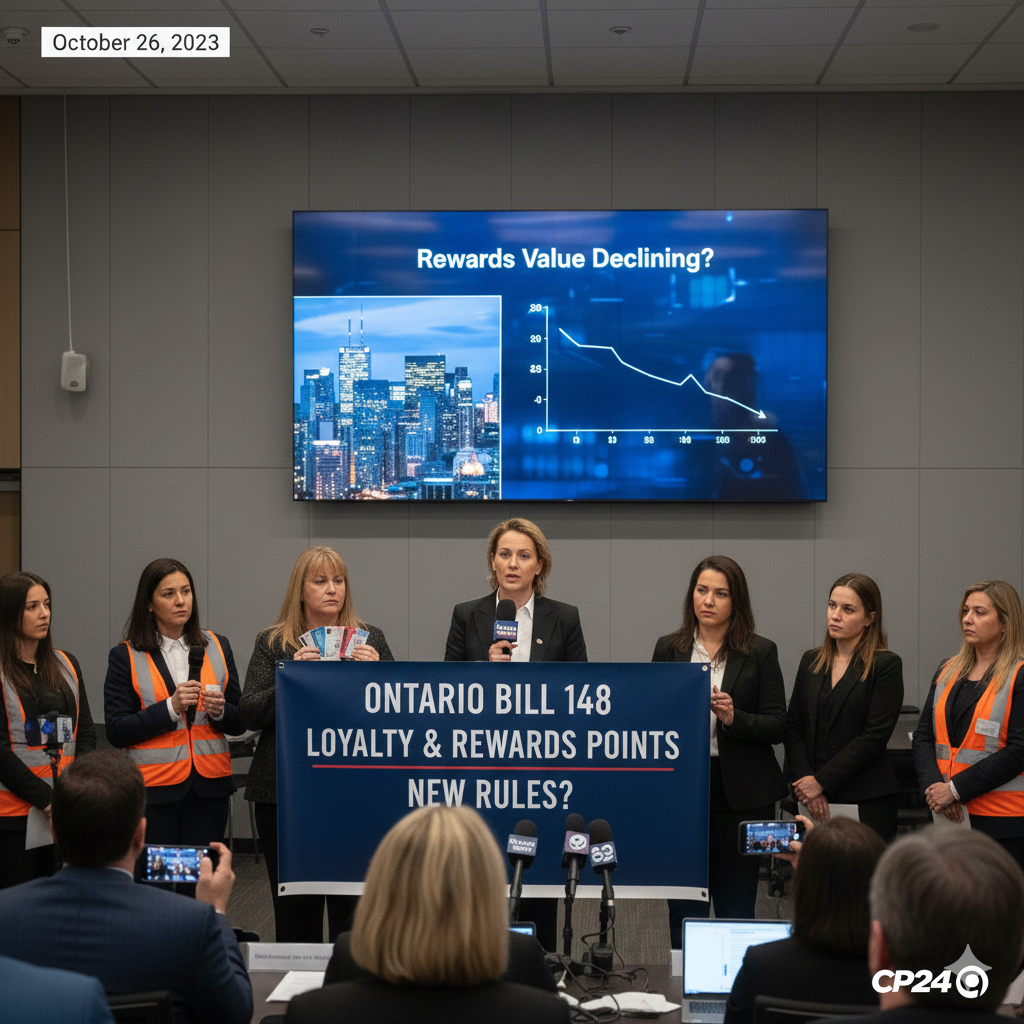
  • Ontario Bill Could Reshape Loyalty-Reward Programs — What Consumers Should Know

    Ontario Bill Could Reshape Loyalty-Reward Programs — What Consumers Should Know

    A proposed bill in Ontario has sparked growing concern from shopper and consumer-rights groups, who warn it may dramatically amend longstanding protections for loyalty and rewards points. While the government maintains the legislation is meant to modernize and clarify consumer-protection rules, critics argue it could quietly pave the way for retailers and businesses to impose expiry dates on points — undermining a benefit that many Ontarians rely on for discounts, groceries, travel, and more.

    As Ottawa-area consumers weigh the potential impact, the debate raises broader questions about fairness, transparency, and the value of “earned rewards” in a time of rising living costs.


    What the Current Law Says — and What’s Changing

    History of Rewards-Point Protections

    Under current legislative rules in Ontario, reward points earned through loyalty programs typically cannot expire simply because time has passed — a protection designed to safeguard consumers who accumulate points over long periods.

    The core of these protections stems from the Protecting Rewards Points Act (enacted via an amendment to the Consumer Protection Act, 2002). That law explicitly prohibits suppliers from writing into consumer agreements any clause that causes rewards points to expire merely due to the passage of time.

    Exceptions to the no-expiry rule are limited, including cases of account inactivity (if a program’s terms allow it), or where points are only redeemable for very low-value items (under a threshold such as $50).

    Thus, for many Ontarians, the points they earn through grocery purchases, retail shopping, or travel benefits carry a lasting value — often treated like a form of savings or credit.

    The New Legislation Under Debate

    That legal framework is now under pressure. The government has recently proposed substantial amendments as part of a broader legislative package, Bill 46 (the “Protect Ontario by Cutting Red Tape Act, 2025”). Schedule 5 of this bill would rewrite how rewards-points agreements are regulated under the Consumer Protection Act.

    Under the proposed changes:

    • All agreements offering rewards points — new or existing — would need to comply with new regulatory standards, possibly including clearer disclosure and revised terms.

    • The bill would permit the government to define, through future regulations, the conditions under which points could expire, be cancelled, or suspended.

    • Consumers could request reinstatement of points that they believe were wrongly expired, cancelled, or suspended. If a dispute arises, they would have a private right of action to recover lost points.

    • The government may even apply new rules retroactively, meaning rewards programs signed prior to the bill’s passage could be affected.

    In effect, while the earlier law banned expiry “based only on the passage of time,” Bill 46 would shift the legal basis: expiry might become possible if regulations allow it. This has triggered alarm among consumer-rights advocates and everyday shoppers alike.


    Why the Proposed Changes Are Triggering Alarm

    Risk to Consumers’ Hard-Earned Value

    For many Ontarians, loyalty points represent more than marketing perks: they are a form of earned value. In tough economic times — when groceries, rent, and other essential expenses stretch household budgets — loyalty points often help families offset costs or make occasional splurges more affordable.

    Critics argue that by allowing retailers or programs to set expiry rules, the bill could strip away that value overnight. This is especially worrisome for people who accumulate points slowly over years — for example, through grocery shopping, credit-card rewards, or gas-station loyalty programs.

    “As it is written, this bill would give corporations the power to wipe out the value you earned,” one opposition legislator warned recently during debates at the provincial legislature.

    Lack of Consumer Clarity and Potential Unfairness

    Another concern centers on transparency. Unless strict regulations mandate clear disclosure of new expiry or suspension rules, companies may include complex or obscure terms in fine print — potentially leaving consumers unaware until their points vanish.

    Moreover, because the proposed law would allow future regulatory changes and possibly retroactive effects, consumers may find themselves subject to a shifting landscape of rights and obligations — undermining the stability of loyalty programs many expected to remain dependable.

    Legal and Contractual Uncertainty

    Legal experts also signal alarm. According to the Ontario Bar Association (OBA), retroactively changing the rights embedded in existing consumer agreements undermines fundamental legal principles.

    In practice, this could mean that someone with points earned under a program in 2022, expecting them to persist indefinitely, might find those points wiped out in 2026 because of new regulations — a scenario that many consider unfair and misleading.


    Government’s Defence: Modernization, Not Erosion

    The provincial government, however, maintains that this legislation is not intended to erode consumer protections — but to modernize them.

    According to official statements, Bill 46 is designed to simplify the existing framework, improve regulatory clarity for businesses, and ensure that loyalty-point agreements are up to date with modern retail practices.

    The government also emphasizes that the bill does not necessarily mean that point expiry will be reintroduced across the board — rather, it enables the possibility of more regulated and transparent terms for loyalty programs going forward, while still preserving certain protections.

    Moreover, businesses that offer loyalty points will be required to meet disclosure requirements under the new law, which supporters argue could lead to clearer communication about how and when points may expire or be cancelled.

    Government officials point out that in the current framework, while time-based expiry is forbidden, points can already be lost under certain conditions — for example if an account becomes inactive or if the program closes. The proposed amendments would instead allow a standardized set of regulated conditions for expiry or suspension, which they argue could, in the long run, benefit both consumers and businesses.


    What Could Change — And What Consumers Should Watch

    Possibility of Expiry, Suspension or Cancellation

    If Bill 46 passes and the government enacts regulations, loyalty programs may begin to impose expiry dates or inactivity-based point cancellations. This could affect many types of points: grocery loyalty rewards, credit-card miles, retail-store points, or travel-related programs — effectively transforming them from long-term savings to short-term perks.

    Need for Clear Disclosure

    Under the new regime, businesses will likely be required to disclose key information about their loyalty programs: how points are earned, when they may expire or be suspended, and any conditions tied to account activity or redemption thresholds. Consumers should demand clear, simple language in membership agreements going forward.

    Right to Reinstatement and Legal Recourse

    One of the more consumer-friendly aspects of the proposed law is that it allows consumers to request reinstatement of points lost improperly, and gives them a private right of action if a business fails to comply. This could pressure companies to be more transparent and fair in their policies.

    Potential Retroactive Impact

    Perhaps most controversially, the legislation may allow changes to apply retroactively — changing the rules for people who signed up years ago under a different expectation. Why this matters: someone who believed their points wouldn’t expire may suddenly find them at risk. This prospect has drawn sharp criticism from legal experts and consumer advocates alike.


    Voices of Concern: Who Is Speaking Out

    Opposition parties in the provincial legislature have been vocal. During recent debates, one member described the proposal as “a quiet rollback on consumer protections,” especially concerning for families using points for essentials like groceries and holiday gifts.

    Meanwhile, several consumer-rights and advocacy groups are urging Ontarians to pay attention — and to speak out before the bill becomes law. They argue that even quietly allowing expiry could disproportionately harm lower- and middle-income families who depend on accumulating rewards over time.

    Legal experts from the Ontario Bar Association caution that retroactive changes to contract rights undermine trust in the legal system and risk destabilizing relationships between businesses and consumers.

    On the business side, many retailers and loyalty-program operators are watching closely. Because loyalty points are often built into long-term customer relationships, any changes could force companies to rethink how they structure programs, communicate with members, and manage their liabilities. The lack of clarity over prospective regulations — and how sweeping any new policy might be — adds to the uncertainty.


    What Ontarian Consumers Should Do Now

    Given the uncertainty, experts recommend that residents of Ontario take several precautionary steps:

    • Check your loyalty accounts: Review your current loyalty programs (grocery stores, credit cards, travel points, retail clubs) and note down your point balances.

    • Read terms and conditions carefully: As many businesses may update their loyalty-program rules soon, pay attention to changes in terms — especially any clauses about expiration, inactivity, or account suspension.

    • Redeem what you value sooner rather than later: If possible, consider using points before new laws or regulations change the rules.

    • Stay alert for updates: Keep an eye on news related to Bill 46 and any regulations issued under it. Changes could come quickly — and some may apply retroactively.

    • Advocate for clear consumer protections: Support calls for regulations that preserve point value, guarantee disclosures, and prevent unfair expiry or cancellation.


    Conclusion: A Moment of Reckoning for Loyalty Programs

    The proposed amendments to Ontario’s consumer-protection rules mark a significant turning point in how loyalty programs might operate in the province. What was once a stable protection — the guarantee that earned reward points wouldn’t fade simply because time passed — may soon become subject to new, potentially complex regulatory conditions.

    For consumers who have long relied on loyalty points as a form of value — whether for groceries, essentials, travel, or occasional luxuries — the stakes are high. The uncertainty, the risk of retroactive application, and the potential for points to be cancelled or expire could undermine thousands of dollars worth of perceived savings.

    Supporters of the changes argue the new rules will modernize the system, provide clearer regulation for businesses and consumers alike, and permit flexibility as retail habits evolve. But many are not convinced that this will lead to stronger protections — or fair outcomes — for everyday Ontarians.

    At a time when families are feeling squeezed by inflation, housing costs, and rising expenses, the potential loss of loyalty-point value represents more than a policy technicality — it could make a real difference in someone’s ability to stretch a budget, put food on the table, or hold onto small savings.

    Whether Bill 46 becomes law as currently drafted — or whether consumer pushback leads to amendments preserving point protections — remains to be seen. What is clear already, however, is that this debate has put the future of loyalty programs in Ontario squarely into the spotlight.

  • Dozens of Women Prepare Class Action Lawsuit Over Alleged Negligence in Toronto’s Nightlife Industry

    Dozens of Women Prepare Class Action Lawsuit Over Alleged Negligence in Toronto’s Nightlife Industry

    A growing group of women is preparing to launch a proposed class action lawsuit against a Toronto club promoter and several prominent nightlife companies, alleging systemic negligence that, they say, allowed decades of sexual violence to occur inside some of the city’s most popular venues. The legal action is being coordinated by End Violence Everywhere (EVE), a Canadian advocacy organization supporting survivors of abuse.

    At the centre of the lawsuit is Mark Holland, a well-known Toronto club promoter who was convicted of sexual assault in 2020 and ordered to remain on the sex offender registry for 20 years. The proposed lawsuit also names multiple hospitality companies that allegedly continued to employ or work with Holland despite what EVE describes as knowledge — or at least reasonable awareness — of his past misconduct.

    While no formal claim has yet been filed and the allegations have not been tested in court, EVE says dozens of women have now come forward with similar accounts of harm, identifying what they describe as a long-standing pattern of abuse enabled by the city’s nightlife ecosystem.

    The unfolding situation has once again raised serious questions about accountability, corporate responsibility, and safety within Toronto’s bar and nightclub scene.

    Advocacy Group Moves Forward With Proposed Legal Action

    End Violence Everywhere (EVE) announced its intention to pursue a class action lawsuit against Holland and several hospitality companies believed to have employed him or provided him access to their venues over the years. According to a draft of the proposed lawsuit reviewed by CBC News, the companies named include Honeycomb Hospitality, Lobby, INK Entertainment, and Uniq Hospitality.

    The draft alleges that the companies worked with Holland “despite knowledge or constructive knowledge of his past misconduct,” and failed to take reasonable measures to protect patrons from harm.

    “Over the span of nearly two decades, numerous women have reported being sexually assaulted, drugged, or otherwise harmed by Mark Holland,” the draft states. “These incidents followed a consistent pattern, often beginning in VIP areas or at private after-parties and ending in secluded areas of the venues or affiliated residences.”

    EVE founder Cait Alexander announced that the organization is currently representing approximately 30 women with direct allegations involving Holland. In addition, more than 20 others have shared experiences involving different individuals whom EVE claims were also permitted to operate within the same nightlife spaces despite known risks.

    Deadline Issued to Companies Named in the Draft

    Alexander said that the proposed legal action can still be prevented if the companies involved meet specific conditions by December 1. These include issuing a public apology, acknowledging responsibility, and signing a formal agreement with EVE outlining changes to ensure safety for women within their establishments.

    “For too long, survivors have been silenced, ignored, or pushed aside while profits came first,” Alexander said during a news conference. “These companies cannot claim innocence when they were warned, informed, or otherwise made aware of the danger they were hosting inside their own spaces.”

    So far, Honeycomb Hospitality has stated that it has “no comment at this time.” The other named companies had not provided public responses as of the latest update.

    Allegations Point to a Pattern of Abuse Spanning Decades

    According to EVE, the reported incidents date back as far as the late 1990s and stretch into 2025. After Holland’s most recent criminal charges in August 2025 — which reportedly included three counts of sexual assault and one count of disobeying a court order — Alexander posted a warning on social media. The response, she says, was overwhelming.

    She received thousands of messages from individuals describing their experiences in Toronto’s nightlife scene. From this, EVE compiled a detailed list of more than 50 potential victims, several alleged perpetrators, and numerous industry insiders who were allegedly aware of what was happening but failed to intervene.

    Despite these serious allegations, Holland was reportedly able to continue working in nightlife settings after being released on bail. His defence lawyer, Randall Barrs, has stated that Holland’s bail conditions did not restrict where he could work.

    Barrs acknowledged that there have been multiple accusations against his client in the past but emphasized that Holland was acquitted of several historic charges.

    Legal Background and Prior Convictions

    Holland’s legal history includes a mixture of convictions, acquittals, and dismissed charges. In 2016, he was charged in connection with an alleged sexual assault involving an 18-year-old woman at a photoshoot. He was later acquitted of that charge.

    Following that investigation, Toronto police received information suggesting there may be additional victims. This led to four more charges related to incidents that allegedly occurred between 1994 and 2014. Of these, one resulted in a 2020 conviction involving an assault in a nightclub stairwell in 2008.

    After delays caused by the COVID-19 pandemic, Holland was sentenced in 2022. The court ordered him to remain on the sex offender registry for 20 years and imposed eight months of conditional imprisonment, including house arrest.

    Two other allegations were dismissed in court, and a fourth was downgraded to a common assault charge, which was resolved through a peace bond agreement. Barrs has pointed to this mixed legal outcome as evidence that further judgment should be reserved for the courts.

    “In this country, we have a presumption of innocence,” Barrs said in a written statement. “Mr. Holland has one conviction. The rest have been acquitted. These public attacks have cost him his livelihood and compromised his ability to receive a fair trial.”

    Survivors Share Emotional Testimonies

    At EVE’s recent news conference, two women publicly shared their experiences for the first time. Although they did not reveal their identities, they described the profound emotional and psychological impact that has stayed with them for years.

    One woman said she was assaulted by Holland during a 2016 modelling photoshoot. Although the case ended in an acquittal, she explained that learning about his more recent charges caused old trauma to resurface.

    “I am devastated to know that he is still out there, and even more devastated that people continue to enable him,” she said. “Why are men like this protected more than the women they harm?”

    Another woman spoke about an alleged assault that took place nearly 18 years ago. She reported the incident to police in 2016, but the case did not result in a conviction. After returning to Toronto in 2025, she was shocked to learn that Holland was allegedly still working in the same industry.

    “Imagine knowing that despite decades of allegations, trials, and even a conviction, he was still being welcomed into these spaces,” she said. “That is not just one person failing — that is a system failing.”

    Demands for Industry-Wide Reform

    Beyond monetary damages, the proposed class action lawsuit seeks legal commitments to reform safety policies within Toronto’s nightlife industry. EVE is demanding that companies ban convicted sexual offenders from working or collaborating with their venues and implement stronger protective measures for patrons.

    Lawyer Kathryn Marshall, who is representing EVE in the proposed lawsuit, described the situation as a wake-up call for the entire hospitality sector.

    “These businesses turned their clubs into hunting grounds by ignoring clear warning signs,” Marshall said. “Profit was prioritized over people. This case must become the catalyst for systemic change.”

    Marshall added that the required reforms are not just about one individual, but about addressing a deeply embedded culture of silence and negligence.

    A Broader Conversation on Safety and Accountability

    The proposed lawsuit arrives at a critical moment, as Toronto and other Canadian cities confront rising concerns around gender-based and intimate partner violence. Authorities and advocacy groups have repeatedly warned that more must be done to protect women in public and private spaces.

    While the final outcome of the proposed legal action remains uncertain, one outcome is already clear: more women are stepping forward, more stories are being heard, and longstanding structures that once allowed silence are now being challenged.

    For survivors, this moment represents more than just legal action — it represents a chance for recognition, accountability, and transformation.

    Conclusion: A Turning Point for Toronto’s Nightlife Industry

    Although the class action lawsuit has not yet been formally filed, its impact is already being felt throughout Toronto’s nightlife community. Allegations of negligence against powerful hospitality companies have sparked debate, raised public awareness, and intensified demands for reform.

    If the case proceeds, it could become one of the most significant legal challenges ever faced by the city’s entertainment industry. Even if it is resolved outside of court, it has already opened a critical conversation about responsibility, trust, and the duty of care owed to every person who walks through a club or restaurant door.

    For the dozens of women preparing to take legal action, the goal is clear: ensuring that no one else has to endure what they experienced, and that the spaces meant for enjoyment and celebration are never again allowed to become places of fear.

  • Toronto Dismantles All Speed Cameras: How a Safety Initiative Was Erased in Less Than a Year

    Toronto Dismantles All Speed Cameras: How a Safety Initiative Was Erased in Less Than a Year

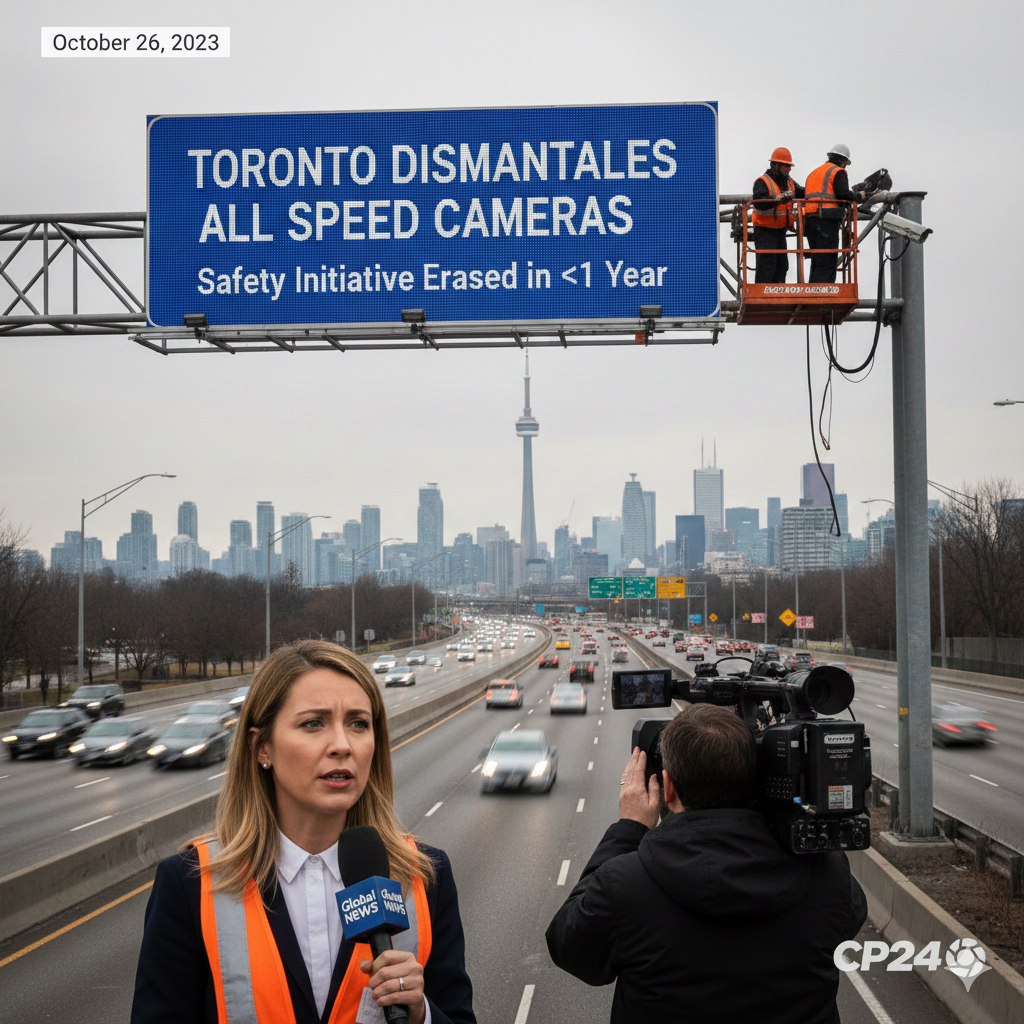
    In an unprecedented reversal of a major road safety policy, every automated speed enforcement camera in Toronto has now been removed. Once a central piece of the city’s strategy to curb dangerous driving and protect pedestrians, the cameras were dismantled by the very vendor that installed them, bringing a turbulent chapter in municipal road safety to a close.

    The sudden disappearance of the devices is not the result of vandalism, technical failures, or city-led budget cuts. Instead, it is the endpoint of a politically charged campaign led by Ontario Premier Doug Ford, who repeatedly referred to the devices as a revenue-generating “cash grab” rather than a life-saving safety measure. In less than twelve months, Toronto went from expanding its automated enforcement program to eliminating it entirely.

    This is the story of how that happened — and what it means for the future of road safety in Ontario’s largest city.


    A Tragedy That Prompted Change

    The push toward automated speed enforcement was rooted in a devastating and avoidable tragedy. In the fall of 2021, Valdemar Avila, 71, and his wife, Fatima Avila, 69, were sitting in slow-moving rush-hour traffic on Parkside Drive, a busy roadway bordering High Park. Although the speed limit was clearly marked at 50 kilometres per hour, a BMW driven by 38-year-old Artur Kotula struck their Toyota from behind at more than twice the permitted speed.

    The impact was catastrophic. Valdemar died at the scene. His wife, who had immigrated to Canada with him in the 1970s, later died in hospital from her injuries. The incident sent shockwaves through the community and across the city.

    In the aftermath, Toronto lowered the speed limit on Parkside Drive to 40 km/h and installed a speed camera in an effort to prevent similar tragedies. The results were immediate and striking. Between April 2022 and March 2023, the camera alone issued 24,556 speeding tickets.

    Kotula was eventually sentenced to six-and-a-half years in prison. The presiding judge described his behaviour as a “crime of stupidity,” underscoring the needless nature of the loss.


    The Rise — and Target — of Toronto’s Speed Cameras

    At first, speed cameras were seen by municipal officials and safety advocates as a logical and effective response to the city’s persistent speeding problem. By using automated technology to monitor speed in school zones and high-risk corridors, the city was attempting to change driver behavior without relying solely on police officers.

    Rather than reducing the program, Toronto moved to expand it. After initial deployment of 75 cameras across the city, officials announced plans to double the number to 150. The logic was simple: fewer speeding vehicles would lead to safer streets, and ideally, fewer tickets would eventually be issued.

    “If these cameras generated no revenue at all, that would mean the program was working,” said Barbara Gray, then-general manager of the city’s transportation division.

    But not everyone saw the cameras as a safety tool. Increasingly, frustration and anger from certain drivers began to build, particularly in areas where repeat fines were common. Parkside Drive, the very site of the 2021 fatal collision, became a focal point of protest.

    Repeated Vandalism Signals Growing Anger

    By December 2024, the first act of direct defiance occurred. The Parkside Drive camera was cut down, dragged through mud, and dumped into High Park’s duck pond. It was a dramatic and symbolic rejection of the city’s efforts to slow drivers down.

    That single act set off a wave of vandalism. Throughout 2025, speed cameras across Toronto were repeatedly targeted. Some were cut, others destroyed, and many had to be repaired or replaced. By early September, in one coordinated overnight spree, 16 cameras were taken down in multiple neighbourhoods across the city.

    The destruction pointed to a deeper divide: while safety advocates praised the program, a vocal group of opponents viewed the cameras as unfair, invasive, and focused on profit rather than public welfare.


    Premier Ford Enters the Battle

    The very next day after the mass destruction of cameras in September, Premier Doug Ford publicly weighed in. His remarks left little doubt about where he stood.

    “Hopefully the cities will get rid of them,” he said. “Or I’m going to help them get rid of them very shortly.”

    From that moment, the fate of Toronto’s speed cameras was effectively sealed.

    Ford doubled down on his position in the weeks that followed, arguing that physical traffic-calming infrastructure, such as speed bumps and signage, was more effective than automated ticketing systems. However, road safety experts were quick to push back against this argument.

    “You cannot put speed bumps on major arterial roads,” said Linda Rothman, a researcher involved in urban transportation studies. “In the exact places where speeding is most dangerous, speed cameras are one of the few viable tools available.”

    Despite these concerns, the province moved forward.


    What the Research Really Showed

    In the midst of the political debate, a powerful piece of evidence emerged in support of the cameras. A study conducted by researchers from the Hospital for Sick Children (SickKids) and Toronto Metropolitan University examined 250 school zones with speed cameras between July 2020 and December 2022.

    The findings were clear and compelling.

    “We observed a significant reduction in vehicle speeds,” said Dr. Andrew Howard, head of orthopedic surgery at SickKids and the study’s lead author. “What was especially encouraging was that the fastest drivers showed the greatest decrease in speed.”

    In simple terms, the cameras were doing exactly what they were designed to do: slow cars down in places where children and pedestrians are most vulnerable.

    Ontario’s police chiefs supported the findings, releasing a statement highlighting the effectiveness of Automated Speed Enforcement (ASE) tools in changing driver behavior and improving safety for all road users.

    Still, the political momentum against the program continued to grow.


    An Attempt to Compromise Falls Flat

    Toronto Mayor Olivia Chow made several efforts to find middle ground with the provincial government. She proposed softer measures, including a grace period between the issuance of a first and second ticket. Her goal was to reduce the perception of the program as punitive while maintaining its safety benefits.

    Additionally, mayors from other major Ontario cities joined together, writing a letter to Premier Ford in October. They warned that eliminating speed cameras would undocut years of progress in school zone safety and expose pedestrians, cyclists, and children to increased risks.

    None of these efforts changed the outcome.

    On October 20, the province introduced Bill 56 — formal legislation to end automated speed enforcement programs across Ontario.

    With that, the decision was no longer in Toronto’s hands.


    The Final Uninstall

    By the end of November, every speed camera in the city had been removed. The process was carried out by Verra Mobility, the Arizona-based company that had supplied and maintained the equipment for Toronto.

    In a statement, Verra Mobility confirmed it would be exiting the Ontario market altogether. While acknowledging the legislative decision, the company stood by the effectiveness of its technology.

    “Speed cameras have a proven track record of improving road safety and reducing serious collisions,” the statement read.

    Unlike past disappearances sparked by midnight sabotage, this time the process was orderly, official, and final. The cameras are gone — and there are currently no plans for their return.


    What Happens Next for Road Safety in Toronto?

    With automated enforcement off the table, the province has committed $210 million to municipalities for alternative traffic-calming strategies. These include speed bumps, increased signage, road narrowing, and other physical measures designed to slow cars down.

    However, many urban planners and safety experts remain skeptical that these steps alone can replace the continuous, data-driven enforcement provided by cameras, particularly on busy city roads where physical modifications may be impractical or ineffective.

    Residents, too, remain divided. Some have welcomed the decision, seeing it as a win for drivers. Others worry that, without constant monitoring, speeding may once again become the norm — and that more lives could be placed at risk.


    Conclusion: A City at a Crossroads

    Toronto’s experience with speed cameras is more than a story about traffic tickets. It is a reflection of how public safety, politics, public opinion, and evidence can collide — and sometimes override one another.

    What began as a response to tragedy evolved into one of the city’s most ambitious safety programs, backed by research and supported by medical and law enforcement communities. Yet, in less than a year, it was undone by political will and growing public resistance.

    Whether Toronto’s streets will become more dangerous or simply different in design remains to be seen. But one thing is certain: the debate over how best to keep roads safe in a growing urban environment is far from over.

  • Complex, Slow-Burning Fire at Thorncliffe Park Towers Leaves Hundreds Displaced With No Clear Timeline for Return

    Complex, Slow-Burning Fire at Thorncliffe Park Towers Leaves Hundreds Displaced With No Clear Timeline for Return

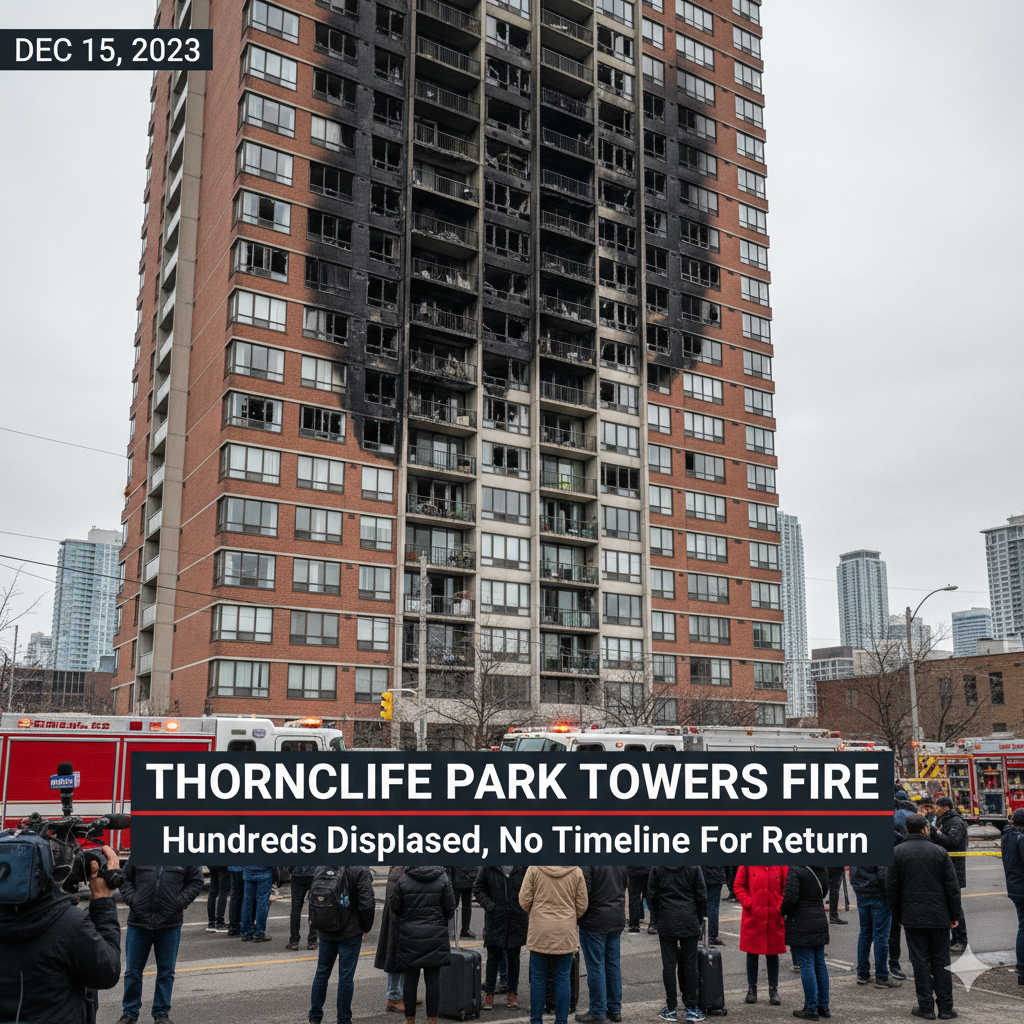
    Residents of two highrise apartment buildings in Toronto’s Thorncliffe Park neighbourhood are facing another difficult day away from home as firefighters continue to battle a stubborn and unusually complex fire that has been smoldering for several days. What began as a hidden blaze inside the walls of the buildings has now developed into one of the most challenging incidents Toronto Fire Services has dealt with in recent memory.

    Five days after the initial evacuation, hundreds of tenants remain displaced, uncertain of when they will be able to return to their apartments. The slow-moving emergency, which lacks the dramatic visuals of a traditional fire but poses unique technical challenges, has required round-the-clock attention from emergency crews, engineers, and support agencies.

    Fire Hidden Within Walls Continues to Burn

    The fire originated inside the walls shared between two connected apartment towers located near the intersection of Thorncliffe Park Drive and Overlea Boulevard. According to Toronto Fire Chief Jim Jessop, the blaze involves highly combustible particle board that had been installed between an expansion joint linking the two buildings.

    This type of construction material is burning slowly, much like the ember of a cigar, Jessop explained. While there are no visible flames and no signs of immediate structural damage, the hidden nature of the fire has made it exceptionally difficult for crews to access and fully extinguish the source.

    “It is one of the more complex fires our service has ever seen,” Jessop said during a briefing. “We now know exactly what is burning and where it is located, but reaching it is proving to be an enormous challenge.”

    Firefighters have been working continuously since the incident began, carefully exploring ways to reach the material without putting the structure or personnel at risk. The situation is being assessed hour by hour, in coordination with engineers and safety experts who are looking for safe and effective methods to eliminate the hidden danger.

    No Immediate Threat, But No Timeline Either

    Although the fire is not currently producing open flames, smoke, or visible damage, officials stress that it must be fully extinguished before residents can safely return. Chief Jessop made it clear that while there is no immediate risk of collapse or catastrophic failure, allowing people back into the buildings before the problem is resolved could lead to further danger.

    At this time, there is still no firm estimate on how long it will take to completely eliminate the fire. Even once it is declared out, residents will have to wait at least 24 additional hours before they are allowed to re-enter their homes. This period is necessary to ensure the area is safe, stable, and free from lingering hazards.

    For many residents, the lack of a clear timeline has been one of the hardest aspects of the ordeal.

    Hundreds of Families Displaced and Living in Hotels

    The ongoing emergency has forced the evacuation of approximately 70 units across the two buildings, impacting a total of 141 households — or nearly 300 residents. With no ability to return home, most of these residents are currently staying in hotels, arranged with the support of the Canadian Red Cross and Toronto Emergency Management.

    As of Monday, 117 hotel rooms had been secured to accommodate displaced individuals and families. The Red Cross, alongside other agencies, has been providing food, temporary housing, and essential services during this time.

    Toronto Emergency Management officials say they are working closely with building management and community organizations to ensure that every resident receives the support they need.

    Community Support Keeps Neighbours Connected

    Despite the disruption, there has been a strong sense of community throughout the crisis. Many residents have remained in constant communication with one another through group chats, emails, and phone calls. Neighbours have been checking in, sharing information, and offering support to those who are elderly or require additional assistance.

    One resident, identified only as May for privacy reasons, described the overwhelming spirit of togetherness that has emerged during this difficult time.

    “I’m more than thankful for the community that I live in,” she said in an interview. “Everyone came together to support each other.”

    May also works for The Neighbourhood Organization, which has stepped in to assist with coordinating aid services for evacuees. The organization has partnered with Toronto Emergency Management and the Canadian Red Cross to conduct wellness checks and ensure that seniors and vulnerable residents are receiving proper care.

    Support for Vulnerable Residents

    The apartment buildings are home to a diverse population, including many seniors and individuals with health or mobility challenges. Community workers have placed a particular focus on ensuring that these residents are not isolated or forgotten amidst the chaos.

    Wellness checks, transportation assistance, and emotional support are being provided as people wait in temporary housing. In some cases, shuttle buses have escorted residents back to the buildings to retrieve essential personal belongings, such as medications, important documents, clothing, and baby supplies.

    These controlled, limited visits are being conducted with safety as the highest priority.

    A Fire That Looks Deceptively Quiet

    One of the most unusual aspects of the situation is how calm the site appears to passersby. Without large flames or thick columns of smoke, the scene does not resemble a typical five-alarm fire. Aside from a visible command station, emergency vehicles, and workers entering and exiting the area, little seems out of place.

    Local councillor Rachel Chernos Lin commented on the unusual visual impact of the incident.

    “If you were to walk past the building, you wouldn’t realize anything was wrong,” she said. “It is very different from what people usually expect when they hear the word ‘fire.’”

    However, she emphasized that the situation is absolutely serious and that residents are understandably anxious as the days pass. She praised the response from city agencies and community partners, calling their collaboration “exceptional.”

    Firefighters Work Around the Clock With Engineers

    Behind the scenes, Toronto Fire Services continues to explore complex technical solutions. Removing interior walls or cutting through certain structural sections carries risk and must be evaluated carefully. Engineers are being consulted to determine the safest way to access the burning material without compromising the integrity of the buildings.

    Chief Jessop, who has spent roughly 30 years in the fire service, said he had never encountered a similar situation in his career. The slow, stubborn nature of the fire combined with the unique construction features of the building have created a rare and complicated challenge.

    Nevertheless, crews have not stopped trying.

    “We’ve been trying everything,” Jessop said. “Our teams are working around the clock to isolate this material and put it out, but it’s not something that can be rushed.”

    Cause Still Under Investigation

    At present, the exact cause of the fire remains unknown. Investigators will begin a full examination once the material has been fully extinguished and the site is deemed safe for detailed inspection. Only then will authorities be able to determine how the fire started and whether any preventative measures can be taken in the future.

    For now, the focus remains on containment, safety, and supporting residents through the disruption.

    Residents Waiting for Stability and Answers

    As winter approaches and the holiday season draws near, the uncertainty makes this situation even more difficult for families who just want to return to the comfort and security of their homes. Many were forced to leave in a hurry, with little time to prepare or gather their belongings.

    The emotional toll is evident, but so is the resilience of the Thorncliffe Park community. While they wait for official updates, residents continue to rely on one another, drawing strength from a shared sense of patience and unity.

    City officials and emergency responders have thanked residents for their cooperation and understanding during this unsettling time, acknowledging that being displaced — especially in the middle of the night and in cold weather — is far from easy.

    Conclusion: A Rare and Complex Emergency Still Unfolding

    The Thorncliffe Park fire is a powerful reminder that not all emergencies are visible to the eye. A hidden, slow-burning threat inside the walls of a building has uprooted hundreds of lives and demanded an extraordinary response from first responders and support agencies.

    While the absence of visible flames may give the impression that the danger has passed, the situation remains unresolved. Until the last ember of the concealed material is extinguished and the buildings are thoroughly inspected, residents will have to remain in temporary accommodations.

    In the meantime, Toronto Fire Services, emergency management teams, community organizations, and local leaders continue to work side by side, not only to solve an engineering puzzle but also to protect and support a community in limbo.

    For the families of Thorncliffe Park, the hope is simple: a safe return home, as soon as possible.

  • Escalating Food Bank Usage in Ontario Highlights Deepening Cost-of-Living Crisis

    Escalating Food Bank Usage in Ontario Highlights Deepening Cost-of-Living Crisis

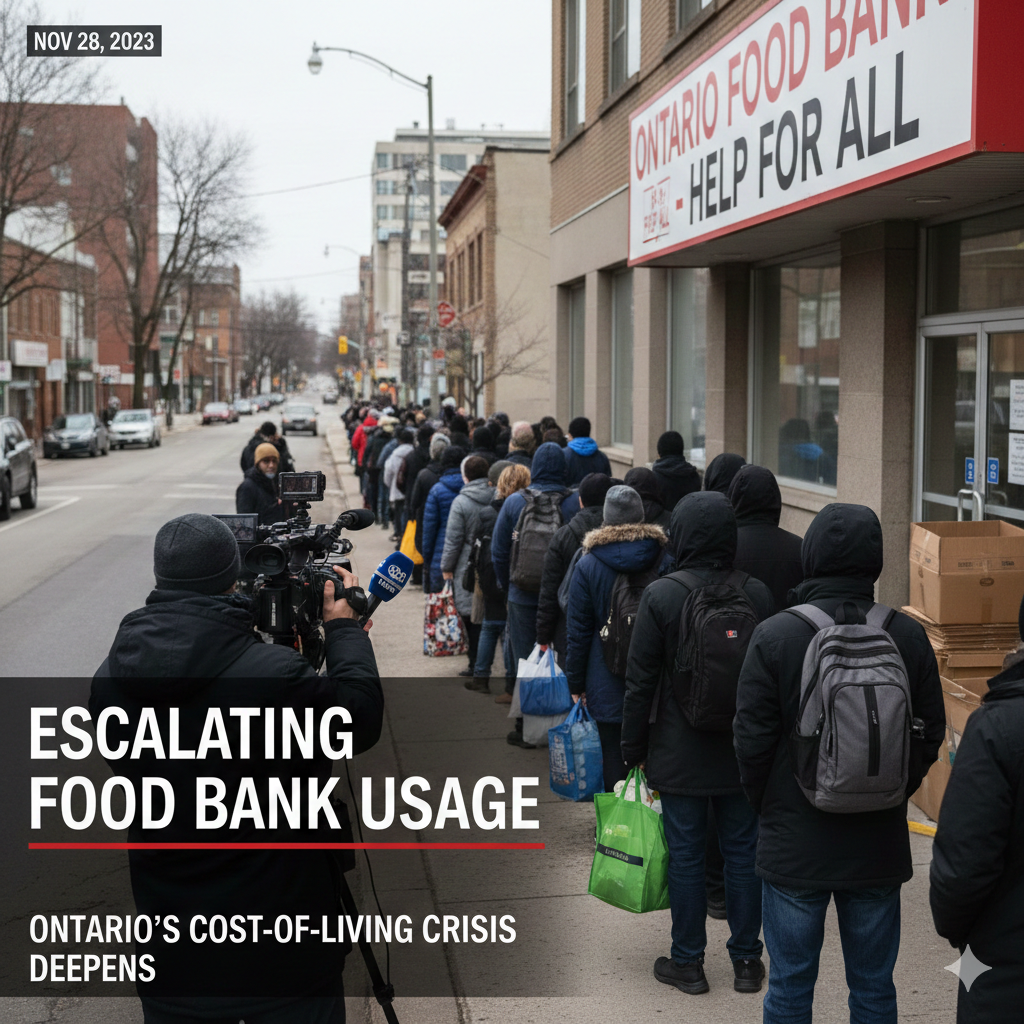
    Ontario is facing an unprecedented rise in food insecurity, with more than one million residents relying on food banks over the past year, according to a new report from Feed Ontario. While the figures are staggering, experts working on the frontline say the reality is something they witness every single day — and the situation continues to worsen.

    The 2025 Hunger Report paints a stark picture of life in the province, revealing that food bank usage has reached historic highs. Between April 1, 2024, and March 31, 2025, Ontarians made approximately 8.7 million visits to food banks, representing a 13 per cent increase from the previous year. This marks the ninth consecutive year of rising demand and sets a new record for food bank usage in the province.

    For organizations like Toronto’s Daily Bread Food Bank, the data simply confirms what they already know: more people than ever are struggling to afford basic necessities.

    Frontline Workers See the Crisis Unfold Every Day

    Neil Hetherington, Chief Executive Officer of Toronto’s Daily Bread Food Bank, described the findings as disheartening but not surprising. According to him, the numbers reflect an ongoing crisis that his organization has been trying to manage for years.

    “We see it here every single day at the food bank,” Hetherington said. “It’s been a real struggle to make sure we can meet the growing need.”

    He explained that the scale of demand has become difficult to comprehend. The number of clients served by Daily Bread each month is so high that it would be enough to fill the Rogers Centre — not just once, but eight times.

    One in Ten Torontonians Now Rely on Food Banks

    Daily Bread estimates that more than one in every 10 people living in Toronto now depends on a food bank to get by. Just three years ago, that number was closer to one in 20. The trend shows a rapid and alarming increase, revealing how quickly families and individuals can slip into food insecurity as living costs continue to rise.

    Children now make up approximately one in four people accessing food bank services in the city. This signals a growing impact on families with young dependents, many of whom may already be facing challenges around housing, childcare, and access to affordable education and healthcare.

    Who Is Using Food Banks in Ontario?

    The Feed Ontario report offers insight into the demographics of people turning to food assistance. Contrary to common myths, those using food banks are not limited to any single group. Instead, the data shows a wide cross-section of Ontarians are affected.

    First-Time Users Are Increasing

    One in three people who accessed a food bank over the past year were doing so for the first time. This suggests that many households that previously managed without assistance can no longer keep up with rising costs.

    Children and People with Disabilities Among the Most Affected

    The report found that:

    • One in three food bank users is under the age of 18.

    • One in three individuals accessing services has a disability.

    • One in four users is employed but still unable to earn enough to cover basic living expenses.

    Three out of every four people who rely on food banks are tenants. With rental costs continuing to soar across Ontario, many households are forced to choose between paying rent and buying groceries.

    Senior Usage Has Doubled in Five Years

    One of the most concerning findings is the sharp rise in seniors accessing food banks. The number of older adults seeking support has doubled compared to five years ago. Fixed incomes, such as pensions, have not kept pace with inflation or the skyrocketing cost of housing, utilities, medication, and food.

    This has left many seniors — who once lived independently without assistance — now relying on food banks to meet their basic needs.

    Rising Need Without Rising Supply

    While the number of people needing help is increasing rapidly, the amount of food available is not growing at the same pace. Hetherington pointed out that Daily Bread is not distributing significantly more food than before — the existing resources are simply being spread across a much larger number of people.

    Each client typically receives enough food to last for three days per week, but as demand grows, the pressure on supply chains, donations, and volunteers also intensifies.

    A previous Daily Bread report titled Who’s Hungry, released in October, highlighted a troubling trend: many people are now turning to food banks more frequently and for longer periods of time, even while holding multiple jobs or possessing post-secondary education. Degrees and steady employment, which once acted as shields against poverty, are no longer guarantees of financial security.

    Warning Signs of a Larger Social Crisis

    The Hunger Report links the escalating use of food banks to broader systemic issues. Without meaningful intervention, experts warn that Ontario could see an increase in homelessness, greater strain on the health care system, and rising instability in communities throughout the province.

    Food insecurity is rarely an isolated problem. It often intersects with mental health challenges, chronic illness, unstable housing, and unemployment or underemployment. As more people struggle to meet their basic needs, the social safety net becomes stretched thinner.

    Advocates stress that food banks are meant to be a temporary support, not a permanent solution. The increasing reliance on them indicates deeper, unresolved issues related to poverty and inequality.

    Political Response in the Legislature

    The findings of the Feed Ontario report quickly made their way into Queen’s Park, where opposition Members of Provincial Parliament questioned the government about its strategy to address the growing risk of homelessness and hunger.

    Government Focuses on Jobs and Infrastructure

    Ontario Premier Doug Ford defended his government’s economic approach, emphasizing large-scale infrastructure investments and job creation. He reiterated that the province is investing around $220 billion in infrastructure projects, including the construction of hospitals, roads, bridges, and schools.

    According to Ford, these projects are designed to strengthen the economy and create employment opportunities, which he believes will ultimately reduce poverty levels.

    Affordability Measures Highlighted

    Ontario Finance Minister Peter Bethlenfalvy also responded to concerns, stating that improving affordability has been a key focus of the government since taking office. He pointed to recent measures that, according to the province, have returned approximately $12 billion to Ontarians through various financial relief initiatives.

    However, critics argue that despite these efforts, food bank usage continues to rise — suggesting that current strategies are not reaching the most vulnerable populations effectively.

    Calls for Systemic Change

    Green Party Leader Mike Schreiner responded to the report by calling for immediate implementation of its recommendations. He argued that relying on food banks to fill policy gaps is unsustainable and places unnecessary stress on charitable organizations.

    Schreiner and other advocates have outlined several key actions they believe could reverse the trend:

    Improve Social Assistance Programs

    Current benefit levels for social assistance and disability support are widely seen as insufficient to cover basic living expenses. Increasing these payments could provide immediate relief to thousands of Ontarians living below the poverty line.

    Invest in Affordable Housing

    With housing costs consuming a significant portion of household income, expanding access to safe and affordable housing is considered one of the most effective long-term solutions to food insecurity.

    Support Low-Income Workers

    Allowing low-income individuals to keep more of what they earn by adjusting income thresholds and benefit clawbacks would provide greater financial stability.

    Prioritize Voices With Lived Experience

    Advocates stress the importance of involving people who have experienced poverty and food insecurity in policy discussions, ensuring that solutions are rooted in real-life challenges and practical needs.

    Conclusion: A Crisis That Cannot Be Ignored

    The surge in food bank usage across Ontario is more than just a statistic — it is a reflection of a growing affordability crisis impacting individuals, families, workers, seniors, and children alike. As the cost of living continues to climb faster than wages and benefits, many people are finding themselves trapped in a cycle of financial instability.

    Organizations like Daily Bread Food Bank continue to serve as a crucial lifeline for those in need. However, frontline workers and advocates agree that charity alone cannot solve a structural problem. Without bold and targeted policy changes, rising demand may soon overwhelm a system already stretched to its limits.

    The Hunger Report stands as a warning — and an opportunity. It calls for coordinated action from government leaders, community organizations, and society as a whole to ensure that no one in Ontario has to wonder where their next meal will come from.

  • Local Shopping and Resale Surge as Canadians Hunt for Black Friday Bargains

    Local Shopping and Resale Surge as Canadians Hunt for Black Friday Bargains

    Malls and main streets across Canada were packed with shoppers this week as Black Friday promotions reached their peak, highlighting how Canadians are adapting their shopping habits in response to economic pressure, tariff concerns, and the rising cost of living.

    Once a single, high-energy day of blockbuster deals, Black Friday has evolved into a month-long cycle of rolling discounts that now begins weeks before the day itself. This year, Canadian consumers are responding not only to deep price cuts but also to shifting priorities — looking closer to home for value and exploring resale as an alternative way to stretch their dollars.

    According to a new survey from BMO, financial caution is shaping holiday spending decisions in 2025. While most Canadians plan to spend a similar amount as last year, the way they shop — and where they choose to spend — is changing dramatically.


    Rising Costs Push Canadians to Rethink Holiday Spending

    Inflation, tariff concerns, and ongoing economic uncertainty continue to influence how much Canadians are willing and able to spend on holiday shopping.

    The BMO survey revealed that three in five Canadians plan to adjust their holiday spending this year due to growing financial pressure. Nearly half of respondents admitted that the lure of seasonal discounts often leads them to spend more, or buy more gifts, than they originally intended.

    Retail analyst Bruce Winder explained that while many shoppers expect to spend around the same amount as 2024, the challenge lies in the increased price of goods.

    “Most shoppers today are going to be spending, or anticipate spending, at least what they spent last year,” he said in an interview with CTV News Channel. “But the challenge is that things are decidedly more expensive this year, so shoppers are really on the hunt for bargains.”

    This search for value has created a more strategic consumer — one that compares prices carefully, waits for deeper discounts, and refuses to pay full retail unless necessary.


    Black Friday: No Longer a Day, But a Month-Long Retail Season

    What was once a high-stakes, 24-hour shopping event has now turned into an extended retail marathon.

    Experts say the holiday shopping season effectively begins shortly after Halloween — and in some cases even earlier. Retailers start rolling out promotions weeks ahead of Black Friday, leading to a phenomenon analysts now describe as “discount fatigue.”

    Winder referred to this as a “pervasive creep” in the industry, where markdowns appear earlier every year.

    Holiday deals now stretch from early November through Cyber Monday and beyond, blurring the traditional boundaries of the shopping calendar.

    With the rise of online shopping events such as Amazon Prime Day, mid-season flash sales, and pre-holiday promotions, some Canadians have already completed a significant portion of their gift buying long before Black Friday arrives.

    “Some holiday spending may have happened months ago,” Winder explained.

    As a result, Black Friday is no longer the only focal point — but it still remains a powerful driver of foot traffic and online activity.


    Businesses Lean Into Personalized Marketing

    To capture the attention of increasingly cautious shoppers, retailers are relying heavily on targeted and personalized marketing strategies.

    Retail analyst Liza Amlani said brands are doubling down on direct communication with customers through email offers, app notifications, loyalty programs, and personalized product recommendations.

    “I’m seeing retailer brands lean into personalized marketing to lure customers, either onto websites or into stores,” Amlani said.

    These strategies are especially effective as consumers grow more selective about how they spend. Rather than responding to mass advertisements, shoppers now expect tailored offers that reflect their preferences and buying history.

    Loyalty perks, exclusive discounts, and location-based promotions have become valuable tools in attracting customers during the ultra-competitive holiday season.


    Shift Away From U.S. Retailers Toward Local Canadian Businesses

    Perhaps the most notable trend this year is the rise in support for local and Canadian-owned businesses.

    Both analysts observed a measurable shift in shopping behavior, with many Canadians intentionally choosing to avoid large American chains in favor of homegrown brands, small businesses, and local specialty shops.

    “They are basically avoiding large American retailers, both online and offline, in favour of trying to do things locally,” Winder said.

    Amlani agreed, calling the trend encouraging for Canada’s retail economy.

    “We’re going to see a little bit more activity in local shopping, local in specialty stores, which is a great thing to see, because we want to see people shopping our own Canadian brands,” she said.

    This movement is being supported by grassroots campaigns encouraging shoppers to “Buy Canadian” and invest in their own communities, particularly as concerns rise over tariffs, foreign supply chains, and economic independence.

    For local businesses, the change is significant. Increased foot traffic and sales during Black Friday and the holiday season can provide critical financial relief after several challenging years marked by pandemic closures and tight consumer spending.


    Resale and Second-Hand Markets Gain Ground

    Another rapidly growing trend is the rise of resale and second-hand shopping as a mainstream option.

    Canadians are turning to thrift stores, online resale platforms, and vintage retailers as a way to reduce costs without sacrificing quality or style.

    Winder says resale offers not only financial savings, but environmental benefits.

    “Many shoppers see it as a way to save money and at the same time save a lot of things from going to a landfill site,” he explained.

    The resale market is no longer viewed as a last resort; in fact, it has become fashionable and socially conscious, especially among younger shoppers. Clothing, electronics, furniture, and even luxury goods are increasingly purchased second-hand.

    This aligns with a growing demand for sustainability, where consumers actively seek to reduce waste and lower their environmental footprint — even during the most commercially intense season of the year.


    The Risk of Permanent Discount Culture

    While shoppers benefit from year-round markdowns, analysts warn that constant discounting could create long-term problems for retailers.

    Amlani cautions that an overreliance on sales may “train customers” to wait for low prices, reducing willingness to pay full value for products.

    When promotions become permanent, the perceived value of goods decreases, potentially eroding brand equity and profitability. Retailers then face pressure to maintain deeper and more frequent discounts just to stay competitive.

    This “race to the bottom” is risky, especially for smaller and independent businesses that may not have the same profit margins as major corporate chains.

    For sustainable growth, experts suggest that retailers must balance value pricing with quality, experience, and service — offering more than just lower tag numbers.


    A New Era of Smart, Conscious Shopping

    Black Friday 2025 showcases a Canadian consumer who is more price-aware, community-oriented, and environmentally conscious than ever before.

    Instead of impulsive spending, many shoppers are:

    • Comparing prices across multiple platforms

    • Supporting local businesses

    • Buying second-hand or refurbished items

    • Choosing experience and value over brand names

    • Limiting wasteful purchases

    While malls remain crowded and online checkouts busy, the deeper story is not just about discounts — it’s about transformation.

    Canadians are redefining Black Friday. It is no longer simply a race for the biggest deal, but an opportunity to spend more intentionally, support local economies, and make smarter financial decisions in uncertain times.

    As holiday shopping continues into December, retailers and consumers alike will be watching closely to see whether this shift becomes a lasting cultural change — or simply a response to another tough economic year.

  • Crash Risk” Warning Prompts Recall of 3,700 Nissan Vehicles

    Crash Risk” Warning Prompts Recall of 3,700 Nissan Vehicles

    Crash Risk” Warning Prompts Recall of 3,700 Nissan Vehicles

    In a recent recall, Nissan has identified a software defect affecting several 2025 and 2026 vehicles — a glitch that could prevent the rear-view camera from displaying when the vehicle is placed in reverse. The recall, notified by Transport Canada, affects approximately 3,700 units across models including the Infiniti QX80, Nissan Armada and Nissan Murano. Because the back-up camera image may remain blank, driver visibility when backing up could be severely compromised — a risk that has prompted the recall and a free software update for affected vehicles.


    What’s the Problem and Which Cars Are Impacted

    Software glitch disables rear-view camera display

    According to the recall notice, a software issue in the infotainment system can cause the centre display screen to remain blank when the vehicle is started or shifted into reverse. As a result, the rear-view camera fails to activate properly.

    Canadian safety regulations require that a rear-view image be displayed whenever a vehicle is reversed. If the image does not appear, the driver’s ability to monitor the area behind the vehicle is reduced — increasing the risk of backing collisions.

    Affected models and trim levels

    The recall specifically covers:

    • 2025 and 2026 Infiniti QX80 SUVs

    • 2025 and 2026 Nissan Armada SUVs

    • 2025 Nissan Murano SUVs.

    However, not every vehicle of those models is affected — only certain trim levels and factory configurations are included in the recall.

    In total, about 3,700 vehicles in Canada have been flagged for this issue.


    Why It Matters: Risk of Crash When Reversing

    Rear-view cameras have become a critical safety feature, helping drivers detect obstacles, pedestrians, and other hazards behind the vehicle — particularly in large SUVs where rear visibility is limited.

    If the display remains blank when shifting into reverse, drivers may be unaware of people, animals or objects behind the car. This error could lead to serious accidents, especially in crowded areas or parking lots.

    Transport Canada’s recall notice explicitly warns that “a rear-view camera image that doesn’t display could reduce a driver’s ability to see behind the vehicle while backing up,” thereby raising the “risk of a crash.”


    What Owners Should Do: Free Software Update

    Owners of affected vehicles should receive a notification letter from Nissan by mail, detailing the recall and next steps.

    Nissan has committed to addressing the issue at no cost to owners. The remedy involves installing an updated version of the infotainment system software designed to fix the display problem. The update can be applied either over-the-air (if supported) or by visiting an authorized dealership.

    Owners can also verify recall status via the VIN lookup tools on the official Nissan or Infiniti websites.


    Broader Context — Not the First Time This Has Happened

    This isn’t the first time Nissan has issued a recall over a rear-view camera or display malfunction. For example, in 2024 the company recalled tens of thousands of vehicles — including some of its popular Rogue and QX80 models — for similar software-related rear-view camera issues. Industry-wide, 2025 has seen a surge in recalls tied to infotainment and backup-camera problems, underscoring ongoing challenges automakers face in ensuring that modern software-dependent systems meet safety standards.


    What This Means for Current and Prospective Owners

    • If you own a 2025–2026 QX80, Armada, or Murano, check your mail for a recall notice or use the VIN lookup tool on Nissan/Infiniti websites to verify eligibility.

    • Promptly schedule the free software update — either OTA or at a dealership — to restore proper rear-view functionality.

    • Until the fix is applied, exercise extra caution when reversing; manually checking mirrors and turning to look behind becomes more important than ever.

    • If you are shopping for such vehicles, inquire with the dealer to confirm the recall has been addressed before taking delivery.


    Final Thoughts

    The recall by Nissan highlights a critical lesson: even in today’s world of advanced automotive technology, software bugs can compromise essential safety features. A blank rear-view display may seem like a minor inconvenience, but when it comes to backing up in traffic or tight spaces, such a defect can pose a serious safety hazard.

    If you own or are considering one of the affected vehicles — the 2025–2026 Infiniti QX80, Nissan Armada, or 2025 Murano — it’s important to act swiftly. Contact your dealership, confirm your vehicle’s recall status, and schedule the update. By doing so, you help ensure your vehicle meets safety standards and helps protect you, your passengers, and those around you.