Blog

  • Metal Found in School-Ordered Hamburgers in Burlington; Public Health Launches Investigation

    Metal Found in School-Ordered Hamburgers in Burlington; Public Health Launches Investigation

    Hero Certified Burgers says it is investigating after two Burlington parents reported that their children discovered pieces of metal in hamburgers served during a school-ordered lunch last week.

    The incident occurred on Friday at Kilbride Public School, which had ordered meals from a Hero Certified Burgers franchise in Oakville, one of its regular lunch vendors. Shortly after the lunches were handed out, two students reported finding a foreign object in their food.

    “It was really scary because my children are young. They absolutely could have swallowed a piece and not realized it,” one parent told CBC Toronto. “That thought was absolutely terrifying.”

    Burgers Recalled Over PA System

    According to parents, school staff acted quickly. A message was broadcast over the PA system instructing teachers to collect all hamburgers immediately, inspect them for contamination, and note how much each student had eaten.

    While some students had only taken a few bites, others finished their meals before the recall. Parents began messaging one another, and some contacted their family doctors to ask whether their children needed X-rays.

    The school notified Halton Public Health, contacted the vendor, and emailed parents about the potentially dangerous discovery.

    Metal Consistent With Grill Brush Bristles

    In a statement sent to families, the school said the metal fragments appeared to be consistent with bristles from a metal grill-cleaning brush. Students who returned their burgers were provided replacement pizza, paid for by the restaurant.

    The school also reported that a Hero Certified Burgers supervisor visited the Oakville franchise at 380 Dundas Street E. and ordered staff to discontinue the use of metal grill brushes immediately.

    Restaurant Investigating

    Hero Certified Burgers confirmed to CBC Toronto that it has launched an internal investigation and that its head office conducted two on-site inspections at the affected franchise.

    “We recognize the seriousness of this matter, and it is being treated with the highest priority,” the company said. It also noted that a public health inspection had already been scheduled for Tuesday.

    “We can confirm that all appropriate protocols and verification steps are being followed to determine the facts and to uphold our commitment to guest safety,” the statement read.

    Public Health Confirms Ongoing Investigation

    Halton Public Health says it has begun its own investigation into the complaint.

    “We take concerns of this nature very seriously,” the agency said.

    According to Health Canada, barbecue grill brushes must carry warning labels and undergo testing to reduce the risk of bristles breaking off and ending up in food. Despite these regulations, they remain legal for restaurants and households to use.

    Between 2011 and 2024, hospitals recorded 45 emergency department visits for injuries linked to ingesting or inhaling detached grill brush bristles. Twenty-one of those cases involved children under age nine.

    “It blew my mind to think that restaurants and chains in today’s day and age are still using these metal brushes,” one parent said.

    School Cuts Ties With Vendor

    In a follow-up statement to parents on Monday, Kilbride Public School announced it will no longer use Hero Certified Burgers as part of its school-approved lunch program.

    Parents say they fully support that decision.

    “[The school] responded with exceptional speed and care,” one parent said. “I believe they took every precaution to ensure students were safe. Their organized response helped turn a scary situation into one that felt managed and transparent.”

  • Is This Emerging Fintech Stock Positioned for a 500% Breakout? Analysts See a Massive Upside Ahead

    Is This Emerging Fintech Stock Positioned for a 500% Breakout? Analysts See a Massive Upside Ahead

    As artificial intelligence continues reshaping industries across the globe, investors are urgently searching for the next major opportunity beyond semiconductors and cloud giants. While AI’s early winners—Nvidia, Microsoft, Amazon—have already delivered extraordinary returns, the next explosive stage of growth is unfolding in a sector that touches every part of the digital economy: financial technology.

    Finance, at its core, is data, and AI’s unmatched ability to process, analyze, and automate that data is driving a seismic shift across global monetary systems. In this environment, one emerging fintech company in particular is attracting notable attention—FintechWerx (WERX). Some analysts believe it could be the industry’s next breakout, potentially delivering gains comparable to the early rise of NuBank or even mirroring elements of Nvidia’s meteoric growth story.


    AI’s Expanding Influence: Why Fintech Is Becoming the New Frontier

    A Market Positioned for Accelerated Growth

    AI’s transformative reach has already reshaped manufacturing, retail, automation, and logistics. But experts argue that its most impactful and profitable application may lie in fintech, where AI systems streamline operations, reduce human error, cut costs, and create entirely new business models.

    Industry projections reveal just how quickly this shift is accelerating. The AI-in-fintech market, valued at roughly $20 billion today, is expected to soar to more than $80 billion within the next four years. This explosive growth highlights fintech as a core component of what analysts refer to as the “second wave of AI adoption.”

    This wave isn’t about developing chips or building massive cloud frameworks. Instead, it focuses on integrating AI into financial systems to improve payment flows, enhance security, automate lending decisions, and enable real-time transaction management.

    Why Finance Is AI’s Most Natural Expansion Point

    The financial sector is fundamentally built on data, transactions, and decision-making—all areas where AI excels. Modern AI tools can examine millions of data points in seconds, detect patterns invisible to humans, and execute tasks with unprecedented accuracy.

    From risk assessment to fraud detection to automated cross-border transfers, AI is enabling banks and fintech companies to perform operations that were previously slow, expensive, or entirely impossible.

    This mounting evidence shows that the next major breakthroughs in AI profitability will likely emerge from fintech innovators capable of capturing and monetizing this rapid evolution.


    The Buffett Signal: Understanding the Fintech Rally

    NuBank’s Remarkable Rise

    Warren Buffett’s investment strategies often serve as reliable indicators of long-term market potential. His firm, Berkshire Hathaway, made a significant investment in the Brazilian fintech NuBank—a decision that prompted widespread interest in the digital-banking sector.

    NuBank’s shares, which once traded near $3, have surged to nearly $20, marking a remarkable run to all-time highs. The company’s growth has reinforced the belief that fintech firms, when aligned with AI and digital infrastructure trends, can generate substantial investor returns.

    The Search for the Next Major Fintech Winner

    Investors now find themselves asking the same question: Who is next?
    While many legacy banks and established processors struggle to modernize their systems quickly enough, emerging fintech players are building AI-native solutions that can adapt to global digital commerce in real time.

    This is where FintechWerx (WERX) enters the conversation.

    With institutions and early-stage investors gradually accumulating positions, WERX is being watched closely as a potential leader in the next era of financial-AI infrastructure. Analysts warn that early entries often separate those who capture the largest gains from those who miss out on transformational moves.


    The New Digital Economy: Transactions as the Fuel of AI

    AI Is Creating the Fastest-Growing Stream of Global Payments

    The AI sector is projected to expand from $371 billion in 2025 to more than $2.4 trillion by 2032. But one overlooked part of that growth is the avalanche of new transactions triggered by AI-driven applications.

    In the Industrial Age, oil powered economic expansion.
    In the Digital Age, transactions do.

    AI doesn’t simply analyze data—it creates commerce. Every digital interaction, software update, automated workflow, or SaaS subscription generates micro-transactions across global networks. As billions of connected devices and platforms operate simultaneously, they produce an endless flow of payments that must be managed securely, instantly, and cost-effectively.

    Why New Payment Infrastructure Is Essential

    Without modern solutions capable of handling these near-constant financial flows, the economic system risks severe bottlenecks. Traditional banks and processors were never designed for this scale, speed, or complexity.

    Fintech innovators who can build the next generation of payment infrastructure—capable of optimizing cross-border transactions, integrating dynamic AI systems, and supporting 120+ digital currencies—stand to become indispensable to the global economy.

    And with indispensability comes investor upside.


    FintechWerx (WERX): A Potential Leader in the AI-Fintech Ecosystem

    Solving Problems That Legacy Firms Cannot

    FintechWerx is developing technology designed specifically for modern digital commerce—not for the pre-AI financial world. Its solutions aim to support high-frequency payments, AI-driven transaction management, and secure movement of funds across increasingly complex digital platforms.

    By addressing emerging challenges that established banks have struggled to solve, WERX is cementing itself as an early contender among the essential infrastructure providers of the next decade.

    Why Analysts Believe WERX Is At a Critical Entry Point

    With shares currently trading around $2, WERX sits at a price level that analysts consider unusually attractive for a company positioned to benefit from expanding AI-driven revenue streams.

    Institutional interest is in its early stages—a pattern seen in many past high-growth technology stocks before they broke out. Observers point out that buying at this stage could be the difference between securing the early upside or missing yet another rapid bull run similar to the early days of Nvidia, Amazon, or NuBank.


    The Bigger Picture: The Shift Toward the Next Generation of AI Infrastructure Stocks

    Why Early Identification Matters

    Wall Street has already saturated the largest gains from first-generation AI winners:

    • Nvidia dominates chips

    • Microsoft controls cloud software

    • Amazon powers massive data-center infrastructure

    With these giants already priced for perfection, attention is shifting toward companies that provide the next layer of essential digital infrastructure.

    Payment systems and fintech platforms that manage the financial flows generated by AI may represent one of the most lucrative opportunities of the next decade. Investors who overlook these emerging leaders risk missing out on the technology cycle’s next transformative surge.


    Conclusion: A Stock Worth Watching in a Rapidly Evolving AI-Driven Market

    As AI accelerates and global payment systems face unprecedented demand, fintech companies capable of supporting this transition are primed for substantial growth. FintechWerx (WERX) has emerged as a candidate with the potential to become a major player in this evolving landscape.

    With institutional interest rising, a compelling valuation, and a market environment hungry for new financial infrastructure, WERX is positioned as a stock worth serious consideration for investors seeking exposure to the next wave of the AI economy.

    For those looking at the long-term upside of AI-enabled financial systems, the window to enter early may be open now—before the broader market fully recognizes the scale of what’s coming.

  • Could This Fintech Upstart Be the Next Major AI Winner?

    Could This Fintech Upstart Be the Next Major AI Winner?

    Artificial intelligence continues to reshape global industries, but its most transformative impact may be coming to financial services. While faster chips and advanced computing often dominate headlines, AI’s real value lies in its ability to integrate with almost any sector—cutting costs, accelerating decision-making, and enabling entirely new business models.

    AI and Finance: A Rapidly Expanding Market

    Finance is emerging as one of AI’s most promising frontiers. At its core, money is simply data moving across digital networks, making financial services uniquely suited for AI-driven innovation.

    Industry analysts now estimate that the AI-in-finance market—currently valued at roughly $20 billion—could exceed $80 billion within four years, underscoring the speed at which institutions are adopting automated risk systems, fraud detection, and intelligent payment platforms.

    This momentum positions fintech companies at the center of what many are calling the “second wave” of AI adoption. And for investors, this new phase could become one of the most fertile grounds for outsized returns.

    Warren Buffett’s successful investment in digital banking giant Nu Holdings is often cited as an example. Berkshire Hathaway’s stake multiplied in value as Nu’s share price climbed from about $3 to nearly $20, highlighting what early fintech exposure can yield.

    A New Entrant Draws Early Attention

    One of the emerging companies in this space is FintechWerx (WERX)—a platform positioning itself to solve some of the persistent bottlenecks in global payments and merchant onboarding.

    According to industry analysts, institutional investors have only recently begun building positions in WERX. Supporters argue that the company is stepping into a market gap that traditional banks and legacy processors have struggled to address, especially as AI creates unprecedented volumes of digital transactions.

    The Next Stage of AI Growth: Infrastructure

    The AI economy is projected to expand from $371 billion in 2025 to more than $2.4 trillion by 2032, driven by constant data generation and automation across every sector.

    In today’s digital world, transactions—not oil—are the essential fuel. Each AI-generated workflow, subscription, download, or automated task sends money moving across more than 120 currencies. Without efficient platforms to route, secure, and optimize these flows, the system risks slowing under its own weight.

    While the largest gains from early AI leaders—such as Nvidia, Microsoft, and Amazon—have already materialized, analysts believe the next major opportunities lie in companies building the financial infrastructure that modern AI requires.

    Why FintechWerx Is Drawing Interest

    FintechWerx aims to provide that infrastructure. The company focuses on:

    • Real-time global payment solutions

    • Automated merchant onboarding

    • Risk and compliance tools enhanced by AI

    • Cross-border transaction optimization

    Supporters argue that the company’s approach aligns with some of the fastest-growing demands in both AI and fintech.

    With shares trading around $2, some analysts believe WERX could offer substantial upside if it gains traction and secures a meaningful role in the global payments ecosystem. However, like all early-stage fintech ventures, the stock carries risk, and future performance will depend on execution, adoption, and competition.

  • Full Recap: These Are the Teams Heading to Canada for the FIFA 2026 World Cup

    Full Recap: These Are the Teams Heading to Canada for the FIFA 2026 World Cup

    FIFA has officially confirmed the full list of teams that will play their 2026 World Cup matches in Canada, with Toronto and Vancouver set to host an exciting mix of global football powerhouses and rising national squads. The announcement comes just one day after the high-profile match draw held in Washington, D.C.

    Toronto’s Lineup: A Mix of Elite and Emerging Nations

    Toronto’s BMO Field is set to welcome:

    • Germany

    • Côte d’Ivoire (Ivory Coast)

    • Senegal

    • Panama

    • Croatia

    • Ghana

    The city will see a diverse mix of European giants, African contenders, and Central American representation — promising some of the most dynamic group-stage atmospheres of the tournament.

    Vancouver’s Teams: European Strength Meets Oceanian and African Representation

    B.C. Place in Vancouver will host:

    • Qatar

    • Switzerland

    • Australia

    • New Zealand

    • Egypt

    • Belgium

    With Belgium and Switzerland both ranked highly in world football, and Australia and New Zealand representing Oceania, Vancouver’s matches are expected to draw massive crowds and global media attention.

    Canada’s Path: A Challenging Start

    During Friday’s draw in Washington, Canada learned it will open its campaign against the winner of a European playoff. The national team will then face Qatar and Switzerland in the group stage — setting up a challenging but promising route for the host nation.

    World Cup 2026: Key Match Locations Revealed

    Saturday’s schedule reveal has now finalized all venues across North America. Here are the major highlights:

    12:54 p.m. — World Cup Final Set for New Jersey/New York

    The 2026 FIFA World Cup Final will take place at MetLife Stadium in East Rutherford, New Jersey, on July 19.
    This venue beat out strong bids from cities across the U.S. and now prepares to host the biggest match in global sport.

    12:52 p.m. — Bronze Medal Match in Miami

    Miami’s Hard Rock Stadium will host the third-place match on July 18 at 5 p.m. ET.

    12:50 p.m. — Semi-Final Venues Confirmed

    Two semi-final matches will take place:

    • Dallas on July 14 at 3 p.m. ET

    • Atlanta on July 15 at 3 p.m. ET

    Both cities will play pivotal roles in determining which nations compete for the title.

  • OPP Launches Investigation into Company Awarded Millions from Provincial Jobs Fund and Ministries

    OPP Launches Investigation into Company Awarded Millions from Provincial Jobs Fund and Ministries

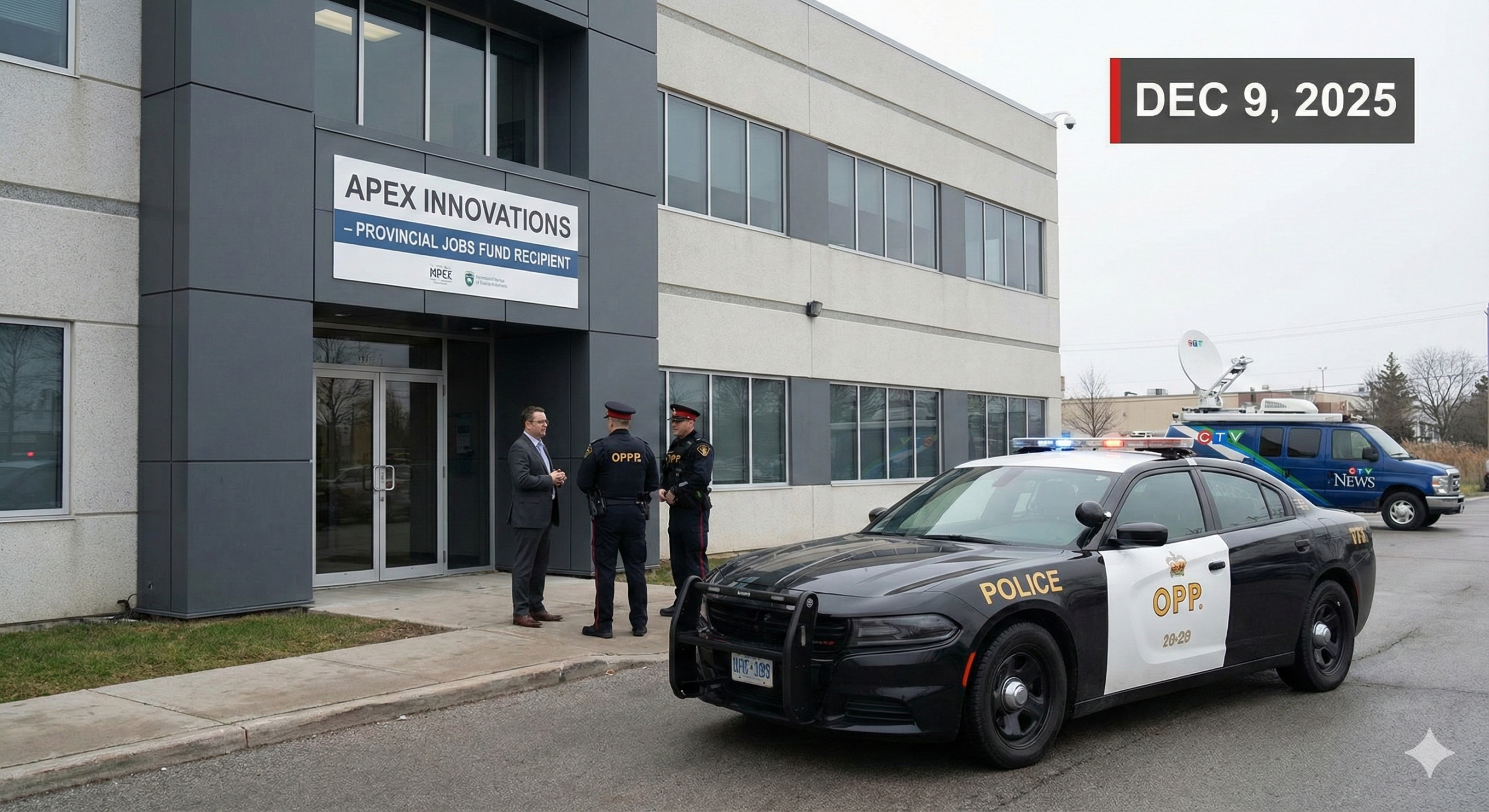
    The Ontario Provincial Police (OPP) has officially launched an investigation into Keel Digital Solutions — a company that received tens of millions of dollars in public funding through a controversial jobs-training program and multiple provincial ministries.

    The move comes after the Ford government handed over the findings of a forensic audit into Keel Digital Solutions and its subsidiary, Get-A-Head. For weeks, the $2.5-billion Skills Development Fund (SDF) has been under intense scrutiny at Queen’s Park, with opposition parties accusing the PCs of using it as a political “slush fund.”

    OPP Confirms Probe Is Underway

    In a statement Monday, OPP spokesperson Gosia Puzio confirmed the Anti-Rackets Branch will move ahead with a formal investigation.

    “The OPP Anti-Rackets Branch has completed its review and will be proceeding with an investigation,” Puzio said.
    “At this time, we cannot release any details or speculate on how long the investigation will take.”

    The investigation follows concerns raised in a government-ordered forensic audit, triggered by irregularities uncovered during a routine financial review of Get-A-Head in 2023.

    Keel Denies Wrongdoing, Says It’s Being Scapegoated

    Keel Digital Solutions maintains that it has followed all rules and contract obligations, arguing that it is being unfairly targeted amid political controversy surrounding the SDF.

    In a statement, Chief Operating Officer Jay Fischbach said the company welcomes the police investigation:

    “Keel remains steadfast in its assertion that it has complied with all laws and contract obligations. We welcome the OPP and will be completely transparent and co-operative. We look forward to the government’s apology at the end of this, and we remain focused on facilitating mental-health supports for the province’s most vulnerable communities.”

    Funding Under Examination

    Government records show Get-A-Head received significant sums from several ministries:

    • $32.74 million from the Ministry of Colleges and Universities between 2022 and 2025

      • $12.75 million of that came in the most recent fiscal year

    • $1.8 million from the Ministry of Health in the same year

    • $2.3 million from the Labour Ministry’s Skills Development Fund

    The Auditor General flagged the SDF program in October, stating its funding decisions lacked transparency, fairness, and accountability.

    Political Connections Raise Questions

    The controversy deepened after revelations of close social ties between Keel executives, lobbyists, and government officials.

    • Former Labour Minister David Piccini — who previously oversaw the SDF — was photographed in rink-side seats at a Toronto Maple Leafs game with Keel director Peter Zakarow.

      • Piccini claimed he paid for the tickets himself.

      • CTV News later reported the seats were season tickets owned by the Zakarow family.

    • The Ontario NDP has also filed an integrity complaint after Piccini reportedly attended a Paris wedding for Keel lobbyist Michael Rudderham, a close friend.

    Piccini has acknowledged intervening personally to approve the grant to Keel.

    Opposition Parties Demand Answers

    Ontario’s Liberal Party is calling on the government to release more details about the initial audit, including when it began, when it concluded, and how much money Keel received after concerns were first raised.

    In a statement, the party said:

    “No company that has been flagged for a forensic audit should be collecting money from taxpayers — especially when the company’s lobbyist is the Minister of Labour’s close personal friend, and one of its directors was seated in family-owned rinkside seats with that same minister at a Toronto Maple Leafs game.”

    With the OPP now formally involved, the government faces increasing pressure to explain how such large grants were approved — and whether oversight failed within one of the province’s largest job-training initiatives.

  • Air Transat Passengers Left in Turmoil as Potential Pilot Strike Threatens Flights

    Air Transat Passengers Left in Turmoil as Potential Pilot Strike Threatens Flights

    Introduction

    Thousands of Air Transat passengers are facing mounting anxiety as the airline edges closer to major flight suspensions amid an escalating labour dispute with its pilots. With the Air Line Pilots Association (ALPA), representing 750 pilots, moving toward potential strike action, travellers are reporting confusion, inconsistent communication, and a lack of clear guidance about their immediate plans. For many, especially those travelling for significant life events or international commitments, the uncertainty has created emotional and financial distress.

    Travellers Caught in the Middle as Strike Deadline Looms

    ‘I feel completely helpless’

    Among the passengers most affected is Ellen Braganca, a Toronto resident scheduled to travel to India this Friday for her daughter’s wedding. Her journey — involving connections in Lisbon and New Delhi — now hangs in the balance as Air Transat has yet to confirm whether her outbound flight will proceed.

    Braganca told CTV News Toronto she first learned about the strike notice on Dec. 3, prompting her to immediately contact the airline by email to explain the urgency of her situation.

    “I asked them for a refund, not a credit,” she said. “A credit does nothing for me. I need the money now to secure new tickets if they cancel my flight.”

    Every day of silence has financial consequences. Braganca watches prices for flights to India climb steadily as she waits for any direction from Air Transat. She also faces a secondary problem — her travel visa for India is set to expire soon, leaving her racing against time.

    “I did all the right things as a passenger,” she said, her frustration palpable. “We’re probably going to lose over $4,000.”

    Repeated calls, little clarity

    Braganca said she has called the airline’s customer service line several times over the last few days, only to receive little to no guidance. On Monday, she said, a representative told her there was nothing he could do before abruptly ending the call.

    “You want to help me, and you’re going to hang up because you can’t find a solution?” she recalled saying.

    Adding to her irritation is the airline’s lack of website updates — an issue echoed by many passengers. With no consistent communication, travellers feel abandoned at a time when they need reassurance.

    “We try to do everything right as passengers, but they’re not giving us the courtesy to make informed decisions,” Braganca said. “We’re being held hostage to a ticket. And this is all happening right before Christmas. I’m almost in tears — I’m so upset.”

    Canadians Abroad Are Also Facing Chaos

    ‘How are we going to get home?’

    While some passengers worry about getting to their destinations, others already abroad are afraid they may not get home at all.

    Shenifa Lahani, another Toronto resident, is currently vacationing in Punta Cana through an Air Transat package. Her return flight is scheduled for Dec. 12, but the looming strike has thrown her trip into disarray.

    Lahani described the past several days as “an emotional roller coaster,” marked by uncertainty and a lack of direct communication from the airline.

    “We keep asking ourselves, ‘What’s going to happen with our flight on Thursday? How are we going to get home?’” she said. “We haven’t heard anything from Air Transat — not even an email.”

    Confusion at the resort

    Attempts to seek clarification have only deepened her concerns. When Lahani called customer service, she was told to speak with the Air Transat representative at her hotel. But the representative offered contradictory information.

    “He told us we were supposed to be on a flight back to Toronto on Monday night,” Lahani said. “Later, he said our flight was still scheduled for Thursday. We don’t know what to believe.”

    With the app still showing her flight as “scheduled,” Lahani is left to guess what will happen.

    “There’s no update, nothing. We’re in limbo,” she said. “We don’t know if we’ll need to stay longer, and if we do, we have no idea what it will cost. I wish they would just communicate with us better.”

    Airline Updates Fall Short of Reassuring Travellers

    Air Transat says flights are operating “for now”

    On Monday afternoon, Air Transat issued a public statement saying that scheduled flights for Dec. 8 were operating normally. It also confirmed that it had added four extra flights to help travellers scheduled to fly on Dec. 10 reach their destinations earlier than planned.

    The airline also announced a “special program” aimed at bringing as many travellers home as possible ahead of any potential strike. It added that negotiations with ALPA continued throughout the night and that “progress was made.”

    “Our priority remains the same: to bring our travellers back home and limit the impact on their travel plans,” the airline said.

    Still, despite this assurance, passengers say updates are sparse and lack the level of detail needed to help them make decisions.

    What Passenger Rights Experts Say You Should Do

    ‘Passengers have more power than they think’

    Gabor Lukacs, a well-known Canadian air passenger rights advocate, told CP24 that passengers should not feel pressured into accepting whatever Air Transat offers.

    Although airlines often provide “goodwill options,” Lukacs said passengers aren’t obligated to agree to them.

    “I recommend they stick to what is in the contract and the law,” he explained. “If you accept some of these goodwill gestures, you put yourself at the airline’s mercy.”

    What to do if your flight is cancelled

    If a flight is officially cancelled, Lukacs advised passengers to take the following steps:

    1. Take a screenshot of the cancellation notice.

    This serves as essential documentation.

    2. Give Air Transat a few hours to rebook you.

    Under Canadian regulations, the airline must attempt to rebook passengers either on its own flights or on a competing airline — at no extra cost.

    3. If the airline fails, buy your own ticket.

    Passengers are legally entitled to purchase a new ticket and then bill Air Transat for the cost difference, along with any additional damages.

    “It is their obligation to buy you a ticket,” Lukacs emphasized. “Not for you to run after them.”

    Conclusion

    As the strike deadline approaches, travellers trapped in Air Transat’s uncertainty are facing mounting emotional and financial strain. From passengers attending once-in-a-lifetime family events to vacationers unsure how or when they’ll get home, the lack of clear communication remains a central frustration.

    While Air Transat maintains that flights are continuing as planned and negotiations are progressing, many customers say they feel abandoned, misled, or ignored. With passenger rights experts urging Canadians to assert their legal entitlements, the situation highlights not only the vulnerability of air travellers during labour disputes but also the critical importance of transparency and timely updates from airlines.

    Until a deal is reached, passengers remain stuck between travel commitments, rising ticket prices, and the possibility of being stranded — waiting for answers that, so far, have been slow to come.

  • Carney Government Rejects Conservative Motion Supporting Alberta Bitumen Pipeline

    Carney Government Rejects Conservative Motion Supporting Alberta Bitumen Pipeline

    Introduction

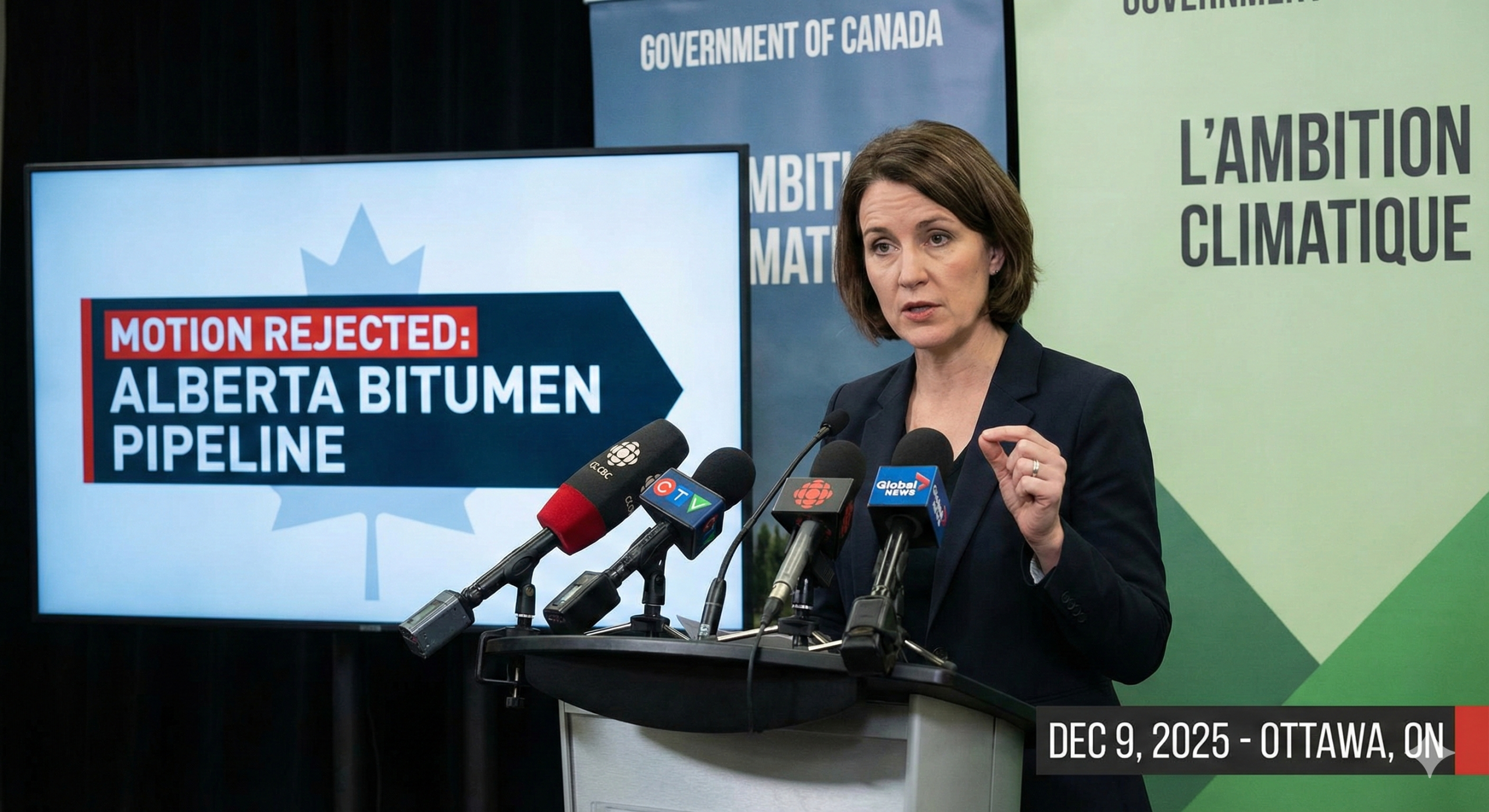
    The Liberal government led by Prime Minister Mark Carney is preparing to vote against a Conservative motion that urges federal support for a large-scale bitumen pipeline project connecting Alberta to a strategic deep-water port on British Columbia’s coast. The non-binding motion, scheduled for a vote on Tuesday, has triggered political tensions over Canada’s energy future, carbon pricing commitments, and federal–provincial cooperation at a time when the country is already navigating a trade war with the United States.

    According to a senior government source who spoke with CTV News, the Liberals believe the motion fails to reflect the full scope of the memorandum of understanding (MOU) recently signed between Ottawa and Alberta—an agreement they consider essential for any progress on new oil infrastructure. Conservatives, meanwhile, argue that the vote is necessary to expose what they call Liberal inconsistency and ambiguity on pipeline development.

    Conservative Motion Sparks Heated Debate

    What the Motion Calls For

    The opposition motion explicitly urges the federal government to support “one or more pipelines enabling the export of at least one million barrels a day of low-emission Alberta bitumen from a strategic deep-water port on the British Columbia coast to Asia markets.” It also calls for adjustments to the Oil Tanker Moratorium Act, emphasizing that any changes must respect the duty to consult Indigenous Peoples.

    The text closely mirrors the MOU signed last month between the federal government and Alberta but notably excludes several conditions Alberta agreed to as part of the negotiations. Those omissions are at the heart of the Carney government’s opposition to the motion.

    Liberals Say Key Elements Are Missing

    A senior government official said the Conservatives’ version “ignores critical elements” of the MOU—specifically:

    • Alberta’s agreement to negotiate a robust industrial carbon pricing system,

    • Co-ownership and financial participation opportunities for Indigenous communities, and

    • Commitments to meaningful engagement with the province of British Columbia.

    Without these components, the government argues, the motion presents an incomplete—and potentially divisive—path to energy development.

    “By refusing to support all elements of this MOU, Conservatives are demonstrating their intent to divide Canadians and inability to get big things built,” the source said, adding that the current trade conflict with the U.S. makes national unity even more critical.

    Inside the Alberta–Ottawa Agreement

    Alberta’s Commitments

    Under the MOU, Alberta agreed to negotiate a new industrial carbon pricing framework by April 2026, setting a minimum price of $130 per tonne. The province also committed to advancing the Pathways Project, which is poised to become the world’s largest carbon capture, utilization, and storage (CCUS) system.

    The Pathways initiative is part of a broader effort to position Canadian oil as among the lowest-emission sources globally. Federal officials argue these environmental and technological commitments are essential to ensuring that any future pipeline gains social license and economic viability.

    Federal Concessions to Alberta

    In exchange, the federal Liberal government pledged to:

    • Suspend clean electricity regulations within Alberta,

    • Refrain from implementing a federal oil and gas emissions cap in the province, and

    • Consider making an exemption to Canada’s tanker ban if circumstances warrant.

    The MOU does not guarantee construction of a pipeline but establishes a framework for how federal and provincial policies must align before a private proponent can bring forward a viable project. Prime Minister Carney has repeatedly stated that no pipeline will be built unless a private company is prepared to lead and finance the proposal.

    Political Tension on Parliament Hill

    Alberta Liberal MP Warns of “Divisive” Motion

    Speaking to reporters on Parliament Hill, Alberta Liberal MP Corey Hogan described the Conservative motion as “designed to provoke and divide,” suggesting that the forced vote could weaken the chances of a pipeline ever being built.

    Hogan argued that a “yes” vote could be misconstrued by Indigenous communities in British Columbia as the government disregarding its duty to consult, while a “no” vote might be misinterpreted as opposition to the pipeline itself.

    “A yes or no vote makes the pipeline less likely,” Hogan said, emphasizing the importance of maintaining trust with all parties involved.

    Conservatives Push Back

    Conservative House Leader Andrew Scheer, in an interview on CTV Power Play with Vassy Kapelos, rejected claims that the motion was divisive. Instead, he said the vote provides the Liberals with “an opportunity to vote for their own MOU.”

    Scheer argued that the MOU contains “ambiguity,” and that by passing the motion, the government would send a clear signal of support for pipeline development.

    “We’ve lifted language right from the MOU,” Scheer said. “If they vote in favour, then that would send a signal that they’re at least going to back up what they sign on to.”

    Alberta Premier Welcomes Agreement

    Alberta Premier Danielle Smith has previously hailed the energy deal with Ottawa as “a great day for Alberta.” She has framed the agreement as a breakthrough that acknowledges Alberta’s economic priorities while integrating climate commitments the province finds reasonable.

    When asked about Smith’s praise, Scheer insisted that Conservatives would never impose an industrial carbon tax on a province, reaffirming the party’s longstanding opposition to federal carbon pricing frameworks.

    “We’re pro-energy,” Scheer said. “We don’t believe that the government should make it harder to get things built.”

    The Bigger Picture: Energy, Environment, and Federal Harmony

    Navigating Trade Tensions

    The senior government source highlighted that Canada is currently engaged in a trade confrontation with the U.S., which adds pressure to present a united front domestically. The Liberals believe the Conservative motion oversimplifies a deeply complex issue that requires broad cooperation between federal officials, the Alberta government, British Columbia, Indigenous communities, and private sector partners.

    Balancing Environmental and Economic Pressures

    The national debate around pipelines continues to sit at the intersection of economic opportunity and climate responsibility. Alberta’s bitumen industry remains central to the province’s economy, while federal climate policy remains a cornerstone of the Carney government’s agenda.

    The MOU attempts to bridge those interests by combining incentives for industry growth with commitments to carbon reduction and technological innovation. The Conservatives, however, argue that such agreements should not come with strict carbon pricing demands or regulatory barriers.

    Conclusion

    As Parliament prepares for the vote, the divide between government and opposition reflects not just a disagreement over a single pipeline motion but a broader philosophical clash over the future of Canada’s energy sector. The Carney government insists that any progress must follow the balanced framework laid out in the MOU, including carbon pricing commitments, Indigenous participation, and provincial cooperation. Conservatives counter that the Liberals are hesitating and sending mixed signals at a time when Canada should be aggressively championing energy infrastructure.

  • Toronto Woman Speaks Out as Dating Coach Faces Sexual Assault Charge

    Toronto Woman Speaks Out as Dating Coach Faces Sexual Assault Charge

    Introduction

    A Toronto woman has stepped forward to share her story after a local dating coach—known online for teaching aggressive “pickup” tactics—was charged with sexual assault in November. The woman, who is being identified as “Jay” due to legal protections for complainants in sexual assault cases, says she hopes that speaking publicly will help other young women recognize potentially manipulative behaviour and avoid harmful situations.

    The accused, 28-year-old Justin Marc Aguiar, also known by his online persona “Justin Marc,” is a self-promoted dating mentor whose paid programs promise to teach clients how to approach, attract, and pursue women in real-life social environments. While his marketing presents him as a confident influencer guiding men to romantic success, Jay’s account paints a very different picture—one marked by discomfort, coercion, and fear.

    Aguiar was charged by Toronto police on November 20 with one count of sexual assault. This is not the first time he has faced such an accusation, and previous cases raise questions about his conduct, his business practices, and the vulnerability of individuals drawn into his social circle.

    A Meeting That Turned Into Something Else

    How Jay Encountered the Dating Coach

    Jay first met Aguiar during the summer of 2024. At the time, she understood him to be a club promoter who frequently interacted with young adults attending nightlife events in downtown Toronto. Later that August, seeking a fun outing with a friend, she messaged him to ask about events or parties he was promoting.

    Instead of directing her to a venue, Jay says Aguiar invited her and her friend to his condominium. Believing this was part of a social gathering or pre-party environment, they accepted the invitation.

    An Unwelcome Situation

    When Jay and her friend arrived, what they encountered was not what they had expected.

    “We thought we were going to a super-fun party,” Jay recalled. “And when we got there, that was not the case. It was just Justin and his roommate.”

    According to Jay, at some point during the visit she found herself in a situation that made her feel unsafe and trapped.

    “I was being cornered in an uncomfortable position,” she said. “That’s why I was able to fight for myself and say, ‘I need to get myself out of this situation.’”

    Jay and her friend managed to leave, but the psychological impact of the experience stayed with her. She later contacted authorities, contributing to the allegation Toronto police received in November.

    Police Investigation and Charge

    The November Charge

    The Toronto Police Service confirmed that they received a complaint of sexual assault earlier this year and subsequently charged Aguiar on November 20. His next court appearance is scheduled for January at the Ontario Court of Justice.

    Previous Legal Encounters

    CTV News also learned that Aguiar had been charged with sexual assault twice before—once in 2019 and again in 2023. In both of those earlier cases, the charges were withdrawn.

    However, court documents show that in the 2019 case, Aguiar entered into an 18-month peace bond. As part of the agreement, he paid a $500 surety and accepted conditions that prevented him from communicating with the complainant, attending locations she frequented, or possessing weapons.

    These details do not confirm guilt, but they provide context as Aguiar now faces yet another allegation.

    Statement from Aguiar’s Lawyer

    Aguiar’s lawyer, Dylan Finlay, emphasized that his client maintains his innocence.

    “My client is presumed innocent. The charge laid against him is an allegation,” Finlay said. “At this stage, we are awaiting the specifics of what the allegation is, which will be provided through the disclosure process.”

    Finlay added that Aguiar “denies sexually assaulting anyone” and intends to defend himself fully in court.

    The World of “Pickup Artistry” and Its Concerns

    The Courses Behind the Persona

    Aguiar markets a program called “Daygame Mastery,” advertised as a guide for men to “open, hook and close, and pull gorgeous women.” Through his online videos and promotional content, he claims the program has helped “thousands of guys” and offers courses ranging from $197 to $2,597.

    Photos and videos on his website show groups of men walking through Toronto’s popular nightlife and public spaces—such as King Street and areas near the CN Tower—presumably practicing approaches taught in the program.

    He also collaborates with other self-described dating strategists who call themselves “certified pimps,” promoting lessons on topics such as overcoming approach anxiety or even managing multiple girlfriends at once.

    Criticism From Advocacy Groups

    To many outside the pickup artist community, these tactics raise red flags. Cait Alexander, founder of End Violence Everywhere—a support group for survivors of domestic and intimate partner violence—expressed concerns about the impact of such programs.

    “I do feel terribly for these men who have paid thousands of dollars or whatever…to get dating advice,” she said. “It’s highly, highly manipulative. Pickup artistry is not genuine. It’s not about actually going out on a date with someone. It’s about controlling someone.”

    Alexander says her organization has heard from additional women who report inappropriate behaviour or unsettling encounters involving Aguiar. She is working to connect those individuals with support and guidance.

    Control vs. Genuine Connection

    According to Alexander, the issue goes beyond one individual. Programs that promote manipulation or pressure-based tactics can create environments where women feel unsafe or undermined, especially when participants view interactions like a strategic game rather than a relationship between two consenting adults.

    “The tactics sold online are a poor substitute for confidence and being genuine,” she added. “Control is not connection.”

    Jay’s Decision to Speak Out

    Why She Came Forward

    Although none of the current allegations have been tested in court, Jay felt compelled to share her story publicly to warn others who may cross paths with Aguiar through his promotional work or his dating programs.

    “I was able to fight for myself,” she said. “But someone else might not be able to. I just want people to be aware.”

    For Jay, telling her story was an act of empowerment after feeling vulnerable and cornered during the alleged incident. She hopes her experience encourages more accountability in communities where influencers—and the tactics they teach—hold sway over young and impressionable audiences.

    Protecting Other Women

    Jay emphasized the importance of education and awareness. She believes that by acknowledging coercive behaviour early and recognizing manipulative approaches, women can better protect themselves when navigating social situations, especially those involving individuals who present themselves as dating experts or nightlife insiders.

    Conclusion

    As the case moves toward the courts, the allegations against Justin Marc Aguiar highlight troubling questions about consent, manipulation, and the broader culture surrounding so-called “pickup artistry.” While Aguiar maintains his innocence and will have the opportunity to defend himself in court, Jay’s decision to speak publicly underscores the emotional weight these allegations carry—and the potential risks faced by women who encounter individuals leveraging authority or influence in dating scenarios.

    The upcoming court proceedings will determine the legal outcome of the November charge. In the meantime, Jay’s story serves as a reminder of the importance of respecting boundaries, promoting genuine human connection, and holding accountable those who may exploit others under the guise of mentorship or expertise.


  • Air Transat Prepares for Three-Day Operational Shutdown After Pilots Issue Strike Notice

    Air Transat Prepares for Three-Day Operational Shutdown After Pilots Issue Strike Notice

    Mounting Uncertainty as Contract Talks Stall

    Air Transat is bracing for a full-scale operational halt, announcing it will phase out all flights over three days after receiving a 72-hour strike notice from the union representing its pilots. The development, revealed early Sunday morning, immediately sent ripples of concern through travellers already in transit or preparing for holiday departures.

    The Montreal-based carrier responded swiftly, calling the notice “premature” and emphasizing that progress has been made in negotiations — though not enough to avert the possibility of a work stoppage as early as Wednesday at 3 a.m. ET. The airline maintains there is still room for a breakthrough, but the countdown has begun.

    The impending shutdown raises an uneasy question for many passengers: Will they be able to return home on time?

    A Gradual Halt to Protect Travellers

    Step-by-Step Suspension Plan

    In its statement, Air Transat explained that the strike notice triggers an immediate obligation to roll out its contingency plan. The airline said it must take “proactive” steps to avoid a chaotic disruption if pilots walk off the job mid-operation.

    That plan includes:

    • Beginning flight suspensions Monday

    • Implementing a full shutdown on Tuesday

    • Repatriating passengers before Wednesday’s strike deadline

    The goal, the company said, is to ensure no one is stranded abroad. The airline intends to bring passengers back to their original departure points while there is still time to manoeuvre.

    This measured wind-down reflects lessons learned across the industry. Sudden strikes can leave thousands stuck in terminals, on islands, or in cities far from home. Air Transat insists it wants an orderly process — even if the circumstances are far from ideal.

    Pilots Say Negotiations Have Stalled

    The Air Line Pilots Association, International (ALPA), which represents the airline’s pilots, said the strike notice was issued only after months of frustrating talks.

    Capt. Bradley Small, chair of the Air Transat Master Executive Council, stated that the airline left the union with “no choice.”

    He described negotiations as “unproductive,” insisting that a strike will occur unless substantial progress is made before Wednesday. Still, he noted, there is time to avoid escalation if management delivers concrete improvements.

    “If we cannot reach an agreement, management will be responsible for every cancelled flight and stranded passenger,” Small said.

    A Network Touching 33 Countries

    A Global Footprint at Risk

    Air Transat serves 10 domestic routes and 63 international destinations — stretching across Europe, the Caribbean, North Africa, South America, and the U.S. East Coast.

    This geographic spread amplifies the stakes. A strike doesn’t only affect weekend leisure trips. It affects business travellers, exchange students, family visits, winter sun seekers, and, in many cases, travellers already abroad.

    The complexity of worldwide operations makes repatriation essential. A passenger stuck in Lisbon, Punta Cana, or Marrakech can’t simply catch a quick alternative domestic carrier home.

    As one industry observer joked recently, “An airline strike is like missing the last train of the night — only the station is an ocean away.”

    Travellers Voice Anxiety as Departure Dates Loom

    Stress Mounts at Canada’s Busiest Airport

    At Toronto Pearson International Airport, tension was visible as would-be vacationers tried to weigh excitement against uncertainty.

    Some were headed out on long-planned trips. Others were already recalculating what a mid-vacation strike might mean.

    Clara Yoon, preparing to fly to the Dominican Republic, said she felt “scared and stressed” about her return plans next week.

    “I’m afraid I won’t be able to come back home,” Yoon told CBC News Network.

    She said the timing of the announcement — just as she and her travel companions were about to leave — made the situation even more frustrating.

    Her reaction echoes a familiar sentiment among travellers: nothing derails vacation anticipation quite like the question of whether you’ll be able to get back.

    A Fictional Glimpse Into Travellers’ Concerns

    One passenger, rushing between check-in counters with a sun hat dangling from her backpack, shared a fictionalized anecdote that captures the mood:

    “I told my husband, ‘If we get stuck, I hope you love the Caribbean enough to live there.’ He laughed. I didn’t.”

    The comment landed with humour but also truth. Many travellers are juggling work commitments, childcare, or medical appointments. A surprise extension abroad sounds idyllic only until reality intervenes.

    The Airline’s Position: Offers Already on the Table

    Air Transat Argues It Has Been Negotiating in Good Faith

    The airline has emphasized that it has made “generous” proposals and believes the two sides have moved closer to an agreement in recent days.

    Still, the decision to prepare for an immediate shutdown suggests the company is taking the union’s notice seriously. The strategic suspension plan demonstrates a desire to minimize reputational damage — something no carrier wants during a busy travel season.

    Air Transat maintains it hopes the coming hours will be enough to avoid a strike entirely. Each side insists resolution is still possible. Yet both are preparing for the worst.

    What Comes Next?

    A Narrow Window for a Deal

    With the strike set to begin early Wednesday morning, the pressure is building. A successful negotiation within the next two days could restore normal operations and ease passengers’ concerns.

    If no agreement emerges, air travel across multiple continents may be disrupted for an unknown period. Repatriated passengers could find themselves rebooking with crowded competitors or waiting indefinitely.

    The uncertainty is creating a delicate tension: quiet optimism from both sides, and jittery anticipation from those who simply want to travel.

    Conclusion: A Pivotal Moment for Canada’s Third-Largest Airline

    Air Transat is confronting a critical test as pilot negotiations reach a breaking point. The coming days will determine whether the company can maintain stability or whether its operations will grind to a halt under one of the most consequential labour disputes it has faced in years.

    For travellers, the situation is a reminder of how quickly vacation plans — or essential journeys — can be upended by events far beyond their control.

  • A Toronto Family Upholds a 70-Year Opening-Day Transit Tradition with the Finch West LRT Debut

    A Toronto Family Upholds a 70-Year Opening-Day Transit Tradition with the Finch West LRT Debut

    A Legacy That Began with Canada’s First Subway Line

    For most Torontonians, the opening of a new transit line is a noteworthy civic event. For the Doucet family, however, it is something far more personal—an unbroken, seven-decade tradition that bridges three generations and reflects their enduring connection to the city’s evolving transit network.

    On Sunday, the family once again honoured that commitment as 83-year-old Michael Doucet, his son Brian, and seven-year-old grandson Hugo boarded the newly launched Finch West Light Rail Transit (LRT)—now officially designated as TTC’s Line 6. The moment carried both historical weight and emotional resonance, marking not only the inauguration of a major transit project, but also the continuation of a family custom that dates back to 1954.

    That year, a young Michael rode the very first train on the newly opened Yonge Line, Canada’s inaugural subway system, accompanied by his father. What began as a memorable outing quickly transformed into a long-standing family ritual: attending every opening day of a Toronto Transit Commission (TTC) subway or streetcar line.

    “It’s always special to witness a new chapter in the city’s transit story,” said Michael, now a retired geography professor from Toronto Metropolitan University. “There’s something meaningful about being present when a new line is unveiled—especially in parts of the city that haven’t always been well served.”

    This year’s opening-day trip was especially important for him. With young Hugo enthusiastically joining the ride, a brand-new generation has officially entered the Doucet tradition.


    Welcoming a New Generation to Toronto’s Transit History

    A Seven-Year-Old’s First Step into a Family Ritual

    For Hugo, the experience was more than a simple train ride. It was his first opportunity to see Toronto through the same opening-day lens that has shaped the perspectives of his father and grandfather for decades.

    “It’s quite exciting because young people see the city differently,” Michael reflected during the ride. “Hugo has enjoyed every part of the trip today, and he’s been so observant of the things we pass.”

    The family has always treated these outings as both celebratory and educational—moments to experience the city’s geography and technological evolution firsthand. For Brian, now an associate professor of planning at the University of Waterloo, the tradition was a defining part of his childhood as well. He was only four when he took his first opening-day trip on the Scarborough Rapid Transit (SRT) line in 1985.

    The tradition, he said, has never been optional.

    “It’s mandatory,” he joked, recalling the mixture of excitement and inevitability that came with each new transit launch. “But it’s also joyful. The real purpose is discovering a new part of the city and seeing how these transit connections reshape neighbourhoods.”


    Exploring the Finch Corridor: A Historic Moment for Toronto Transit

    Curiosity, Technology, and First-Day Excitement

    Sunday’s launch of the Finch West LRT brought out more than just families continuing long-standing traditions. According to Brian, the inaugural ride also attracted a diverse mix of riders—some fascinated by the line’s modern technology, others eager simply to understand how the new system works.

    “People were excited to be part of this moment,” Brian shared. “Yes, there will be issues, as there always are with new transit lines, but the mood today was overwhelmingly positive.”

    The Finch West LRT is Toronto’s first new transit line in more than two decades, and its arrival marks a significant milestone for residents of northwest Toronto, a region historically underserved by rapid transit. The line connects Humber College to Finch West Station, offering a critical new east-west link across the city.

    “This corridor of Finch is now connected,” Brian said. “It changes how people can navigate this part of the city.”


    A Tradition Rooted in Urban Curiosity and Civic Pride

    Riding Transit as a Way of Understanding the City

    Michael and Brian share a belief that public transit is more than transportation—it is a window into the life and character of a city. Over the decades, their opening-day rides have taken them through diverse neighbourhoods, evolving infrastructure, and newly formed connections.

    Toronto, Michael noted, often faces criticism for delays, crowding, and service issues. Yet in comparison to many North American cities, he believes Toronto remains fortunate to have a transit system that is expanding and offers frequent service.

    “People sometimes forget how lucky we are,” he said. “This city continues to grow, and transit is a central part of how that growth happens.”

    Brian hopes that the Finch West LRT launch will encourage more residents to view transit as a tool for exploration, not just commuting.

    “I always tell people: take an afternoon and ride around,” he said. “Pick a line, stop somewhere you’ve never been, and explore the neighbourhood. Transit lets you discover the city in ways you don’t expect.”


    Looking Back: Iconic Rides and Farewell Trips

    Moments Preserved in the Doucet Family Album

    The Doucet tradition isn’t limited to opening days alone. Over the years, they have also participated in several memorable “last-day rides”—a final tribute to retiring streetcars and vehicles that played a defining role in Toronto’s transit identity.

    In 1995, they boarded one of the final runs of the Presidents’ Conference Committee (PCC) streetcars, an iconic symbol of mid-20th-century transit. In 2019, they said goodbye to the Canadian Light Rail Vehicles (CLRVs), marking another significant turning point in TTC history.

    One of the family’s cherished photographs, taken in 1982, shows a young Brian standing beside a streetcar with his father in the city’s waterfront area—just years before Brian’s own inaugural opening-day experience.


    A New Line, A Renewed Sense of Wonder

    Community Reactions and the Spirit of Exploration

    The launch of the Finch West LRT has generated widespread attention and conversation across the city. In interviews conducted along the route, many residents expressed a mix of excitement, curiosity, and cautious optimism—reflecting Toronto’s long-standing love-hate relationship with its transit system.

    Still, the prevailing sentiment was clear: this long-awaited addition represents opportunity, mobility, and growth for thousands of daily riders.

    For Hugo, the newest member of the Doucet tradition, the day ended with a wide smile and a simple, heartfelt conclusion: the ride was “exciting” and his favourite train trip so far.


    Conclusion: A Tradition That Moves With the City

    As Toronto continues to expand its transit network, the Doucet family’s tradition stands as a testament to the ways in which public transportation can shape personal histories and strengthen connections between generations.

    What began as a father-son outing in 1954 has evolved into a seven-decade legacy—one that celebrates both the city’s progress and the enduring value of shared experiences.

    With the launch of the Finch West LRT, another chapter has been added to Toronto’s transit story. And for the Doucets, another memory has been added to a growing family archive—one that Hugo may continue one day with his own children.