Blog

  • Vancouver’s Last Sex Worker Drop-In Centre Faces Uncertain Future as Funding Model Shifts

    Vancouver’s Last Sex Worker Drop-In Centre Faces Uncertain Future as Funding Model Shifts

    Vancouver’s only remaining dedicated drop-in space for sex workers could be forced to close in the coming years as the City of Vancouver considers changing how it funds critical support services along the Kingsway corridor. The potential shift from stable service-based funding to a competitive grant system has sparked deep concern among advocates, service providers and the vulnerable community the centre serves.

    Located at the intersection of Kingsway and Windsor Street, the Kingsway Community Station has provided essential nighttime support to street-based sex workers for the past five years. Operated by non-profit organization RainCity Housing, the centre is more than just a physical space — it is a lifeline that helps prevent violence, fosters safety and offers dignity to people often pushed to the margins of society.

    A Safe Haven for One of Vancouver’s Most Vulnerable Communities

    The Kingsway Community Station operates as a trans-inclusive, women-focused drop-in facility open six nights a week from 10 p.m. to 6 a.m. The timing is deliberate, as these are peak hours for street-based sex work activity. According to program director Amelia Ridgway, the location was strategically chosen because it serves the area with the highest concentration of street-based sex workers in the city.

    Beyond Basic Services: A Space of Care and Empowerment

    Visitors to the centre can access a warm and welcoming environment where their immediate and long-term needs are addressed. Services include:

    • Access to washrooms and hygiene facilities
    • Hot food and beverages
    • A quiet space to rest or nap
    • Harm reduction supplies
    • Peer support from individuals with lived or living sex work experience
    • Connections to housing and healthcare services
    • Assistance in reporting violent or harmful encounters

    The centre also fosters a sense of community. The interior is carefully designed with input from the sex workers themselves, featuring makeup stations with mirrors and bright lighting, comfortable seating, art spaces for creative expression and uplifting messages that reinforce self-worth and safety.

    A Funding Change That Could Put Everything at Risk

    RainCity Housing recently learned that the City of Vancouver is considering transitioning from its current service agreement model to a grant-based funding system. Since opening in 2021, the Kingsway Community Station has relied entirely on city funding, which provided consistent operational stability.

    Ridgway expressed serious concern that this change could undermine the centre’s ability to function effectively.

    Two Major Concerns: Reduced Funding and Long-Term Instability

    Ridgway highlighted two primary risks associated with the proposed funding shift:

    1. Potential Funding Cuts

    There is widespread belief that city grants are often capped at approximately $100,000. If that applies here, the centre’s annual budget could be reduced by nearly 75 per cent, dramatically limiting its programming, staffing and operational hours.

    2. Barriers to Securing a Permanent Location

    Without guaranteed core funding, RainCity may struggle to secure a new long-term lease. The current building is scheduled for redevelopment, and the present lease expires in March 2026, adding another layer of uncertainty to the centre’s future.

    While the City of Vancouver has disputed the notion of a fixed grant cap, noting that many grants exceed $100,000, it acknowledged that no decisions have been finalized regarding future funding levels or service agreements.

    City of Vancouver Responds to Concerns

    In a formal statement, the city confirmed that it has been exploring a new funding model for approximately one year. Officials stated the shift to a grant-based approach would align more closely with how similar social services are funded across the city.

    Ongoing Discussions But No Final Decisions

    The city emphasized that it remains in dialogue with RainCity Housing to understand service delivery needs and explore potential options. If any changes proceed, they would not take effect until 2026 and would require approval through the standard council and social grants process.

    “No decisions have been made about future funding levels for Kingsway Community Station,” the city stated. “Any future funding decisions would be based on service needs, alignment with city priorities and available funding sources.”

    Despite these assurances, the lack of clear guarantees has left workers and advocates uneasy.

    Historical Context: The Cost of Losing Safe Spaces

    Vancouver has a painful history of violence against sex workers, particularly in the Downtown Eastside during the 1980s and 1990s. The crimes of serial killer Robert Pickton exposed systemic failures in protecting marginalized women, many of whom were Indigenous and engaged in survival sex work.

    Subsequent inquiries and national reports consistently recommended creating third spaces — safe, neutral environments where vulnerable individuals can gather, build community and access supports — as a key strategy for preventing violence and exploitation.

    The Importance of “Third Spaces”

    Third spaces like the Kingsway Community Station allow sex workers to:

    • Reduce isolation
    • Build peer networks
    • Receive early intervention support
    • Stay safer while working

    Advocates argue that removing such spaces risks undoing years of progress in protecting vulnerable individuals.

    A Community Designed by Those It Serves

    One of the defining features of the Kingsway drop-in centre is its collaborative design process. Sex workers contributed ideas that shaped both the atmosphere and functionality of the space, helping create an environment that feels respectful and affirming.

    From art nights at the central table to creative décor such as a glittery pole-dancing skeleton, the space reflects joy, identity and resilience — elements rarely afforded to those facing systemic stigma.

    Funding Confirmed Until 2026 — But What Comes After?

    RainCity has confirmed that operational funding is secure until March 2026, which coincides with the expiration of the current lease. Beyond that date, the drop-in’s future remains unclear.

    Bill Briscall, RainCity’s manager of communications and fund development, confirmed that efforts are underway to find a permanent location, but success has so far been limited due to property availability, zoning challenges and rising commercial rents.

    The Consequences of Closure

    Ridgway described the potential closure as “devastating,” warning that it would leave Vancouver with virtually no dedicated services for sex workers.

    What Closure Could Mean:

    • Increased exposure to violence
    • Reduced access to harm reduction supplies
    • Fewer opportunities to report abuse
    • Greater social isolation
    • Higher health risks

    Advocates stress that the closure would not only harm sex workers but also undermine broader public health and safety goals.

    A Critical Moment for Vancouver’s Social Policy

    As Vancouver balances redevelopment, public safety and budget pressures, the fate of its last sex worker drop-in centre has become a litmus test for the city’s commitment to harm reduction and inclusive social services.

    The decision ahead is not merely budgetary. It is fundamentally about whether vulnerable residents continue to have safe, dignified access to support or are once again pushed further into the shadows.

    For many, the Kingsway Community Station represents far more than a building. It symbolizes trust, safety and recognition of humanity — something advocates say cannot be replaced by temporary funding or fragmented services.

    As the city moves forward with its funding review, sex worker advocates, non-profit organizations and community members will be watching closely, hopeful that Vancouver chooses compassion, stability and care over uncertainty.
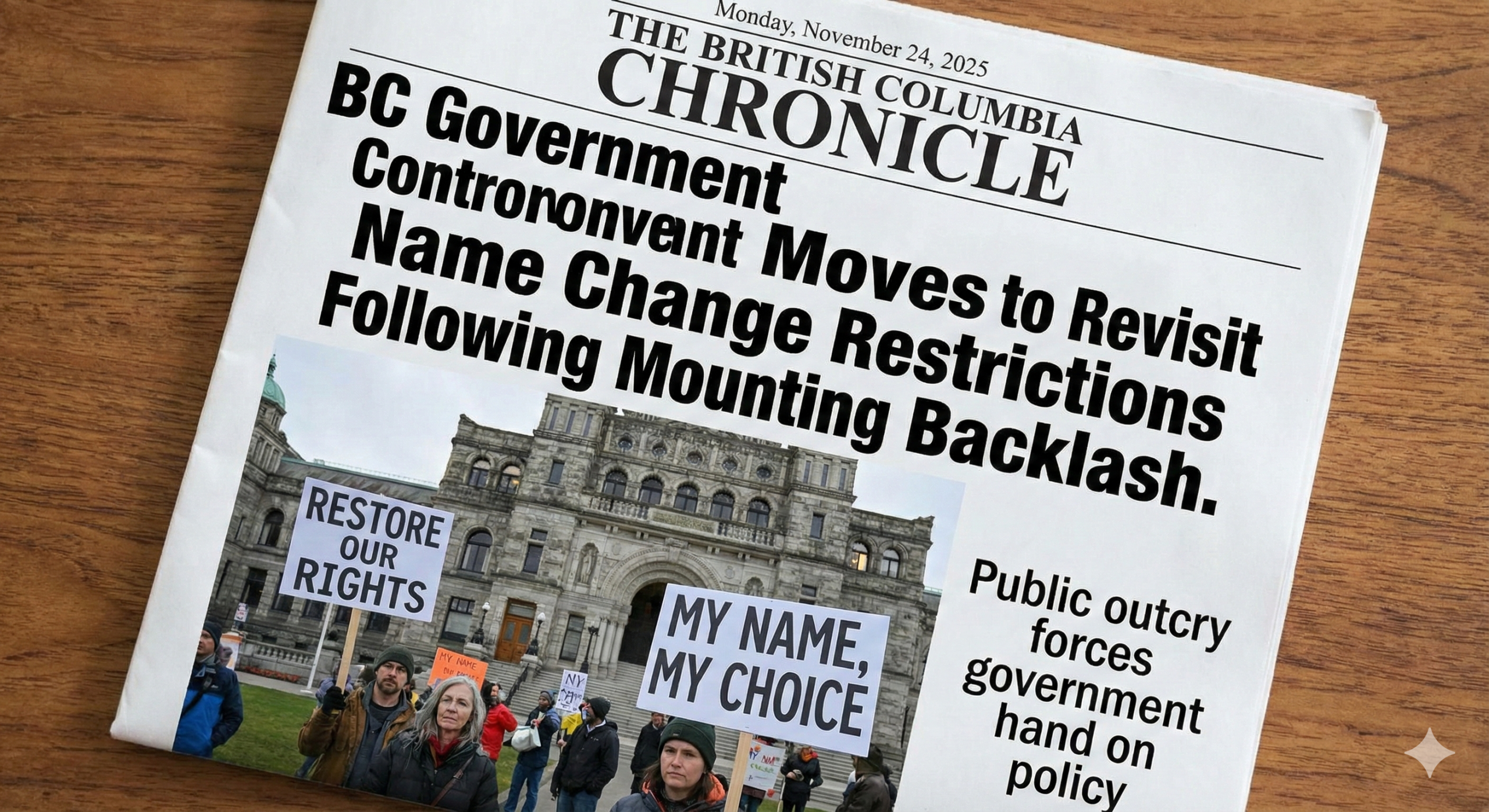
  • BC Government Moves to Revisit Controversial Name Change Restrictions Following Mounting Backlash

    BC Government Moves to Revisit Controversial Name Change Restrictions Following Mounting Backlash

    Introduction: A Law Under Growing Scrutiny

    The government of British Columbia is preparing to re-examine a highly contentious law that restricts certain individuals from legally changing their names, following strong opposition from within its own party and widespread criticism from advocacy groups. The decision comes after delegates at the BC NDP convention unanimously passed a resolution urging the repeal of restrictions introduced under the Name Amendment Act in 2024. Premier David Eby has confirmed that the province will conduct a review of the legislation to address unintended consequences while preserving what he describes as its core public safety objective.

    The move has reignited debate across the province over the balance between safeguarding communities and protecting the rights and dignity of vulnerable individuals, including Indigenous peoples, transgender individuals, and survivors of violence.

    Origins of the Name Amendment Act

    Law Introduced Amid Public and Political Pressure

    In May 2024, the BC government passed the Name Amendment Act, which prohibits certain individuals from legally changing their names if they have been convicted of specific criminal offences, declared dangerous or long-term offenders, or found not criminally responsible due to mental disorder. Additionally, the legislation requires anyone over the age of 12 to undergo a criminal record check within 30 days before applying for a legal name change through the Vital Statistics Agency.

    The policy was introduced following political pressure from the official Opposition and public outcry over revelations that Allan Schoenborn — who was found not criminally responsible for killing his three children in 2008 — had legally changed his name in 2021. The case heightened concerns that people with serious criminal histories could use name changes to obscure their past and evade accountability.

    NDP Delegates Push for Repeal

    Unanimous Vote Signals Party Discontent

    At the recent BC NDP convention, party delegates voted unanimously in favour of rescinding the name-change restrictions. Adrienne Smith, chair of the party’s Sexual Orientation and Gender Identity (SOGI) committee, delivered a forceful speech condemning the law and highlighting its far-reaching consequences.

    Smith pointed out that every Member of the Legislative Assembly supported the law at the time, regardless of political affiliation, but acknowledged that it has proven deeply flawed in practice. She described the legislation as a mistake that has resulted in lengthy delays of more than a year for name change applications, further compounding hardships for those seeking legal recognition of their identities.

    Concerns Over Misguided Fear and Legal Inefficiency

    Smith, who is also a practicing lawyer, argued that the law is grounded in an unfounded fear that name changes could enable individuals to hide criminal histories. She emphasised that existing governmental tools such as fingerprint identification and criminal background checks are already sufficient to prevent misuse of the process. According to the SOGI committee report, hiding a criminal record through a name change is not realistically possible under current systems.

    Impact on Vulnerable Communities

    Transgender and Gender-Diverse Individuals

    One of the most affected groups are transgender and gender-diverse individuals who rely on legal name changes to align their identity documents with their gender identity. Failure to update legal names often leads to misgendering, discrimination, and emotional distress, especially in healthcare, education, and employment settings.

    Advocates argue that the new restrictions create barriers that compromise safety and dignity, particularly for young trans people who must navigate systems already fraught with misunderstanding and stigma.

    Indigenous Peoples Seeking Cultural Reclamation

    The law has also raised alarm among Indigenous communities, where name changes are often part of reclaiming traditional identities that were forcibly erased through colonial systems. Preventing individuals from restoring Indigenous names undermines broader reconciliation efforts and hampers cultural continuity.

    Survivors of Violence and Exploitation

    Survivors of gender-based violence and intimate partner abuse frequently seek name changes as part of their efforts to start anew and escape dangerous situations. Advocacy groups warn that forcing survivors to retain names tied to their past abusers can compromise their safety and prolong trauma.

    The party’s women and gender rights committee echoed these concerns, stating that the restrictions could potentially trap survivors in vulnerable positions, increasing the risk of being located by their abusers.

    Broader Social and Economic Consequences

    Barriers to Reintegration and Opportunity

    Morgane Oger, former NDP candidate and ex-official with the Vancouver Pride Society, voiced strong opposition to the policy, describing it as socially damaging. She argued that the ban effectively turns past convictions into permanent obstacles, preventing people from rebuilding their lives and accessing essential services such as housing, employment, healthcare, and education.

    Oger stressed that those most affected are already disproportionately targeted by the justice system, compounding systemic inequalities and marginalisation.

    Unequal Treatment and Exemptions

    Another major criticism lies in the exclusion of name changes through marriage or adoption from the law’s restrictions. Critics argue that this reveals an inconsistency that preserves traditional norms while denying fundamental dignity to others. Advocates say if name changes pose a risk, the rules should apply equally across all categories.

    Government Response and Review Strategy

    Premier Eby’s Balanced Approach

    Premier David Eby has acknowledged the concerns raised by party members and advocacy groups but reaffirmed the government’s commitment to the law’s original intention — preventing individuals from avoiding accountability through name changes.

    He cited the example of a Kelowna student who wished to ensure her identification reflected her true name and gender before beginning studies in the United States, demonstrating how unintended consequences can significantly impact ordinary citizens.

    Eby emphasised that the government would consult affected communities to correct flaws in the legislation without compromising its foundational principle of public protection.

    Ministerial Oversight and Responsiveness

    Citizens’ Services Minister Diana Gibson confirmed that extensive consultations would take place with stakeholders and affected individuals. Having recently taken over responsibility for Vital Statistics, Gibson expressed commitment to reviewing the implications of the law and ensuring that the government’s approach aligns with fairness and compassion.

    She noted that while initial engagement had already occurred, the current review would be more comprehensive and focused on achieving the right balance between safeguarding public safety and preserving individual rights.

    Opposition Voices and Political Division

    Conservative Party Criticism

    The Conservative Party of BC has strongly opposed the NDP’s resolution, describing it as reckless and dangerously lenient. Party leader John Rustad warned against any move that could potentially allow individuals with criminal histories to conceal their past.

    According to Rustad, no circumstances should permit someone with a criminal record to modify their identity in a way that could distort public accountability or endanger community safety.

    Persistent Ethical Debate

    The issue continues to stir ethical and political debate, reflecting broader societal tensions around criminal justice reform, human rights, and the scope of government oversight. While critics prioritise security, supporters argue that dignity and rehabilitation must remain central to modern governance.

    Expert Opinions on Criminal Record Transparency

    Legal analysts maintain that modern identification systems ensure traceability regardless of name changes. Criminal records remain linked to biometric data, and government agencies retain full access to historical identities. This, they argue, makes fears of evasion largely unfounded and reinforces the argument for revising restrictive policies.

    Conclusion: Toward a More Equitable Framework

    As British Columbia prepares to review its Name Amendment Act, the unfolding debate underscores the challenges of crafting legislation that safeguards public safety while upholding human dignity. The government now faces increasing pressure to amend policies that disproportionately affect vulnerable populations and undermine the very principles of inclusion and rehabilitation it strives to protect.

    Premier Eby’s commitment to dialogue and balanced reform signals a crucial moment in the province’s governance. Whether the law is ultimately revised or restructured, the process will likely redefine how British Columbia navigates identity rights, justice, and social equity in the years ahead.

    This review carries profound implications not only for those directly affected but also for the broader vision of a just, compassionate, and inclusive provincial framework — one that recognises that a name is far more than a label, but a foundational expression of identity, dignity, and belonging.

  • The Oil Tanker Ban That Challenges Alberta’s Pipeline Ambitions

    The Oil Tanker Ban That Challenges Alberta’s Pipeline Ambitions

    Introduction: A Renewed National Debate Over Energy and Coastline Protection

    Canada’s long-standing restriction on oil tanker traffic along British Columbia’s north coast has once again moved to the centre of national attention, as the federal government explores potential pathways to transport crude oil from Alberta’s oilsands through northern British Columbia. While discussions between Ottawa and Alberta continue, any proposal to move oil through this environmentally sensitive region must confront a deeply entrenched agreement designed to keep large oil tankers away from B.C.’s northern shoreline.

    What many British Columbians believed to be a settled matter is now resurfacing as both an environmental and political flashpoint. The Oil Tanker Moratorium Act, enacted in 2019, is rooted in decades of advocacy, public concern, and historical resistance that stretches back more than half a century. As the federal government considers possible exemptions, the issue has triggered fierce opposition from coastal communities, Indigenous leaders, and environmental advocates who argue that the ban is essential to protecting fragile ecosystems and local economies.

    The Oil Tanker Moratorium Act: A Legacy of Environmental Protection

    From Policy Debate to Federal Law

    Although the Oil Tanker Moratorium Act became law in 2019, its origins date back over 50 years, when the prospect of large-scale oil tanker traffic along B.C.’s north coast first alarmed communities and policymakers. The federal ban prohibits oil tankers carrying large volumes of crude from docking at or passing through key ports along the northern coastline, including areas near Haida Gwaii and the Great Bear Rainforest.

    The legislation was framed as a long-overdue measure to safeguard coastal waters, preserve sensitive marine environments, and protect the livelihoods of fishing communities and Indigenous nations that rely heavily on clean and stable ecosystems.

    For many residents and advocacy groups, the law represented a definitive resolution to a contentious issue — a clear statement that economic development would not come at the expense of ecological integrity and Indigenous rights.

    Federal Consideration of a “Limited Exemption”

    A Proposal That Reignited Tensions

    Reports recently surfaced suggesting that the federal government is exploring the possibility of a “limited exemption” to the tanker ban in order to facilitate crude oil shipments from Alberta through northern B.C. Sources familiar with internal discussions indicated that such a move could form part of an emerging agreement between Ottawa and Alberta to expand national energy infrastructure and boost export capacity.

    However, this suggestion has been met with swift resistance, including from members of the governing Liberal Party itself. Several MPs representing west coast ridings stressed that any change to the law would require explicit consent from both the British Columbia government and Indigenous nations — consent that currently appears highly unlikely.

    Strong Opposition From B.C. and First Nations

    Unified Stand for Coastal Protection

    Earlier this month, B.C. Premier David Eby joined coastal First Nations leaders in signing a formal declaration urging the federal government to preserve the oil tanker ban in its current form. The statement described the moratorium as the product of over five decades of sustained advocacy led by Indigenous and coastal communities, supported across party lines at both provincial and federal levels.

    Leaders emphasized that lifting or weakening the ban would undermine years of reconciliation efforts and environmental stewardship, placing both ecosystems and cultural heritage at risk.

    Many First Nations have repeatedly stressed that their opposition is not symbolic but rooted in lived experience and traditional responsibility to protect the land and sea. The coastal waters in question are not merely transportation corridors — they are vital sources of food, cultural identity, and economic survival.

    Federal Vision for “Nation-Building” Projects

    Broader Infrastructure Push in Northern B.C.

    Despite resistance to an oil pipeline, Prime Minister Mark Carney recently indicated that a broader agreement with Alberta could be reached in the coming weeks. During a visit to northern British Columbia, Carney announced federal backing for a suite of so-called “nation-building” projects aimed at stimulating economic growth and strengthening energy security.

    Out of 11 proposed projects currently under federal review for fast-tracking, four are located in northern B.C. These include a mine expansion, two liquefied natural gas (LNG) export facilities, and a power transmission line intended to support regional development.

    Notably, no oil pipeline announcement accompanied these initiatives, even as Alberta Premier Danielle Smith continued to apply pressure for expanded pipeline infrastructure to support crude exports to international markets.

    Why the Tanker Ban Remains So Contentious

    Environmental Risks to a Fragile Coastline

    The primary argument against lifting the oil tanker ban lies in the severe environmental consequences of a potential spill. The north coast of British Columbia is known for its complex marine ecosystems, including habitats crucial for salmon, whales, seabirds, and other wildlife. Cleanup in these remote, storm-prone waters would be exceptionally difficult, if not impossible.

    Environmental groups argue that even a single spill could devastate local fishing industries, permanently damage marine biodiversity, and disrupt Indigenous communities whose way of life is directly tied to the health of the ocean.

    Economic and Cultural Implications

    Beyond environmental concerns, the tanker ban is seen as an essential safeguard for regional economies dependent on tourism, fishing, and sustainable coastal industries. Many residents fear that lifting the ban would expose the region to long-term economic harm that far outweighs any short-term gains from oil transport.

    For Indigenous nations, the debate also touches on sovereignty and self-determination. The proposed changes risk infringing upon their rights to govern traditional territories and protect sacred lands and waters.

    Historical Roots: The Alaska Pipeline and Early Opposition

    The 1970s Turning Point

    The origins of the tanker ban can be traced back to the early 1970s, when the United States began developing the Trans-Alaska Pipeline System under President Richard Nixon’s administration. At the time, Canada’s prime minister was Pierre Trudeau, who faced growing concerns from British Columbians about the impact of increased oil tanker traffic along the west coast.

    The Alaska pipeline, designed to transport oil from the North Slope to the port of Valdez, quickly became a symbol of the potential environmental risks associated with large-scale crude transportation. While the system now carries significantly less oil than at its peak, tankers continue to leave Valdez regularly, reinforcing fears about what a similar model might mean for Canada’s coast.

    Officials and community leaders worried that increased tanker traffic could expose B.C.’s coastline to catastrophic spills that would cripple both the environment and regional economies. These early concerns planted the seeds for the persistent resistance that eventually culminated in formal federal legislation decades later.

    Alberta’s Pipeline Ambitions and National Energy Strategy

    Economic Pressures and Export Demand

    Alberta has long pushed for expanded pipeline access to tidewater as a means of reducing dependence on U.S. markets and increasing competitiveness in global energy exports. Provincial leaders argue that without new infrastructure corridors, Canada’s oil sector remains constrained, limiting national revenue and job creation.

    Supporters of expanded pipeline projects maintain that modern safety standards, improved spill response technologies, and strict regulatory oversight make such projects viable and manageable. They contend that Canada can achieve both economic development and environmental protection through innovation and careful planning.

    However, critics remain unconvinced, pointing out that no safety system is foolproof and that the consequences of failure are simply too severe to justify the risk.

    Political Balancing Act in Ottawa

    Navigating Competing Interests

    The federal government now finds itself walking a tightrope between appeasing Alberta’s economic concerns and respecting the long-standing commitments made to Briti

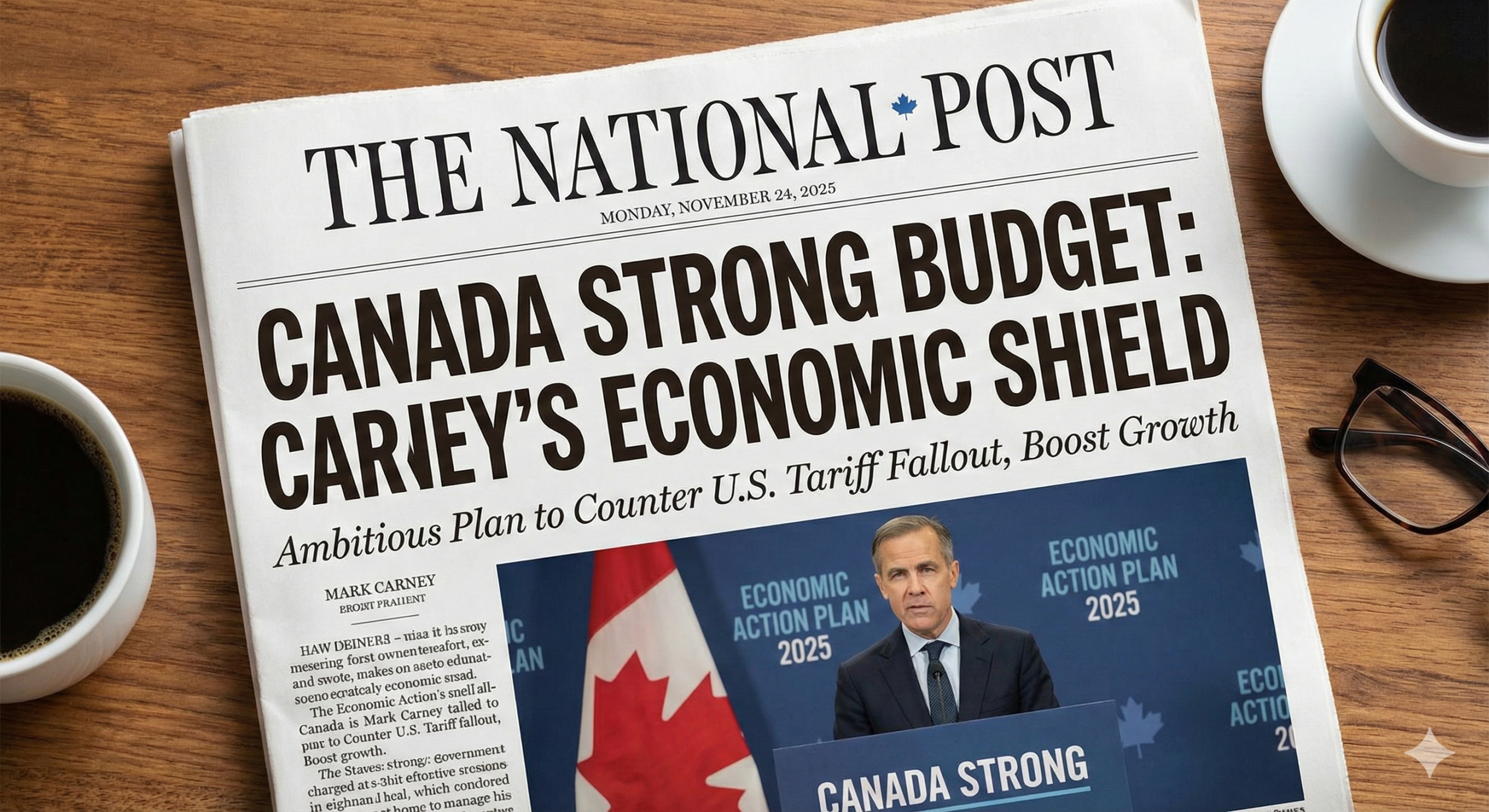
  • Canada Strong Budget: Mark Carney Unveils Ambitious Economic Plan to Shield Canada from U.S. Tariff Fallout

    Canada Strong Budget: Mark Carney Unveils Ambitious Economic Plan to Shield Canada from U.S. Tariff Fallout

    Introduction: A Defining Moment for Canada’s Economic Future

    Canada’s newly appointed Prime Minister Mark Carney has launched an expansive federal budget designed to protect the national economy from the escalating impact of U.S. tariffs and global trade instability. Presented earlier this week, the sweeping $580 billion fiscal plan outlines a bold strategy aimed at strengthening Canada’s industrial backbone, modernising infrastructure, enhancing defence capacity, and supporting long-term national resilience.

    As Carney and Finance Minister François-Philippe Champagne embark on a nationwide tour to explain the budget to Canadians, the political realities remain challenging. Leading a minority government, Carney must secure support or strategic abstentions from opposition parties to avoid triggering a snap election during the holiday season. Despite resistance from conservative factions, the government insists the budget represents a critical turning point for Canada in a rapidly transforming global landscape.

    Mark Carney’s Vision: Responding to a Global Economic Crossroads

    Addressing media and stakeholders following the budget’s unveiling, Carney described the current period as a “hinge moment” for the nation, warning that indecision could leave Canada vulnerable to economic shocks. He stressed that global trade systems are undergoing fundamental restructuring, exacerbated by technological acceleration, geopolitical tensions, and evolving tariff regimes.

    The Impact of U.S. Tariffs on Canada

    According to government estimates, punitive U.S. tariffs and the broader uncertainty surrounding them could cost Canada approximately 1.8 percent of its Gross Domestic Product. This decline translates to a potential loss of $50 billion and an economic burden of roughly $1,300 per Canadian citizen.

    Carney emphasised that while Canada cannot dictate decisions made in Washington, it retains full authority over its domestic economic strategy. By investing strategically and strengthening local industries, he asserted that Canada could recover these losses and exceed previous growth levels.

    The ‘Canada Strong’ Budget: Key Spending Priorities

    The budget, branded under the theme “Canada Strong,” introduces $141 billion in new spending over the next five years. This investment is directed toward revitalising critical sectors while positioning Canada for sustainable long-term growth.

    Defence Spending Expansion

    One of the most significant allocations is the nearly $82 billion earmarked for defence initiatives. This funding aims to modernise military capabilities, enhance national security, and move Canada closer to meeting NATO’s recommended defence spending benchmark of five percent of GDP.

    The government argues that this expanded defence budget is essential in response to global instability and shifting security dynamics.

    Infrastructure and Nation-Building Projects

    An additional $51 billion has been designated for large-scale infrastructure development. Planned projects include high-speed rail corridors, modernised ports, renewable energy facilities, and carbon capture and storage systems. These initiatives are intended not only to create jobs but also to strengthen trade networks and reduce dependency on external supply chains.

    Boosting Canadian Industries and Housing

    The budget also includes increased funding for housing development and a renewed commitment to domestic procurement through a “Buy Canadian” strategy. This approach is designed to stimulate local production, reduce reliance on imports, and create more affordable housing across urban centres.

    Government Strategy: Balancing Investment and Fiscal Discipline

    To counterbalance the surge in government spending, the Carney administration plans to implement $60 billion in cost-saving measures over the same five-year period. These reductions will be achieved through efficiency reforms, departmental restructuring, and significant downsizing of the federal workforce.

    Federal Job Reductions

    Nearly 40,000 federal positions are expected to be phased out, primarily through voluntary buyouts and natural attrition. While the government portrays this move as a responsible fiscal adjustment, critics argue it may weaken public services and reduce government operational capac

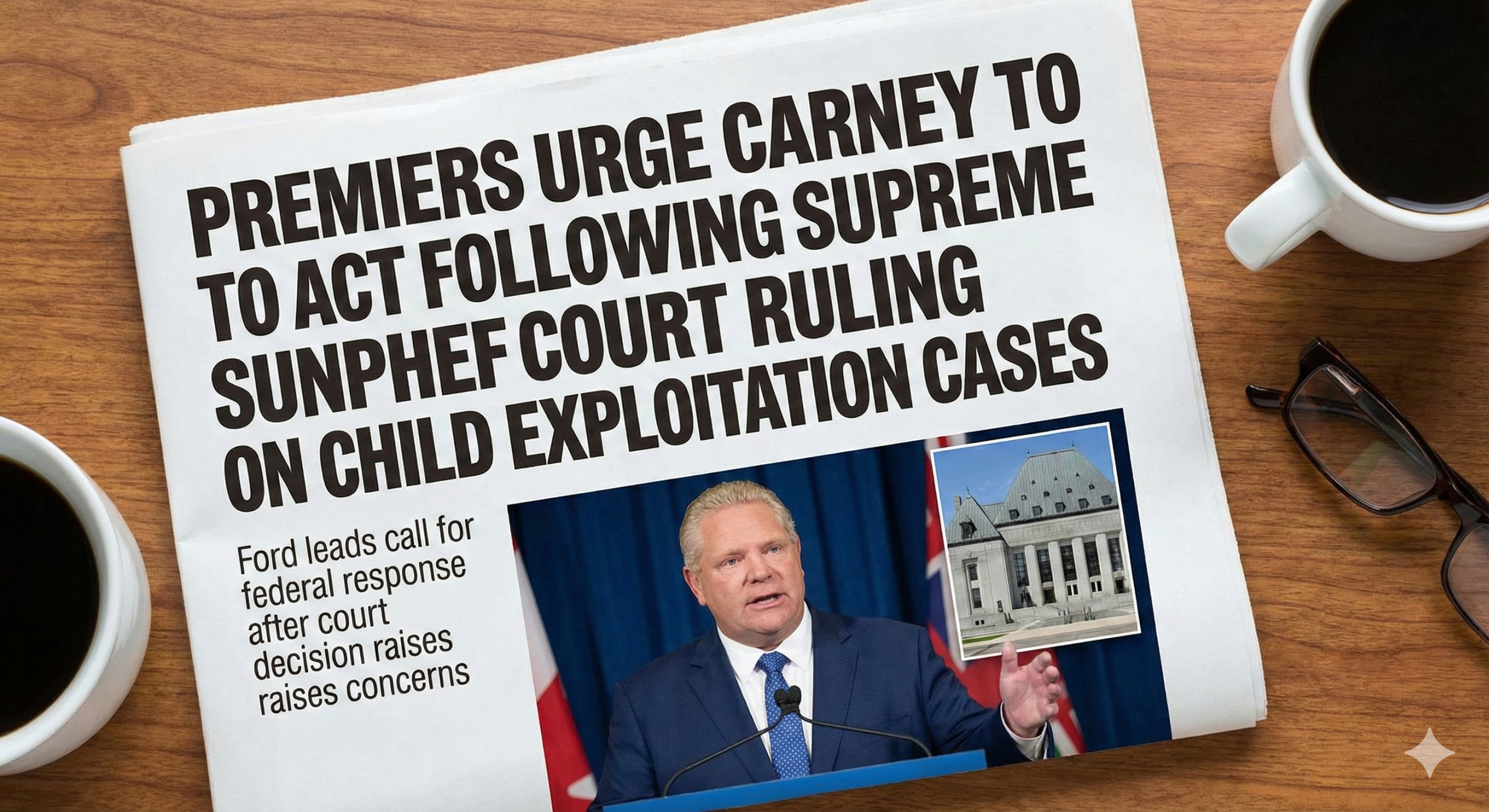
  • Ford and Other Premiers Urge Carney to Act After Supreme Court Ruling on Certain Child Exploitation Cases

    Ford and Other Premiers Urge Carney to Act After Supreme Court Ruling on Certain Child Exploitation Cases

    Growing Political Pressure After Landmark High Court Decision in Canada

    Canada is witnessing an intense political and legal debate following a controversial ruling by the Supreme Court of Canada that struck down mandatory minimum jail sentences for certain child exploitation offences, particularly those relating to the possession and accessing of illegal child sexual abuse material. The ruling has triggered strong reactions from several provincial premiers, opposition leaders, and justice advocates who are now urging Prime Minister Mark Carney to take decisive action.

    At the centre of the controversy is the court’s 5-4 decision declaring that the one-year mandatory minimum sentence for specific offences involving child pornography violates the Canadian Charter of Rights and Freedoms. The judges reasoned that such rigid sentencing removes judicial discretion and could lead to unconstitutional outcomes in rare or exceptional cases.

    While the court emphasized that it is not minimizing the seriousness of these crimes, its decision has ignited concern among political leaders who argue that removing mandatory jail time sends the wrong message and weakens deterrence.


    Premiers Demand Use of the ‘Notwithstanding Clause’

    Several provincial leaders, including Ontario Premier Doug Ford, Alberta Premier Danielle Smith, and Conservative opposition leader Pierre Poilievre, have called on Prime Minister Mark Carney to invoke Section 33 of the Charter — commonly known as the “notwithstanding clause.” This clause allows governments to override certain constitutional rights for a limited period of time when deemed necessary.

    Premier Doug Ford was particularly vocal in his condemnation of the Supreme Court ruling, describing the offence as one of the most disturbing crimes imaginable. He argued that individuals involved in the creation, distribution, or possession of such material should face strict and unavoidable jail time.

    Ford stated that the courts had stepped outside the expectations of ordinary Canadians and insisted that Parliament must step in to protect vulnerable children and uphold public confidence in the justice system.


    Manitoba Premier Sparks Controversy With Strong Remarks

    Manitoba Premier Wab Kinew also echoed calls for harsher sentencing but drew backlash for the tone and intensity of his comments. While stressing that crimes involving child sexual abuse are among the most severe violations of human rights, Kinew’s statements were criticized for appearing to promote punitive rhetoric rather than constructive legal reform.

    The Criminal Defence Lawyers Association of Manitoba condemned his remarks, asserting that such language from a public official inflames emotions and undermines the principle of balanced justice. The association reminded the public that the justice system must remain rooted in proportionality, due process, and constitutional safeguards.


    Nova Scotia and Other Provinces Join the Call for Action

    Nova Scotia’s Justice Minister Scott Armstrong announced plans to engage directly with federal officials in Ottawa. He emphasized the importance of restoring firm sentencing that deters offenders and reassures victims and their families that justice is being served.

    Armstrong stated that strong penalties are essential not only for punishment but also for preventing future crimes and reinforcing the seriousness with which Canada treats child exploitation offences.

    Support for stricter sentencing has also come from other provincial representatives who believe the federal government must respond swiftly to public outrage and perceived gaps in the criminal justice system.


    Legal Experts Defend Supreme Court’s Position

    Despite political backlash, many legal scholars and constitutional experts have defended the Supreme Court’s reasoning. They argue that mandatory minimum sentences can lead to unjust outcomes, especially in complex or rare scenarios where personal circumstances significantly affect culpability.

    Wayne MacKay, a law professor from Dalhousie University, explained that the court is not condoning the crime but ensuring that penalties align appropriately with specific case details. According to MacKay, the principle that punishment must fit the crime is fundamental in Canadian law.

    Experts also note that the ruling does not eliminate prison sentences; instead, it restores a judge’s ability to determine whether incarceration or alternative penalties are appropriate in each individual case.


    Federal Government Rejects Use of Override Clause

    Prime Minister Mark Carney’s Liberal government has firmly stated that it will not invoke the notwithstanding clause to overturn the Supreme Court’s ruling. Federal Justice Minister Sean Fraser clarified that while the government takes child exploitation seriously, it will seek solutions that uphold constitutional values.

    Fraser explained that Ottawa is exploring alternative approaches such as strengthening investigative capabilities, improving digital crime enforcement, and enhancing victim support services, rather than bypassing the constitution.

    The government believes that respecting judicial independence and constitutional limits is crucial for maintaining the integrity of Canada’s democratic institutions.


    Public Reaction and National Debate Intensify

    The ruling has sparked widespread discussion across the country, with citizens, advocacy groups, and media outlets weighing in on the balance between protecting children and preserving civil liberties.

    Many parents and child welfare organizations argue that strict jail sentences are essential to safeguard minors from exploitation. Others warn that emotional responses should not drive laws that may unintentionally weaken judicial fairness.

    This national conversation has highlighted deeper questions about the role of punishment, rehabilitation, and legal discretion in Canada’s justice system.


    Understanding the Notwithstanding Clause

    The notwithstanding clause was designed as a constitutional compromise, enabling legislatures to override certain rights for up to five years. It has historically been used sparingly and remains a politically sensitive tool due to its implications for civil liberties.

    While some leaders view its use as necessary to correct judicial overreach, others fear it could erode the separation of powers and set a dangerous precedent for future governance.


    What Happens Next?

    Although the federal government has declined to override the Supreme Court ruling, pressure continues to mount. Provinces may pursue independent policy adjustments, and Parliament could propose amendments that align sentencing laws with constitutional standards while addressing public concerns.

    This evolving situation reflects a critical moment in Canadian politics where legal interpretation, public safety, and constitutional rights are converging in a high-stakes national conversation.

    As debate continues, one reality remains clear: the protection of children and the fairness of the justice system will remain central priorities in shaping Canada’s legal future.

  • Quebec’s New Health Law Triggers Doctor Exodus as Ontario Prepares for Influx of Physicians

    Quebec’s New Health Law Triggers Doctor Exodus as Ontario Prepares for Influx of Physicians

    Ontario is preparing for a significant wave of incoming physicians as a growing number of doctors from Quebec seek to relocate in response to a controversial new law that dramatically changes how healthcare professionals are paid in the French-speaking province. The legislation, intended to reform Quebec’s healthcare system, has sparked widespread dissatisfaction among doctors, with many now looking to Ontario as a more stable and respectful environment to continue their medical practice.

    Over the past several weeks, the Ontario College of Physicians and Surgeons has reported receiving nearly 300 applications from Quebec-based doctors expressing interest in practising in Ontario. This surge has raised national attention, highlighting deep tensions between healthcare professionals and the Quebec government over recently introduced payment and performance reforms.

    A Controversial Law Reshaping Quebec’s Healthcare System

    At the core of the unrest is a new law introduced by Quebec’s provincial government that significantly alters the way physicians are compensated. Traditionally, doctors in Quebec were paid primarily through a fee-for-service model. However, the new system links a portion of their salaries to performance targets, aiming to improve efficiency and patient care metrics.

    Performance-Based Pay Model Sparks Outrage

    Under the revised structure, family doctors will receive a fixed payment for each patient visit, with additional income tied to meeting specific productivity and service benchmarks. These include requirements such as treating 75 percent of emergency room patients within 90 minutes and completing 97 percent of surgeries within a year of medical assessment. Should these targets not be met, doctors face the possibility of having their wages reduced through salary clawbacks.

    Critics argue that the system fails to account for real-world operational challenges, including staff shortages, limited hospital resources, and increasing patient volumes. Many physicians feel they are being unfairly penalised for systemic problems beyond their control.

    Doctors Speak Out: Frustration from the Frontlines

    Dr. Trevor Hennesey, a Quebec physician who has decided to move his practice to Ontario, has publicly expressed frustration over the situation. He described a critical shortage of nurses leading to hospital operating room closures, which directly affects patient care and physician productivity.

    According to Dr. Hennesey, nine of the twelve operating rooms at his hospital have been closed due to insufficient nursing staff, leaving surgeons and anaesthetists unable to perform procedures. Despite these limitations, doctors are being held accountable for delays and inefficiencies that stem from broader infrastructure failures.

    “We have professionals ready and able to work, but the system simply doesn’t allow it,” Hennesey explained. “And yet, we’re being blamed for the issues in the system.”

    Growing Discontent and Mass Protests

    Although the law will not officially come into effect until January, it has already led to widespread unrest. Thousands of doctors and healthcare workers joined protests over the weekend, voicing strong opposition to the government’s approach. Many view the legislation as punitive rather than supportive, designed to pressure physicians rather than address the root causes of healthcare challenges.

    Harsh Penalties for Protesters

    In response to the demonstrations, Quebec authorities warned that doctors participating in protests could face fines of up to $20,000 per day. This has further intensified tensions, with medical associations arguing that such penalties stifle democratic expression and worsen the fragile relationship between the government and the healthcare community.

    Despite the threat of heavy fines, protests have continued, reflecting the depth of frustration among physicians who fear the new system will damage morale, reduce healthcare quality, and push skilled professionals out of the province.

    Ontario Seizes the Opportunity

    As Quebec grapples with discontent among its medical workforce, Ontario is positioning itself as an attractive alternative for displaced physicians. Premier Doug Ford has publicly invited Quebec doctors to apply for positions in Ontario, emphasising the province’s commitment to respecting healthcare professionals and providing a supportive working environment.

    A Welcoming Message from Ontario Leadership

    “If you treat your doctors well and you respect them, they’re going to stay, and they’re going to have a thriving practice,” Ford stated, reinforcing Ontario’s stance as a province that values and supports its medical community.

    The influx of Quebec doctors could help alleviate Ontario’s own healthcare workforce shortages, particularly in rural and underserved areas. With increased demand for medical services across Canada, this movement could bring both opportunities and challenges to Ontario’s healthcare system.

    Quebec Government Defends Its Position

    Quebec Premier François Legault has firmly defended the new law, arguing that reforms are essential to improve the efficiency and accessibility of healthcare services. According to Legault, performance-based measures are necessary to ensure that public funding delivers tangible results and that patients receive timely care.

    Focus on Patient Outcomes

    Legault maintains that the changes are designed to create accountability and reduce long wait times, which have long been a concern in Quebec’s healthcare system. He insists that the ultimate goal is to improve conditions for patients and create a more responsive healthcare framework.

    However, many healthcare professionals believe the approach is overly rigid and ignores practical realities, such as resource shortages and burnout among frontline workers.

    Impact on Quebec’s Healthcare System

    If the trend continues, Quebec may face significant challenges in retaining qualified doctors, particularly specialists and family practitioners. The departure of experienced physicians could strain hospitals, extend waiting periods, and reduce access to healthcare services for residents across the province.

    Risk of Long-Term Damage

    Healthcare experts warn that a mass migration of doctors could create long-term implications, including increased patient loads, reduced quality of care, and higher pressure on remaining medical staff. This could further destabilise an already stretched healthcare system.

    Moreover, the loss of trained professionals represents not only a medical deficit but also a financial one, as Quebec has invested significantly in the education and training of its doctors.

    Ontario’s Healthcare System: Ready or Strained?

    While Ontario welcomes the influx, questions remain about whether the province’s healthcare infrastructure can smoothly integrate such a large number of new physicians. Licensing processes, hospital placement, and regional distribution will need careful coordination to ensure that new arrivals can practise effectively.

    Potential Benefits and Challenges

    The arrival of Quebec doctors could reduce patient wait times, increase access to specialised services, and strengthen hospital staffing. However, it may also require additional funding, administrative adjustments, and strategic workforce planning to ensure sustainable integration.

    Understanding the Bigger Picture

    The situation reflects a broader national challenge in Canada’s healthcare system, where provinces struggle to balance accountability, efficiency, and professional well-being. The debate highlights the complexity of healthcare reform and the need for policies that consider both patient outcomes and the realities faced by frontline medical workers.

    A Call for Collaborative Reform

    Many medical associations argue that meaningful reform should involve consultation and collaboration with healthcare professionals rather than unilateral policy changes. A cooperative approach, they say, would foster trust, encourage retention, and produce more effective solutions.

    Conclusion: A Healthcare Crisis in Transition

    As Quebec’s new law looms closer to implementation, the migration of doctors to Ontario continues to grow, signalling deep dissatisfaction with the province’s healthcare reforms. While Ontario stands to benefit from the arrival of experienced physicians, Quebec risks weakening its medical infrastructure at a time when healthcare demands are rising.

    The coming months will be critical in determining whether Quebec can stabilise its healthcare workforce or whether the exodus will accelerate further. Ultimately, the situation serves as a stark reminder that healthcare reform must strike a careful balance between accountability, efficiency, and respect for the professionals who form the backbone of the system.

  • Canada Considers Swedish Gripen Fighter Jet Offer Amid Possible Shift from U.S. Defence Deal

    Canada Considers Swedish Gripen Fighter Jet Offer Amid Possible Shift from U.S. Defence Deal

    Canada is once again re-evaluating its defence procurement strategy as it considers a renewed offer from Sweden for its Gripen fighter jets, a move that could signal a strategic shift away from a long-standing deal with the United States for F-35 aircraft. This development comes during a high-profile royal visit from Sweden, highlighting growing diplomatic, trade, and military ties between the two nations.

    The visit of the King and Queen of Sweden to Ottawa has placed renewed focus on strengthening bilateral relations. Accompanied by senior government ministers and industry leaders, the Swedish delegation is promoting deeper collaboration across multiple sectors, including defence, trade, and environmental cooperation. At the centre of these discussions lies Sweden’s determined effort to position its Gripen fighter jet as a viable and potentially superior alternative for Canada’s future air defence needs.

    Strategic Diplomacy and a Strengthening Partnership

    Canadian Prime Minister Mark Carney formally welcomed the Swedish royal couple during the start of their three-day visit, underlining the importance of this moment in international relations. Describing the current global climate as exceptional, Carney stressed that the shared values and long-standing friendship between Canada and Sweden are more crucial than ever.

    A New Era of Cooperation

    During the visit, Canada and Sweden signed a strategic partnership agreement aimed at reinforcing collaboration in defence, trade, environmental initiatives, and broader global challenges. Both leaders reiterated their shared commitment to supporting Ukraine and addressing security concerns in the Arctic region, where both countries maintain significant strategic interests.

    King Carl XVI Gustaf noted the unique position of Canada and Sweden as Arctic nations and highlighted their mutual responsibility in tackling climate issues and security threats arising from changing geopolitical dynamics. The formal reaffirmation of this alliance reflects a mutual understanding that future global stability depends on reliable and like-minded partners.

    Renewed Push for Swedish Gripen Fighter Jets

    The central defence issue emerging from the visit involves Swedish defence company SAAB’s renewed proposal to supply Gripen fighter jets to the Royal Canadian Air Force. Previously, SAAB lost the major contract to Lockheed Martin’s F-35, which was selected as Canada’s primary next-generation fighter aircraft.

    However, shifting economic conditions and rising trade tensions with the United States have prompted Canada to reconsider the scale and scope of the original agreement. The initial plan to purchase a full fleet of F-35s has now been adjusted, with Canada committing to only 16 aircraft while leaving the option open for an additional 70 in the future.

    Economic Considerations and Industrial Benefits

    Canadian Industry Minister Melanie Joly voiced concerns regarding the limited industrial return from the F-35 deal. She pointed out that the contract has not generated the level of job creation or domestic manufacturing benefits Canadians expected, sparking debate about whether the deal truly serves national interests.

    Joly emphasized that any major defence procurement should deliver tangible economic gains, particularly in terms of job creation and industrial development across Canadian provinces. This stance has opened the door wider for SAAB’s Gripen proposal, which promises substantial employment opportunities and technology transfer.

    SAAB’s Joint Venture Proposal

    SAAB is positioning its Gripen fighter jet as a cost-effective, versatile, and Arctic-optimized solution for Canada’s defence needs. The company has proposed a joint venture that would see Gripen aircraft assembled in Canada, not only for domestic defence but also for export markets.

    Manufacturing and Technology Transfer

    According to SAAB CEO Micael Johansson, the company is prepared to invest in Canadian manufacturing infrastructure, including establishing production facilities and a central operational hub. The proposal outlines the potential creation of nearly 10,000 highly skilled jobs, spanning engineering, advanced manufacturing, and technical services.

    Johansson stressed the importance of Canada maintaining sovereign capability over its defence equipment, including the ability to conduct upgrades, assemble critical components, and perform final testing within its own borders. This approach, he argued, would strengthen Canada’s independence while boosting economic growth within the country.

    Political and Strategic Motivation

    The Canadian government’s reassessment of its reliance on American defence systems reflects a broader policy vision. Prime Minister Carney has been vocal about reducing Canada’s dependence on the United States, especially in light of ongoing trade disputes and unpredictable geopolitical dynamics.

    Moving Toward Strategic Autonomy

    Carney’s administration has spent recent months expanding trade and security alliances globally, aiming to diversify Canada’s international partnerships. A defence agreement with Sweden aligns closely with this strategy, offering a way to balance North American security cooperation while reinforcing global independence.

    Sweden’s Deputy Prime Minister Ebba Busch echoed these sentiments, describing the present global environment as turbulent and complex. She praised Canada’s strategic leadership and emphasised Sweden’s intention to foster long-term cooperation built on trust and shared democratic values.

    The Arctic Dimension and Military Capability

    One of the strongest arguments in favour of the Gripen is its suitability for Arctic conditions. SAAB maintains that the Gripen fighter is designed to operate efficiently in extreme climates and remote regions, making it an ideal choice for defending Canada’s vast northern territories.

    Operational Advantages

    The Gripen’s ability to perform short take-offs and landings, operate from dispersed locations, and require lower maintenance costs makes it appealing for geography like Canada’s. These features could potentially enhance Canada’s defence operations while reducing long-term expenditure.

    Military planners must now evaluate whether the Gripen can meet or exceed the performance and interoperability standards set by the F-35, which remains one of the most advanced stealth fighters in the world.

    Workforce and Industry Impact

    Sweden’s limited population and engineering workforce could benefit from a collaborative venture with Canada’s well-established aerospace sector. Canada’s skilled labour pool, coupled with SAAB’s advanced technology, could create a mutually beneficial manufacturing ecosystem.

    A Boost for the Canadian Economy

    The proposed joint venture could provide high-paying jobs, stimulate regional development, and reinforce Canada’s global reputation in aerospace manufacturing. It would also create opportunities for Canadian companies to participate in international defence supply chains.

    For policymakers, this potential economic gain must be weighed against strategic defence needs and long-term military readiness.

    Decision Yet to Be Finalized

    While the renewed Swedish offer has generated considerable interest and discussion, the final decision has yet to be made. The Carney government continues to assess whether SAAB’s Gripen proposal aligns with Canada’s defence objectives, economic goals, and security commitments.

    Balancing Defence and Diplomacy

    Choosing the Gripen over additional F-35s would represent a notable policy shift, reflecting Canada’s desire to assert greater independence while strengthening ties with trusted allies beyond the United States. However, the government remains cautious, recognizing the complexity and gravity of such a decision.

    Conclusion: A Defining Moment for Canadian Defence Policy

    Canada stands at a critical crossroads in its defence planning. The Swedish proposal offers a compelling blend of economic benefits, technological advancement, and strategic autonomy. At the same time, the F-35 programme represents established military integration with longstanding allies.

    As Ottawa continues its evaluation, the outcome will not only shape the future of Canada’s air force but also define its broader geopolitical alignment. Whether Canada ultimately chooses to deepen its partnership with Sweden or maintains its reliance on U.S. defence systems, this decision will have lasting implications for national security, economic growth, and global diplomacy.

    For now, both nations await the government’s final stance, understanding that the choice will reflect Canada’s vision for its role in an increasingly complex and interconnected world.

  • Carney Announces New Round of Canada’s ‘Nation Building’ Projects to Strengthen Economy and Reduce U.S. Dependence

    Carney Announces New Round of Canada’s ‘Nation Building’ Projects to Strengthen Economy and Reduce U.S. Dependence

    Prime Minister Mark Carney has unveiled a new wave of large-scale infrastructure and resource development initiatives, describing them as a fresh series of “nation building projects” aimed at reshaping Canada’s economic future. These projects are intended to boost national competitiveness, accelerate economic diversification, and reduce the country’s reliance on the United States by strengthening domestic production and expanding trade with global partners.

    According to Carney, this latest group of mega-projects represents a transformative investment of approximately $56 billion and is expected to generate around 68,000 new jobs across Canada. The initiatives span multiple provinces and territories and cover critical sectors such as mining, energy, infrastructure, and natural resource development, all of which play a key role in long-term national growth.

    A National Strategy for Economic Transformation

    The newly announced projects are spread strategically across the country, reflecting a coordinated effort to stimulate regional economies while reinforcing Canada’s position as a global supplier of essential resources. From energy transmission networks in British Columbia to mining operations in Ontario, Quebec, and New Brunswick, and hydroelectric development in Nunavut, the plan signals a broad and ambitious vision for modernizing Canada’s economic framework.

    Building Resilience Through Infrastructure

    Carney emphasized that these initiatives are designed to connect regions, diversify economic activity, and create sustainable opportunities for Canadian workers. He described the projects as a long-term investment in the nation’s prosperity, intended to support trade expansion and domestic manufacturing while enabling Canada to compete more effectively on the global stage.

    “These are projects that will connect, diversify and propel forward our economy,” Carney stated. “Projects that will help us expand our exports to new partners. Projects that will create hundreds of thousands of good-paying union jobs for Canadian workers.”

    Key Projects Across the Country

    The new tranche includes several high-profile developments that target critical sectors of the Canadian economy. Each project is aimed at enhancing production capacity while addressing growing global demand for essential materials and clean energy solutions.

    British Columbia: Powering Resource Expansion

    In northwestern British Columbia, a major energy transmission line is planned to supply power to emerging mining operations and facilitate export expansion. This infrastructure will support the extraction and processing of critical minerals, positioning the province as a central hub for resource development.

    Additionally, British Columbia is set to host a new liquefied natural gas (LNG) facility, which, once completed, will become Canada’s second-largest LNG plant. The development is expected to significantly boost energy exports while contributing to job creation and regional economic growth.

    Ontario and Quebec: Strengthening the Mining Sector

    Further east, a proposed nickel mine in northern Ontario is among the flagship projects. The Crawford Nickel Mine, once operational, is anticipated to become the largest nickel sulfide mine in the western world. This project is seen as vital for supporting the battery supply chain and meeting the demands of electric vehicle production and renewable energy storage.

    In Quebec, a new graphite mine is planned to supply materials essential for battery manufacturing and defense applications. The project aligns with Canada’s broader goal of becoming a reliable supplier of critical minerals, particularly as global industries shift toward sustainable and low-carbon technologies.

    Atlantic Canada and the North

    New Brunswick will see the development of a tungsten mine, further diversifying Canada’s mining portfolio and reinforcing its role in supplying strategic minerals. Meanwhile, a hydroelectric project in Nunavut is set to improve energy reliability in the region while supporting sustainable development in northern communities.

    Together, these projects represent a comprehensive approach to strengthening Canada’s natural resource sector while maintaining a balance between economic growth and environmental responsibility.

    The Role of the Major Projects Office

    To ensure the efficient execution of these large-scale initiatives, the federal government has introduced the Major Projects Office. This newly established body is tasked with streamlining approval processes and accelerating infrastructure development by reducing administrative delays.

    Fast-Tracking Development and Financing

    Dawn Farrell, Chief Executive Officer of the Major Projects Office, explained that the office’s primary objective is to help projects move seamlessly from planning to completion. By cutting red tape and coordinating with stakeholders, the office aims to ensure that initiatives are delivered on time and within budget.

    “Our job is all about making sure that people get across the line, get everything they need to get it built on time and on budget,” Farrell said, highlighting the commitment to efficiency and accountability.

    Political Reactions and Opposition Concerns

    While the projects have received support from several provincial leaders, the initiative has also drawn criticism from opposition parties. Conservative leader Pierre Poilievre expressed skepticism, arguing that the creation of the Major Projects Office adds another layer of bureaucracy for resource companies.

    Concerns Over Red Tape

    “He’s created yet another bureaucracy, a new bureaucratic hurdle for miners, for oil and gas enterprises and other resource companies to jump through in order to get anything approved,” Poilievre said, questioning whether the new structure would genuinely simplify the process.

    Despite these concerns, the government maintains that the office is designed to remove obstacles rather than create them, providing clearer pathways for approval and funding.

    Meeting the Growing Demand for Critical Minerals

    A significant focus of Carney’s announcement is the development of critical mineral corridors, particularly in northwest British Columbia and the Yukon. These regions are known to hold vast deposits of minerals essential for modern technologies and sustainable energy systems.

    Preparing for Global Market Shifts

    Carney highlighted projections indicating that global demand for critical minerals is expected to increase fivefold by 2050. He noted that current supply chains are heavily concentrated in a single country, creating risks for the global economy.

    “What the world wants is Canada to be the reliable supplier of critical minerals as the world moves toward building a more sustainable economy,” Carney explained, reinforcing Canada’s ambition to become a trusted source for these essential materials.

    Provincial Support and Calls for Expanded Investment

    Provincial leaders have largely welcomed the announcement, recognizing the economic potential of the new projects. However, some provinces are calling for even greater investment, particularly in large-scale energy development.

    Ontario’s Push for Nuclear Expansion

    Ontario Premier Doug Ford has supported the Crawford Nickel Mine but is also advocating for increased federal involvement in nuclear energy. Stephen Lecce, Ontario’s Energy and Mines Minister, emphasized the need for substantial funding to support national nuclear infrastructure and research.

    He stated that investing in large-scale nuclear development could significantly contribute to Canada’s GDP while strengthening energy security and reducing reliance on external sources.

    Confidence Building Through Project Referrals

    Although none of the newly announced projects have yet received official designation, Carney explained that their inclusion on the referral list provides reassurance to investors and stakeholders. This status is intended to signal government backing and improve access to financing, making it more likely that these projects will progress to completion.

    Strengthening Investor Confidence

    Being part of the referral process allows projects to benefit from streamlined procedures, reducing uncertainty and encouraging private sector participation. Carney noted that this approach ensures that Canada remains competitive in attracting investment and executing large-scale developments.

    ‘Buy Canadian’ Policy and National Economic Vision

    In addition to promoting infrastructure development, Carney reinforced his ‘buy Canadian’ policy, which will apply to major projects. This policy aims to prioritize domestic suppliers and contractors, ensuring that Canadian businesses and workers directly benefit from federal investments.

    Supporting Domestic Industry

    By encouraging the use of Canadian-made materials and services, the government hopes to strengthen local industries and keep more economic value within the country. This strategy reflects a broader vision of building a self-reliant and resilient national economy.

    Conclusion: A Defining Moment for Canada’s Economic Future

    Prime Minister Mark Carney’s announcement of a new round of nation building projects mar

  • Hello world!

    Welcome to WordPress. This is your first post. Edit or delete it, then start writing!