Blog

  • Floats Take Over New York City for the 99th Annual Macy’s Thanksgiving Day Parade

    Floats Take Over New York City for the 99th Annual Macy’s Thanksgiving Day Parade

    New York City once again transformed into a giant, colorful stage as the 99th annual Macy’s Thanksgiving Day Parade took over the streets of Manhattan in a dazzling display of oversized balloons, creative floats, marching bands, and celebrity performances. Drawing millions of spectators both on-site and through live broadcasts around the world, the iconic parade reaffirmed its status as one of the most beloved holiday traditions in the United States.

    From towering character balloons to newly introduced floats and musical acts, the 2025 edition of the parade delivered a vibrant blend of nostalgia and innovation as it moved through the Big Apple.


    A Timeless American Tradition Returns

    First held in 1924, the Macy’s Thanksgiving Day Parade has become deeply woven into American culture. Every year, families gather along the streets of New York City or in front of their television screens to witness the spectacle that officially kicks off the holiday season.

    As the parade approached its historic 100th year, excitement was higher than ever. The 99th edition paid tribute to its rich legacy while introducing new creative elements that reflect modern pop culture and global entertainment trends.

    This year’s celebration featured:

    • Larger-than-life balloon characters

    • Newly designed themed floats

    • High school and college marching bands from across the U.S.

    • Dance squads, cheerleaders, and community performers

    • Live music and special celebrity appearances

    The result was a visually stunning and emotionally uplifting experience for audiences of all ages.


    New Floats Debut at Press Preview in New Jersey

    Ahead of the parade, Macy’s hosted a special press preview at its Parade Studio in Moonachie, New Jersey, where media and invited guests got their first look at the newest additions to the float lineup.

    Pop Mart’s Labubu and Mokoko Make Their Debut

    Among the most talked-about new floats was the colorful creation featuring Pop Mart’s beloved characters, Labubu and Mokoko. The playful and whimsical design instantly caught the attention of attendees and fans on social media.

    The float was designed with a vibrant color palette, detailed craftsmanship, and signature Pop Mart aesthetics. It symbolized an exciting blend of Eastern and Western pop culture, highlighting the parade’s expanding global appeal.

    This addition represented a broader shift in the parade’s direction — one that embraces globally recognized brands and characters to connect with a younger, more diverse audience.


    The Parade Route Comes Alive in Manhattan

    On Thanksgiving morning, thousands of spectators lined up along the traditional parade route in Midtown Manhattan, wrapped in scarves and coats as they waited patiently for the start of the show.

    As the first floats and balloons made their way through the streets, cheers echoed between the tall buildings. The parade traveled past iconic New York landmarks, turning the city into a vibrant celebration zone.

    Families, tourists, and longtime parade fans waved, snapped photos, and soaked in the festive atmosphere. Children stared in awe at the towering characters floating above their heads, while parents and grandparents shared stories of parades they had watched decades earlier.

    Despite the chilly November weather, the energy on the streets was warm, festive, and electric.


    Iconic Balloons Continue to Steal the Show

    One of the most anticipated features of the Macy’s Thanksgiving Day Parade is always the giant helium balloons. This year did not disappoint.

    Characters from:

    • Classic cartoons

    • Animated movies

    • Video games

    • Children’s shows

    • Comic books

    …soared high above the streets of New York, guided by large teams of handlers. These balloons required months of precision planning, design, and testing to ensure safe navigation through the city’s skyline.

    Each one was met with applause and excitement from the crowd, proving again why they are a central symbol of the parade’s identity.


    Music, Dance and Celebrity Power

    In addition to the visual spectacle, the parade featured a lineup of live musical performances and celebrity appearances on specially designed performance floats.

    Popular artists delivered holiday-themed and hit-song performances, adding rhythm and excitement to the already vibrant event. Dance troupes, choirs, and marching bands enhanced the festive mood with choreographed routines and powerful melodies.

    High school and college marching bands traveled from various states to participate, showcasing their talent on one of the world’s biggest stages. For many students, being part of the Macy’s Parade is a once-in-a-lifetime experience.


    A Massive Production Behind the Scenes

    The Macy’s Thanksgiving Day Parade is not just a public celebration — it is a massive production effort that involves months of behind-the-scenes preparation.

    Key facts about the production include:

    • Hundreds of Macy’s employees and volunteers

    • Weeks of rehearsal for performers

    • Detailed float construction requiring expert engineers and artists

    • Advanced safety planning involving city officials and police

    • Coordination between broadcasters, organizers, and local authorities

    Every balloon, float, performance, and movement through the city is carefully timed and monitored. This extraordinary coordination ensures that the parade runs smoothly from beginning to end.

    The event is also a major economic booster for the city, drawing visitors from across the country and contributing to tourism, hospitality, and retail industries.


    Millions Watch Around the World

    While thousands gathered on the streets of New York, millions more watched the parade on television and online streaming platforms. Over the years, the Macy’s Thanksgiving Day Parade has grown into a global event, reaching audiences far beyond the United States.

    Social media platforms were flooded with:

    • Photos of new floats

    • Videos of performances

    • Reactions from viewers

    • Behind-the-scenes clips

    The hashtag related to the parade trended across multiple platforms, showing how the event continues to resonate with fans across generations and borders.


    Symbol of Unity, Hope and Holiday Spirit

    Beyond the floats and performances, the parade represents something deeper for many people — a sense of togetherness, hope, and tradition.

    In a world often filled with conflict and stress, the Macy’s Thanksgiving Day Parade offers a moment of joy, color and celebration. It brings families together, reconnects people with childhood memories, and reminds everyone of the magic of the holiday season.

    Many spectators described this year’s parade as:

    • “Inspiring”

    • “Full of joy”

    • “A beautiful start to the holidays”

    • “Something the world needs more of”

    As the 99th edition came to an end, excitement already began building for next year’s monumental 100th anniversary parade.


    Looking Ahead to the 100th Anniversary

    With one year remaining until the 100th Macy’s Thanksgiving Day Parade, anticipation is already sky-high. Industry insiders and fans expect even bigger balloons, more elaborate floats, and unforgettable performances to mark the historic milestone.

    If the 99th parade was any indication, the centennial celebration promises to be one of the most memorable events in the history of American parades.


    Final Thoughts

    The 99th Annual Macy’s Thanksgiving Day Parade once again proved why it stands as one of the greatest and most enduring celebrations in the world. Combining art, culture, music, and tradition, it turned New York City into a living canvas of joy and creativity.

    From new global characters like Labubu and Mokoko to the classic balloons and grand performances, this year’s parade was a beautiful reminder that tradition can evolve while still honoring its roots.


  • Progress Update: Inside the Rehabilitation of Parliament’s Centre Block

    Progress Update: Inside the Rehabilitation of Parliament’s Centre Block

    Ottawa — Work on the massive rehabilitation of Parliament Hill’s Centre Block has now reached roughly the halfway point, offering a rare look at the transformation of one of Canada’s most iconic and historic structures.

    The multi-year restoration project, which is expected to span more than a decade, focuses on modernizing the heart of the Canadian Parliament while preserving its architectural and historical significance. At the center of the redevelopment is the creation of a new, state-of-the-art underground welcome centre, designed to improve safety, accessibility, and visitor experience.

    Recent images from the site reveal workers deep within the excavation area where the welcome centre is being constructed, highlighting the scale and complexity of the undertaking. Heavy equipment, reinforced structures and ongoing groundwork demonstrate steady progress as engineers and construction crews continue their work beneath Parliament Hill.

    The Centre Block, which houses the Senate Chamber, the House of Commons chamber, and the iconic Peace Tower, has been closed since 2019 to allow for the extensive upgrades. The rehabilitation includes seismic reinforcement, replacement of outdated mechanical and electrical systems, and the careful restoration of stonework and heritage elements dating back over a century.

    Officials involved in the project describe it as one of the most significant heritage rehabilitation efforts ever conducted in Canada. The goal is not only to preserve a national symbol for future generations but also to ensure the building meets modern safety, sustainability and accessibility standards.

    Construction continues daily behind secured fencing surrounding the East and West lawns of Parliament Hill. While the iconic façade remains familiar, much of the interior has been stripped down for restoration and renewal.

    The Centre Block renovation is expected to be completed in the early to mid-2030s, representing one of the largest and most technically challenging infrastructure projects in the country’s history.

  • Knicks Dominate Raptors 116-94 to Secure Fourth Straight Win at Madison Square Garden

    Knicks Dominate Raptors 116-94 to Secure Fourth Straight Win at Madison Square Garden

    The New York Knicks continued their strong run of form on Sunday night, delivering an impressive 116-94 victory over the Toronto Raptors at Madison Square Garden. In a game that showcased both depth and resilience, the Knicks overcame a brief third-quarter scare to secure their fourth consecutive win and further strengthen their position in the Eastern Conference standings.

    With multiple players stepping up on both ends of the court, New York not only protected its home court but also sent a clear message ahead of its upcoming NBA Cup semifinal showdown with Toronto.


    Balanced Scoring and Hustle Power Knicks’ Victory

    The Knicks’ success on the night was the result of a balanced offensive effort and relentless hustle from across the lineup. Josh Hart delivered a standout all-around performance, recording 20 points, 12 rebounds, and seven assists. His energy and versatility once again proved why his promotion to the starting lineup has been such a pivotal turning point for the team.

    Karl-Anthony Towns also played a major role in the win, contributing 22 points and eight rebounds. Whether working in the paint or creating space on the perimeter, Towns posed a consistent problem for the Raptors’ defense throughout the game.

    Jalen Brunson continued to be an effective floor general, finishing with 18 points, seven assists, and six rebounds. His leadership and composure in key moments provided the Knicks with stability when the momentum briefly shifted in Toronto’s favor.

    Supporting contributions came from Mikal Bridges and Miles McBride, who each scored 14 points. Their ability to step in and provide scoring punch off the wing helped maintain the Knicks’ offensive rhythm.

    With the win, New York improved to an outstanding 10-1 record at home and 13-6 overall, reinforcing Madison Square Garden’s status as one of the league’s toughest places to play.


    The Impact of Josh Hart in the Starting Lineup

    One of the major storylines surrounding the Knicks in recent weeks has been the decision to shift Josh Hart into the starting lineup — a move that has paid immediate dividends. Since Hart was inserted into the starting five last week, the Knicks have not lost a game.

    Hart’s influence goes far beyond the box score. His high basketball IQ, ability to rebound from the guard position, and willingness to do the gritty, unglamorous work have transformed the team’s energy. His 20-point outing on Sunday was complemented by two crucial three-pointers and key defensive stops at important moments.

    Even more importantly, Hart’s spark fueled the Knicks during a critical stretch in the second half, halting Toronto’s comeback attempt and restoring New York’s control over the game.


    Raptors’ Effort Falls Short Despite Strong Performances

    Although the final score suggested a comfortable win for the Knicks, the Raptors put up a spirited fight, especially in the third quarter. Immanuel Quickley, facing his former team, led Toronto with 19 points and eight assists, demonstrating both confidence and composure throughout the contest.

    Scottie Barnes also made his presence felt, adding 18 points and showing the versatility and athleticism that have made him a cornerstone of Toronto’s roster. Despite their individual efforts, however, the Raptors struggled to maintain consistency on both ends of the floor.

    Toronto entered the game fresh off the end of a nine-game winning streak, which had been snapped the night before in a road loss to Charlotte. That loss appeared to carry some emotional and physical toll, as the Raptors found it difficult to match New York’s intensity for a full 48 minutes.

    Following Sunday’s defeat, the Raptors dropped to 14-7 on the season — still a strong record, but one that reflects how competitive and unforgiving the Eastern Conference remains.


    A Strong Start Nearly Turns into a Scare

    The Knicks came out firing in the first half, building a commanding 24-point lead that seemed to put the game firmly in their control. Their ball movement was sharp, shots were falling, and their defensive rotations limited Toronto’s easy scoring opportunities.

    However, the Raptors, known for their resilience, refused to go away quietly. Midway through the third quarter, Toronto mounted an impressive comeback and cut the Knicks’ lead down to just three points at 70-67.

    For a brief moment, the momentum shifted noticeably. Toronto’s defense tightened, and the Knicks appeared to lose some of their earlier rhythm on offense. The crowd at Madison Square Garden grew restless as the comfortable lead rapidly disappeared.

    It was a critical moment — one that would test the Knicks’ maturity and ability to respond under pressure.


    16-1 Run Seals the Game

    Just when it seemed Toronto might complete a dramatic turnaround, the Knicks stepped up in decisive fashion. Josh Hart and Mikal Bridges led a dominant 16-1 run over a span of just 4 minutes and 20 seconds.

    During that surge, Hart knocked down two three-pointers and added aggressive drives to the basket, while Bridges contributed six points and assisted on both of Hart’s deep shots. The run completely shifted the momentum back in New York’s favor, reigniting the crowd and deflating Toronto’s confidence.

    From that point on, the Knicks never looked back. Their defense tightened, their rebounding edge grew, and their shot selection improved, allowing them to pull away comfortably in the final quarter and secure a comprehensive 22-point win.

    This run was a perfect example of the Knicks’ growing chemistry and ability to rise in clutch situations — qualities that are essential for a team with postseason aspirations.


    Eyes Now Turn to NBA Cup Semifinal

    Sunday night’s matchup was not just another regular-season game — it also served as a preview of what’s to come. The Knicks and Raptors are set to meet once again in the NBA Cup Eastern Conference semifinals, scheduled to take place in Toronto on Dec. 9.

    That rematch now carries added intrigue. Toronto will be eager to respond after this loss and defend their home court, while New York will head into the semifinal full of confidence, riding a four-game winning streak and a flawless record since Hart joined the starters.

    The game is shaping up to be a significant early-season test for both squads, with momentum, pride, and tournament progression on the line.

    For the Knicks, another strong performance could solidify their emergence as a legitimate threat in the East. For the Raptors, it presents an opportunity to demonstrate their resilience and bounce back in a high-stakes environment.


    Conclusion: Knicks Send a Statement with Authority

    The New York Knicks’ 116-94 victory over the Toronto Raptors was about more than just another mark in the win column. It was a display of balance, resilience, and cohesion — three qualities that define successful teams.

    From Josh Hart’s all-around brilliance to Karl-Anthony Towns’ steady scoring and Jalen Brunson’s leadership, the Knicks proved they have multiple weapons and the mindset to respond when challenged.

    Despite Toronto’s determined push, New York’s ability to regain control and dominate the final stretch highlighted a maturity that fans and analysts will take note of moving forward.

    As both teams prepare to meet again in the NBA Cup semifinals, one thing is clear: the intensity between these two Eastern Conference rivals is only going to grow. And if Sunday’s matchup was any indication, fans can expect an electrifying and fiercely contested battle when they square off again in Toronto.

  • Time Magazine Mistakenly Quotes Canadian Satirical Site, Sparking International Confusion

    Time Magazine Mistakenly Quotes Canadian Satirical Site, Sparking International Confusion

    A major editorial blunder recently unfolded when Time magazine mistakenly treated a satirical quote from a Canadian parody website as a real statement, highlighting the growing challenges news organizations face in verifying information in a digital and increasingly automated media environment. The incident involved a fabricated remark attributed to the U.S. Ambassador to Canada, Pete Hoekstra, which was originally created by the Canadian satire outlet The Beaverton.

    The error not only misrepresented a high-ranking diplomat but also reignited debates around fact-checking standards, satire recognition, and the role of artificial intelligence in modern journalism.


    How a Satirical Quote Found Its Way Into a Global Publication

    The confusion stemmed from a recent Time magazine article discussing strained diplomatic and trade relations between the United States and Canada. In the piece, Time referenced an event hosted by the Halifax Chamber of Commerce, where Ambassador Pete Hoekstra reportedly expressed frustration over Canada’s role in American politics and trade negotiations.

    Among the alleged quotes was an aggressive and alarming statement suggesting Canada could be targeted with extreme consequences:

    “A Canada that it would be very easy to target with 500% steel tariffs, or one patriot missile aimed at Parliament Hill.”

    This dramatic quote, attributed to Hoekstra in Time’s original article, was completely fabricated. In reality, the statement had been created by writers at The Beaverton, a well-known Canadian satirical and parody publication similar in style and intent to the American outlet The Onion.

    Hoekstra never made the remark.


    The Beaverton: A Satirical Publication Meant to Entertain, Not Deceive

    The Beaverton is recognized for publishing fictional, comedic stories inspired by real-world events. Its content is deliberately exaggerated to satirize political, social, and cultural developments. The website includes a disclaimer explaining that when real individuals or organizations are named, the details of the story are entirely fictional.

    The controversial quote in question originated from a satirical article titled:

    “U.S. Ambassador threatens to tariff, annex, and bomb Canada if anti-American sentiment doesn’t improve.”

    According to Ian MacIntyre, a writer at The Beaverton, the quote was “entirely made up” and contained “no grain of truth whatsoever.” MacIntyre confirmed to CTVNews.ca that the article was purely comedic in nature and never intended to be misinterpreted as a factual report.

    He stated that he believed the exaggerated tone of the satire would make the joke obvious to readers.

    “I thought it would be very clear that what we wrote was a complete joke,” he said. “Apparently, Time magazine did not see it that way.”


    Two Months of Confusion Before a Correction Was Issued

    The satirical article was originally published in September and remained online for several months. Despite its fictional nature, the invented quote somehow made its way into Time’s reporting and was treated as a legitimate diplomatic threat.

    It took nearly two months for the error to be discovered and publicly addressed. On Friday, Time finally issued a correction at the end of the original article, acknowledging the mistake:

    “The original version of this story incorrectly attributed a quote from a satirical site to Pete Hoekstra, the U.S. Ambassador to Canada.”

    While the correction clarified the situation, the delay raised serious questions about editorial oversight at major media organizations.

    Clare Blackwood, an actor, comedian, and writer at The Beaverton, called the situation “wild” and somewhat unbelievable.

    “For two months, people thought that the United States might shoot a patriot missile at Parliament Hill — and nobody raised the alarm,” she said, half in disbelief.


    Concerns Over Fact-Checking and the Role of AI in Journalism

    Beyond the embarrassment of the simple mistake, the incident has drawn attention to deeper concerns within the journalism industry, particularly regarding research methods and source verification.

    Blackwood questioned how such an error could happen inside a respected media organization.

    “What kind of research went into this? How did they end up using a satirical quote from The Beaverton?” she asked.

    MacIntyre also raised the possibility that artificial intelligence or automated tools may have played a role in gathering or summarizing information used by the reporter.

    “I don’t know if that’s what happened,” he said carefully. “But it certainly makes you wonder. Time never reached out to us for clarification, so it’s hard to know exactly how the quote ended up in their story.”

    AI-powered tools are increasingly used in newsrooms to speed up research, summarize topics, and even write draft content. However, this case highlights how dangerous automation can become when not paired with human verification and traditional journalistic standards.


    A History of Satire Being Mistaken for Reality

    This is not the first time that The Beaverton has seen its fictional content misinterpreted as factual reporting. According to MacIntyre and Blackwood, multiple publications over the years have cited their satirical articles without realizing that they were written as jokes.

    While satire has long served as a powerful tool to comment on politics and society, its lines can blur in today’s fast-moving information cycle, especially on social media where articles are often shared without context.

    “We’re trying to write the most obviously ridiculous stories we can,” MacIntyre said. “We’re poking fun at the news, not trying to fool anyone. That’s never been our goal.”

    Still, the fact that a respected international publication failed to recognize satire has intensified concerns about how easily misinformation — even unintentional — can spread across borders.


    The Real-World Impact of a Simple Error

    Although the situation may appear humorous on the surface, attributing violent or hostile language to a diplomat carries serious geopolitical implications. In an era of tense international relations and ongoing trade disputes, inaccurate reporting can inflame tensions, mislead the public, and undermine trust in both governments and media institutions.

    Blackwood shared that she wished, if a mistaken quote was going to be used, it had been taken from a less sensitive or less inflammatory article.

    “I would have preferred it was one of our more harmless jokes,” she said. “Something that didn’t have potential global consequences.”

    The situation has forced conversations about the responsibility of major publications to verify every quote — no matter how believable it may seem or where it is sourced.


    A Wake-Up Call for the Media Industry

    In response to the incident, media analysts and journalists alike are now reinforcing the importance of critical reading, multiple-source verification, and human editorial oversight.

    While parody and satire serve valuable purposes in society, this case proves that the distinction between fact and fiction can easily disappear when editorial standards slip. In a media environment where speed often takes priority over accuracy, even the most trusted publications risk damaging their credibility.

    As for The Beaverton, its contributors maintain that satire will always be part of their mission — but they hope news organizations will exercise greater caution moving forward.

    “We’re here to make people laugh and think,” MacIntyre added. “We never imagined one of our jokes would end up in Time as real diplomatic commentary. But here we are.”


    Conclusion: A Lesson in Media Literacy and Accountability

    The Time magazine misquote stands as a powerful example of why strong fact-checking and media literacy are more important than ever. In an age where information spreads within seconds and algorithms often decide what is seen, the responsibility of journalists, editors, and readers to verify sources has never been greater.

    What began as a satirical joke ended as an international reporting error — one that took two months to correct. For many, the incident is both a cautionary tale and a reminder: even the most established publications are not immune to mistakes.

    As the media industry continues to evolve alongside technology, the line between satire and fact must be guarded with care, precision, and accountability — because the consequences of crossing it can reach far beyond a simple joke.

  • I Started Crying”: Why Thousands of Families Are Walking Away from Toronto for Other Parts of Ontario

    I Started Crying”: Why Thousands of Families Are Walking Away from Toronto for Other Parts of Ontario

    Toronto has long been promoted as the place where opportunity lives — a city of careers, diversity, and upward mobility. For many families, that promise was the reason they moved to the Greater Toronto Area (GTA) in the first place. But for a growing number of residents, reality has started to look very different.

    According to new data from Environics Analytics, more than 35,000 households left the GTA in the past year alone, relocating to other regions across Canada. A large proportion of those families stayed within Ontario, choosing areas such as Simcoe County, Hamilton, and smaller communities like Chatham and London.

    What was once considered a temporary trend connected to the pandemic is now revealing itself as a longer-term shift. Families are not simply moving away for more space — they are leaving because the city has become increasingly difficult to live in, raise children in, and plan a future within.

    This is the second part of an ongoing series examining where Toronto residents are going and, more importantly, why they are making the decision to leave.


    When a Six-Figure Income Still Isn’t Enough

    Andrea Griffith believed that earning a combined household income of $200,000 a year would secure a comfortable life in Toronto. With a stable career, a supportive partner, and a newborn daughter, she assumed she could finally step out of the rental cycle and own a modest home.

    She quickly discovered that assumption was wrong.

    Just weeks after giving birth at the age of 43, Griffith and her family were forced to vacate the basement apartment they had been renting in Scarborough. Although they qualified for a mortgage of up to $750,000, the search for a suitable home in the city painted a harsh reality: the homes in that price range were often small, outdated, or far from the lifestyle they hoped to create for their child.

    “On paper, it looked like we could afford to stay,” she said. “But in real life, it would have meant huge financial stress. I knew we would end up ‘house poor.’”

    The term “house poor” is now common among Toronto residents — referring to people who spend such a high percentage of their income on housing that they have little left for savings, childcare, transportation, or emergencies. For a new family, this risk felt unacceptable.

    Ultimately, Griffith and her partner made a difficult choice: they left the city and moved more than 300 kilometres southwest to Chatham, Ontario. There, they were able to purchase a detached home with breathing room in their budget — something that felt impossible in Toronto.

    Financially, the move brought relief. Emotionally, it was far more complicated.

    “I started crying because my daughter won’t have anyone at her second birthday,” Griffith admitted. “We don’t know anyone here. We left our entire support system behind.”

    Even so, she is confident the decision was the right one.

    “If renting in Toronto had been more affordable and more secure, we probably would have stayed longer,” she said. “But we couldn’t keep living on the edge.”


    Safety Concerns Push Parents to Reconsider City Living

    For other families, money is only part of the problem. Personal safety — or the lack of it — has become an equally powerful reason to leave.

    Dustin Titus, 43, lived in South Etobicoke’s Long Branch neighbourhood with his family. One ordinary afternoon, while his young son was riding a balance bike, the boy veered dangerously close to the street. The moment was brief, but its impact was lasting.

    “That scared me more than anything else,” Titus explained. “It made me realize just how vulnerable we were. You feel exposed in the city these days.”

    Beyond traffic concerns, Titus described a growing discomfort with what his family encountered daily: speeding vehicles, heavy congestion, visible drug use in public spaces, and a general sense that things were becoming less controlled, especially for young children.

    Eventually, they made the decision to relocate to Horseshoe Valley in Oro-Medonte, a small community in Simcoe County. What they found there stood in sharp contrast to their Toronto experience.

    “Within three days of moving in, every neighbour had come over to introduce themselves,” he said. “We felt welcomed immediately — like we were part of something, not just living beside strangers.”

    The ability to walk his children to school without fear and to see them play outdoors freely gave Titus a sense of peace he had not felt in years.

    “It just feels natural here,” he added. “And when you have a family, that sense of normalcy is priceless.”


    School Access Becomes a Breaking Point

    For Morley Abbott, 39, the driving factor behind his family’s decision was education.

    He and his wife live in North York, directly across from one of the area’s top-rated elementary schools. They assumed their daughter would eventually attend that school. However, a recent adjustment in school zoning boundaries meant that their home would no longer be included in the school’s catchment area. Instead, their daughter would be required to travel several kilometres away by bus to a different school.

    While the change may sound minor, it forced the family into a difficult moment of reflection.

    “We love our neighbourhood,” Abbott said. “But suddenly we were asking ourselves a bigger question: If our child can’t even attend the school across the street, then why are we staying here at all?”

    The change acted as a catalyst. After weighing their options, the family decided to move to London, Ontario — a city where their daughter will be able to attend school alongside her cousins and remain close to extended family.

    “It feels like families like ours are being forgotten in big cities,” Abbott said. “The system doesn’t seem designed to support us.”


    Experts Say the Trend Is Long-Standing — and Growing

    Urban planning expert Matti Siemiatycki, director of the University of Toronto’s Infrastructure Institute, says the movement away from the GTA has been happening for years. The difference now is the speed and scale of the shift.

    “When you combine the cost of housing, the challenges of finding childcare, and ongoing issues with school access, it becomes clear why families start looking elsewhere,” he explained. “Every neighbourhood has its own challenges, and people are simply choosing places where life feels more manageable.”

    The migration data confirms this. While some families are moving to other provinces, many are choosing smaller cities and towns within Ontario that offer a lower cost of living, a calmer environment, and better access to community resources.

    What was once considered a “downgrade” from the big city is now seen as a lifestyle upgrade.


    City Officials Respond to Growing Out-Migration

    Toronto officials are not ignoring the issue.

    In a statement, the office of Mayor Olivia Chow acknowledged the seriousness of the situation and outlined steps being taken to make the city more affordable. The city is working on increasing housing supply, strengthening renter protections, and supporting the construction of deeply affordable housing units.

    According to the mayor’s office, 25,000 new homes are expected to break ground this year and next, many through city-led or city-supported initiatives. Officials say the goal is simple: people who work and study in Toronto should be able to live in Toronto.

    However, not everyone is convinced that current efforts will be enough.

    City Councillor Brad Bradford described the mass departure of residents as a genuine crisis.

    “When tens of thousands of people are leaving your city every year, that’s a warning sign,” he said. “If 60 per cent of your workforce talked about quitting, the alarm bells would be ringing. This is no different.”


    A City at a Crossroads

    Toronto remains Canada’s largest economic hub, attracting skilled workers, students, and immigrants from around the world. Yet, as housing prices rise, neighborhoods become more crowded, and services are stretched thin, more families are left asking themselves a painful question: Is staying really worth it?

    For people like Andrea Griffith, Dustin Titus, and Morley Abbott, the answer was no.

    They did not leave in search of luxury — they left in search of stability, safety, and a future that felt possible.

    As thousands more families consider making the same choice, the city finds itself at a critical turning point. Without meaningful change, Toronto risks becoming a place people come to work — but no longer stay to build a life.

  • Rory McIlroy Criticizes LIV Golf’s “Irrational” Spending, Says PGA Tour Merger Would Be “Very Difficult”

    Rory McIlroy Criticizes LIV Golf’s “Irrational” Spending, Says PGA Tour Merger Would Be “Very Difficult”

    Introduction: A Sport Searching for Stability

    Golf has spent the past several years navigating one of the most turbulent periods in its modern history. The emergence of LIV Golf in 2021 fractured the professional landscape, pulled top players in competing directions, and ignited a global debate about money, tradition, and the future of the sport.

    Now, even after months of speculation about a possible reunification, one of golf’s most influential voices is openly expressing doubt. Rory McIlroy, fresh off his historic 2025 Masters victory, has made it clear he sees more obstacles than opportunities when it comes to a merger between the PGA Tour and LIV Golf. His recent comments at CNBC’s CEO Council Forum offered a blunt assessment — one rooted in experience, realism, and perhaps a touch of weariness after years at the center of the sport’s civil war.

    As he put it, unifying the tours sounds great in theory. In practice? It’s “very difficult.”

    In a sport known for calm tones and polite decorum, McIlroy’s latest remarks hit with unusual force. And they raise a pressing question: is golf anywhere close to healing its divide?


    McIlroy’s Candid Appraisal of a Fractured Sport

    A Voice That Carries Real Weight

    McIlroy has never been shy about sharing his perspective, especially when the integrity or future of the sport feels at stake. Over the past four years, he has found himself simultaneously competing at the highest level and serving, voluntarily or not, as one of golf’s most visible spokesmen.

    Speaking to a room filled with global business leaders, he addressed the potential merger without hesitation. He said the idea of bringing the PGA Tour and LIV Golf back together is admirable but wildly complicated — and complicated in a way that feels less like a puzzle and more like a tangled mess of competing interests, legal obstacles, and financial realities.

    His tone suggested both skepticism and fatigue. “You see some of these other sports that have been fractured for so long,” he said, referencing boxing and American motor racing. Those examples, he implied, are cautionary tales. Once a sport splits, reunification becomes a marathon full of missteps, missed chances, and unresolved tension.

    Golf, he believes, risks the same fate.


    The Difficult Path Toward Unification

    Lessons From Other Divided Sports

    McIlroy’s comparison to boxing wasn’t accidental. In that sport, rival promotions have spent decades struggling to align, often preventing fans from seeing the biggest fights. His analogy to IndyCar and NASCAR carried the same message: fragmentation dilutes the product, confuses viewers, and creates two versions of the same entertainment that rarely meet in the middle.

    He argued that, for the good of the sport, unity is the ideal. Fans want clarity. Players want a single ecosystem. Sponsors want a stable marketplace.

    But ideals, in this case, collide with reality.

    “I just think with what’s happened over the last few years,” McIlroy said, “it’s just going to be very difficult to be able to do that.”

    Four years of legal battles, public feuds, and record-breaking contracts have reshaped the power dynamic between the tours. And those changes are not easily unwound.


    LIV Golf’s Spending: “Irrational” and Unrelenting

    An Economic Strategy That Defies Convention

    McIlroy saved his sharpest criticism for LIV Golf’s financial model. He described the Saudi-backed league’s approach as “irrational,” not as an insult but as an economic reality check. The organization’s method of courting talent — by offering guaranteed contracts, many exceeding $100 million USD — has rewritten the cost structure of professional golf.

    He noted that billions have already been spent without producing any measurable return on investment. “It’s been four or five years and there hasn’t been a return yet,” he said. And the spending won’t end soon. According to McIlroy, maintaining LIV Golf’s current roster will require “another five or six billion” over the next cycle alone.

    The problem, as he sees it, is that players whose contracts expire will expect equal or higher compensation. That means the financial treadmill continues. “A lot of these guys’ contracts are up,” he added. “They’re going to ask for the same number or an even bigger number.”

    Which raises an important and uncomfortable question: how does a merger work when one side operates as if the budget is limitless and the other must balance books?


    A Sport Pulled Between Tradition and Transformation

    The Traditional Model vs. the Disruptor

    McIlroy has long positioned himself as a supporter of the established structure of men’s professional golf. The traditional model rewards performance, long-term consistency, and tournament prestige. LIV Golf flipped that paradigm by guaranteeing money upfront — a strategy that lured several major champions and international stars.

    In McIlroy’s view, this financial free-for-all makes negotiations nearly impossible. If one side operates according to market logic and the other works outside those constraints, how do you find a middle ground?

    His frustration is not rooted in resistance to innovation. Rather, it stems from the belief that the sport needs a coherent pathway — not two parallel systems sprinting further apart each season.


    A Fictional Moment That Speaks to the Real Crisis

    A Behind-the-Scenes Glimpse

    To capture the emotional undercurrent of the debate, imagine a fictional scene that mirrors the real tension. Picture McIlroy walking off a practice range at the DP World Tour Championship, approached quietly by a fellow pro who once considered joining LIV.

    “I thought the money would fix everything,” the player confides. “Turns out, it only fixed my bank balance.”

    McIlroy nods, half empathetic, half exasperated. “The game has to matter,” he replies. “Otherwise, what are we even doing?”

    While fictional, the sentiment reflects the very real conversations happening throughout the sport.


    The 2025 Context: A Season of Contradictions

    Triumph and Turbulence

    McIlroy’s comments come in a year where he reached a career milestone by winning the 2025 Masters, completing one of golf’s most coveted achievements. Yet even at the height of personal success, the bigger picture remained clouded by uncertainty.

    Golf is experiencing record viewership in some markets, declining engagement in others, and a constant tug-of-war among sponsors trying to navigate divided loyalties. In that environment, McIlroy’s call for caution feels less like pessimism and more like hard-earned realism.


    The Road Ahead: Is a Merger Even Feasible?

    Major Questions That Remain Unanswered

    McIlroy’s remarks highlight several unresolved challenges:

    • How do you merge two financial models that operate on opposite principles?

    • What happens to guaranteed LIV contracts in a unified system?

    • How do players reconcile years of public hostility and legal disputes?

    • Who governs the merged tour — and who funds it?

    Until those questions find credible answers, negotiations may remain theoretical at best.


    Conclusion: A Sport Still Searching for Direction

    Rory McIlroy’s commentary is larger than a headline — it’s a snapshot of a sport caught between ambition and uncertainty. His criticism of LIV Golf’s spending is not personal; it’s a reflection of economic realities he believes are unsustainable.

    His doubts about a merger aren’t rooted in reluctance but in pragmatism. Too much has happened, and too much money has changed hands, for the tours to snap back together cleanly.

    Golf may eventually find a path to unification, but if McIlroy is right, the journey will be far more complicated — and far less predictable — than many fans hope.

    For now, the divide remains. And the sport, much like its players on a windy day at Augusta, is trying to figure out which direction the next shot should go.

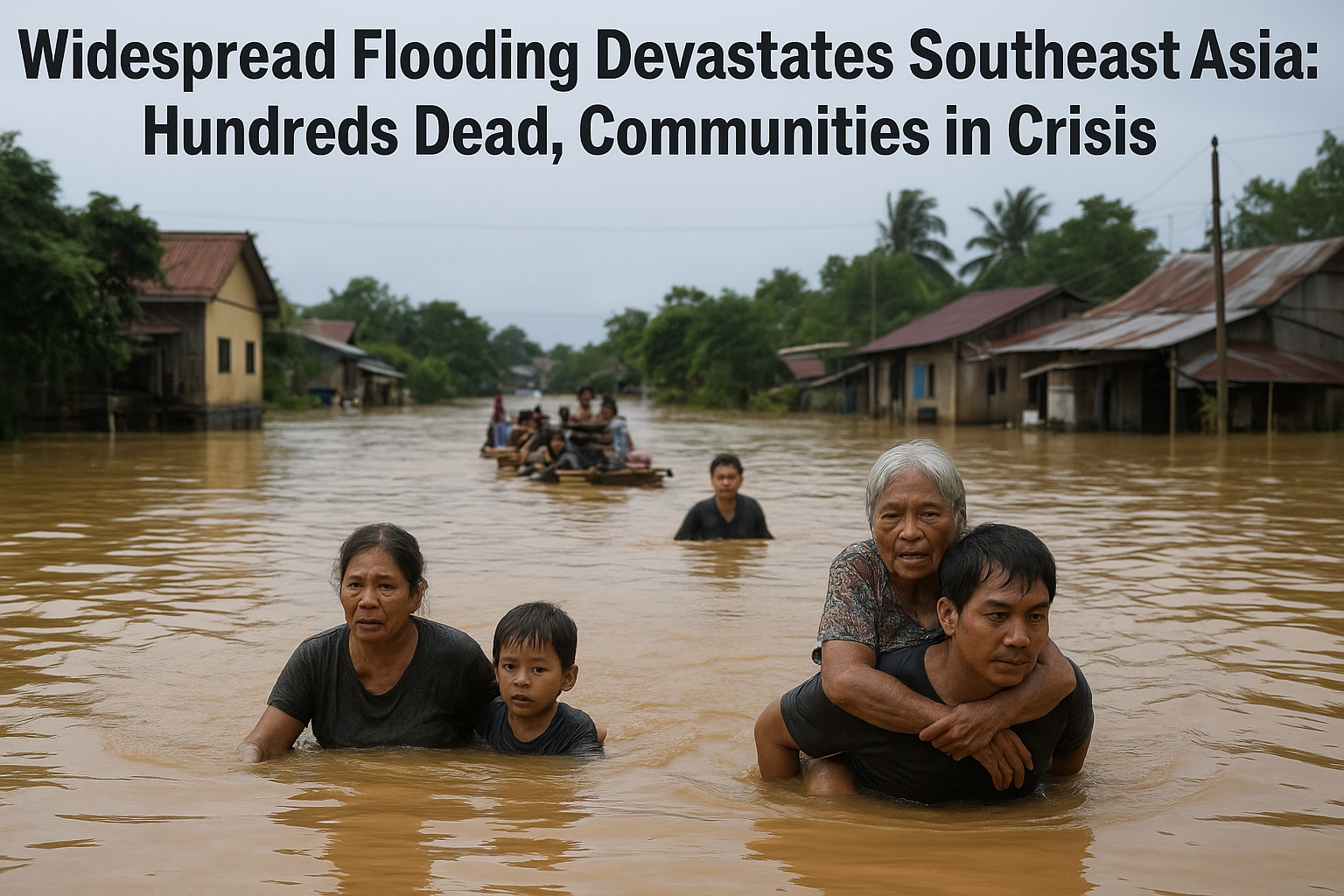
  • Widespread Flooding Devastates Southeast Asia: Hundreds Dead, Communities in Crisis

    Widespread Flooding Devastates Southeast Asia: Hundreds Dead, Communities in Crisis

    Overview: A Region Submerged

    Severe flooding across Southeast Asia has left hundreds dead and caused widespread destruction, as relentless torrential rains and seasonal monsoon systems overwhelmed rivers, inundated towns, and disrupted daily life across multiple countries. Emergency services, local authorities, and international aid agencies are scrambling to respond to mounting humanitarian needs while assessing the full scale of infrastructural and economic damage.

    Timeline and Areas Most Affected

    When and Where the Floods Struck

    Over the course of several days, intense rainfall—exacerbated in places by swollen upstream basins and poor drainage—triggered flash floods and riverine flooding in low-lying provinces and coastal zones. The hardest-hit areas include river valleys, coastal plains, and urban districts with aging drainage systems. Remote mountain communities have also reported catastrophic landslides after prolonged downpours saturated slopes.

    Country-Specific Impacts

    While the pattern of destruction varies by country, common threads include collapsed bridges, washed-out roads, submerged agricultural land, and overwhelmed hospitals and shelters. Urban centers reported extensive flooding in neighborhoods near rivers and estuaries, while rural communities saw entire hamlets isolated as access roads vanished beneath runoff.

    Human Cost and Emergency Response

    Lives Lost and People Displaced

    Authorities report that the death toll has reached into the hundreds, with many more injured or missing. Tens of thousands of people have been displaced, forced into temporary shelters in community centers, schools, and makeshift camps. In many areas, basic services—electricity, potable water, and communications—are intermittent or offline, complicating both rescue efforts and the accurate accounting of victims.

    Search, Rescue and Relief Operations

    Local rescue teams, military units, and volunteer groups have been deployed to the most dangerous zones. Boats, helicopters, and high-clearance vehicles are being used to extract trapped residents and transport medical supplies. International partners and non-governmental organizations are mobilizing emergency relief supplies—food, water purification tablets, hygiene kits, blankets, and medical aid—but access challenges and damaged logistics nodes slow delivery to the most remote sites.

    Coordination Challenges

    Coordinating response is proving difficult due to damaged infrastructure and rapidly evolving conditions. Floodwaters continue to shift the landscape, rendering some previously cleared routes unusable. Relief agencies are establishing centralized logistics hubs where feasible, but localized strategies—such as community-led distribution points—have become essential where formal supply chains break down.

    Infrastructure Damage and Economic Fallout

    Transportation and Utilities

    Major roads and rail lines have been cut in several provinces, hampering commerce and emergency access. Bridges and culverts have failed or been temporarily rendered impassable, increasing isolation for rural communities and forcing detours for critical goods. Power substations and communication towers in flood-prone zones have been affected, causing outages that hinder both relief coordination and normal life.

    Agriculture, Fisheries, and Local Livelihoods

    Regionally important agricultural areas have experienced severe crop losses. Standing water and silt deposits damage rice paddies and vegetable plots, and saltwater intrusion in coastal farms threatens longer-term productivity. Fisherfolk face ruined boats and fishing gear, while market disruptions limit the ability to sell surviving produce—dealing a dual shock to income and food security.

    Economic Costs and Long-Term Recovery

    Preliminary assessments suggest that economic losses will be substantial, encompassing infrastructure repair, lost agricultural output, and the cost of rebuilding homes and public facilities. Governments will likely need to balance immediate humanitarian expenditure with medium-term investments in resilient infrastructure—an expensive and politically sensitive trade-off for countries already managing tight budgets.

    Health Risks and Social Vulnerabilities

    Public Health Concerns

    Flood conditions raise acute public health risks: contaminated water supplies, outbreaks of waterborne diseases such as cholera and diarrheal illnesses, and increased mosquito breeding leading to potential spikes in vector-borne diseases. Overcrowded shelters raise the risk of respiratory and communicable disease transmission, while interruptions in chronic care and immunization services endanger vulnerable populations.

    Vulnerable Populations at Greatest Risk

    Children, the elderly, pregnant women, and those with disabilities face heightened danger during displacement. Informal settlements and economically marginalized communities often lack robust housing and secure land tenure, meaning recovery and access to aid can be slower and more precarious. Women and girls may face additional protection risks in overcrowded or poorly organized shelters.

    Environmental and Climate Context

    Meteorological Drivers and Climate Change Links

    While monsoon variability is a normal feature of the region’s climate, scientists note that warmer atmosphere conditions can intensify rainfall events and increase the risk of extreme precipitation. Land-use changes—such as deforestation upstream, urban expansion into floodplains, and inadequate drainage planning—have magnified vulnerability. These factors together create a scenario in which traditional coping mechanisms are increasingly overwhelmed.

    Lessons on Land Management

    Long-term resilience will require integrated land management: reforestation and upstream watershed protection, strengthened urban planning that limits development in high-risk zones, and investments in flood defenses and natural buffers like wetlands. Building back should prioritize nature-based solutions and adaptive infrastructure to reduce the likelihood of future catastrophic losses.

    International Aid and Policy Responses

    Cross-Border Assistance and Funding

    Several nations, regional organizations, and international NGOs have pledged support. Emergency funding, rapid-response teams, and relief shipments are being coordinated to supplement local capacities. Diplomatic channels are active in arranging overflight permissions, transport corridors, and customs facilitation for urgent humanitarian cargo.

    Policy Measures and Future Preparedness

    Governments are expected to review disaster preparedness plans, early warning systems, and evacuation protocols in the aftermath. Strengthening meteorological monitoring, improving real-time data sharing, and investing in community-level preparedness programs will be crucial policy priorities to mitigate the next extreme event.

    Conclusion: A Long Road to Recovery

    The recent floods across Southeast Asia have produced an immediate humanitarian crisis and a complex recovery challenge. With hundreds confirmed dead, tens of thousands displaced, and critical infrastructure damaged, the region faces a prolonged period of reconstruction and healing. Short-term relief is underway, but attention must quickly shift to resilient rebuilding and systemic reforms to reduce vulnerability to future storms.

    In the coming weeks, accurate damage assessments and coordinated international support will be essential. Policymakers, aid organizations, and communities will need to work in partnership to restore services, revive local economies, and implement durable measures that protect lives and livelihoods from the next inevitable deluge.

  • Five Arrested as CBSA’s Operation Meridian Uncovers Major Drug-Smuggling Network in Southern Ontario

    Five Arrested as CBSA’s Operation Meridian Uncovers Major Drug-Smuggling Network in Southern Ontario

    The Canada Border Services Agency (CBSA) has announced a sweeping series of arrests and seizures following a two-month enforcement initiative targeting drug trafficking through commercial ports of entry in Southern Ontario. The results of the operation, made public Friday, reveal a complex network attempting to move large quantities of illicit narcotics, weapons, and contraband across the border—an effort CBSA officials say has now been significantly disrupted.

    Operation Meridian, described by the agency as a “targeted” 60-day investigation, led to the seizure of more than 700 kilograms of illegal drugs, multiple firearms, prohibited weapons, tens of thousands of nicotine products, and over US$93,000 in suspected crime proceeds. Five individuals have now been charged in connection with the operation.


    A Coordinated Effort to Stop Cross-Border Drug Flow

    CBSA expands screening amid rising concerns

    According to the CBSA, Operation Meridian focused specifically on commercial shipments entering and leaving the country through Southern Ontario’s busiest land-border crossings. Over the past year, officials have expressed concern that organized crime groups are increasingly using legitimate commercial channels as cover for trafficking operations.

    During the 60-day period, border officers intensified examinations, deployed advanced detection tools, and conducted targeted inspections of high-risk shipments. The aim, the agency said, was to disrupt both inbound and outbound smuggling attempts, particularly those involving high-value narcotics destined for distribution networks across Canada.

    CBSA officials emphasized that the region’s strategic location—with multiple international crossings such as the Blue Water Bridge and Peace Bridge—makes it a key entry point for criminal organizations attempting to exploit commercial supply chains.


    Massive Haul: More Than 700 Kilograms of Drugs Seized

    Breakdown of seizures under Operation Meridian

    The scale of the operation’s results underscores the magnitude of trafficking efforts uncovered by border officers. In total, CBSA reported seizing:

    • Over 700 kg of illicit narcotics, including:

      • Cocaine

      • Methamphetamine

      • Khat

      • Opium

      • Contraband tobacco

    • Nine firearms

    • 19 additional prohibited or restricted weapons

    • More than 115,000 tins of nicotine

    • 14,400 vaporizers

    • US$93,100 believed to be proceeds of crime

    The agency noted that roughly 90 percent of seizures involved attempts to smuggle contraband into Canada, while the remaining 10 percent related to items being illegally exported.

    Michael Prosia, CBSA’s Regional Director General for Southern Ontario, called the outcome “remarkable,” emphasizing that the seized narcotics were destined for communities across the country. “The success of Operation Meridian highlights the effectiveness of coordinated efforts between the CBSA and law-enforcement partners,” Prosia said.


    Five Individuals Arrested in Connection With Smuggling Attempts

    Charges laid across multiple ports of entry

    As part of the operation, CBSA identified and arrested five individuals—three Canadians and two U.S. citizens—at two major ports of entry. Each case, authorities say, reflects a different method of smuggling or violation of customs and financial reporting laws.


    H3: Three Arrested for Major Meth and Cocaine Smuggling at Blue Water Bridge

    The Blue Water Bridge, which connects Sarnia, Ontario, to Port Huron, Michigan, is one of the busiest commercial crossings in Canada. During Operation Meridian, it became central to multiple large-scale drug seizures.

    Navpreet Singh, 32, of Stoney Creek

    Singh was arrested after border officers allegedly discovered 108.4 kilograms of cocaine concealed in a commercial shipment entering Canada. He now faces charges of:

    • Importation of a controlled substance

    • Possession of a controlled substance for the purpose of trafficking

    Karan Owaan, 24, of Kingston, and Gagandeep Singh Gharail, 32, of Brampton

    In a separate incident at the same port, officers intercepted a shipment allegedly containing 349.8 kilograms of methamphetamine. Both Owaan and Gharail were taken into custody and charged with:

    • Importation of a controlled substance

    • Possession for the purpose of trafficking

    CBSA officials said the meth seizure represents one of the operation’s single largest drug interceptions and may be linked to wider criminal supply networks.


    H3: U.S. Citizens Arrested at Peace Bridge for Firearm and Currency Offences

    The Peace Bridge in Fort Erie was the site of two additional arrests. In both cases, CBSA officers identified serious violations involving firearms and undeclared cash.

    River Donell Goldwire, 25, of Covington, Georgia

    Goldwire was arrested after officers allegedly discovered a stolen firearm during an inspection. He is now facing multiple charges under both the Customs Act and the Criminal Code, including:

    • Smuggling

    • Possession of a prohibited firearm

    • Possession of stolen property

    CBSA emphasized that the interception of firearms at the border remains a top priority for the agency.

    Oshin Sharara Thompson, 31, of Springfield, New York

    Thompson was apprehended on September 17 after failing to report US$93,100 while attempting to cross into Canada. Officers seized the currency and charged her under the Proceeds of Crime and Terrorism Financing Act.

    The agency noted that undeclared large sums of cash are frequently connected to organized crime activities, including drug trafficking, money laundering, and cross-border smuggling operations.


    A Closer Look at the Criminal Trends Identified

    Increasing use of commercial channels

    Authorities involved in Operation Meridian say the results confirm a troubling trend: organized crime groups are increasingly attempting to embed illicit cargo within legitimate commercial shipments. This method allows traffickers to exploit the volume and complexity of cross-border trade, making detection more difficult.

    Large quantities of cocaine and meth, such as those seized at the Blue Water Bridge, are often concealed within goods like produce, manufacturing equipment, or mixed cargo. CBSA’s enhanced inspection efforts during the operation relied on risk-assessment intelligence and advanced scanning tools to detect anomalies.

    Contraband nicotine and vaporizers surge

    One of the operation’s significant findings—beyond narcotics—was the seizure of over 115,000 tins of nicotine and 14,400 vape products. CBSA officials say the illicit tobacco and vaping market has grown rapidly, fueled by organized crime networks seeking high-profit, low-risk revenue streams.

    Smuggled nicotine products are often trafficked in bulk and sold illegally to avoid taxes and regulatory restrictions.


    Impact and Implications for Public Safety

    Disrupting distribution networks across Canada

    CBSA stated that the drugs seized were destined for multiple Canadian cities and, if successfully smuggled, could have fueled widespread distribution. The interception of more than 700 kilograms of narcotics is expected to have a significant impact on the supply chain for criminal organizations operating within Canada.

    Beyond drug trafficking, the seizure of firearms and proceeds of crime underscores the interconnected nature of these networks, where weapons, cash, and narcotics are frequently moved together.

    Importance of multi-agency cooperation

    Authorities credited collaboration with domestic and international partners—including law-enforcement agencies in the United States—for the success of Operation Meridian. Strong cross-border coordination allowed officers to identify high-risk shipments, track movement patterns, and intercept contraband before it dispersed into Canadian markets.


    CBSA’s Ongoing Commitment to Enforcement

    Operation Meridian is part of a broader series of initiatives aimed at strengthening border integrity and dismantling organized crime networks. The agency said it will continue investing in detection technologies, intelligence-driven enforcement, and targeted operations across key ports of entry.

    We have had remarkable success in intercepting smuggling efforts of dangerous narcotics destined to cities throughout the country,” Regional Director General Michael Prosia said. “This operation shows what is possible when our teams and partners work together toward a common goal.”


    Conclusion: A Significant Blow to Cross-Border Trafficking

    The arrests and massive seizures resulting from Operation Meridian mark one of Southern Ontario’s most substantial recent border-enforcement successes. With five individuals now facing serious charges and more than 700 kilograms of narcotics kept off the streets, CBSA officials say the operation has dealt a meaningful blow to smuggling operations exploiting commercial trade routes.

    As investigations continue, the CBSA maintains that protecting Canada’s borders remains a top priority — and Operation Meridian demonstrates the powerful impact of coordinated, intelligence-driven action.

  • Steven Guilbeault’s Resignation Puts Key Seats in Quebec and B.C. at Risk

    Steven Guilbeault’s Resignation Puts Key Seats in Quebec and B.C. at Risk

    The sudden resignation of former environment minister Steven Guilbeault has sent shockwaves through Canadian politics, raising fresh questions about Prime Minister Mark Carney’s leadership and the stability of the Liberal caucus. According to political analyst Lori Williams, Guilbeault’s departure represents “a real test” for the prime minister, particularly in regions where the former minister held significant influence—most notably Quebec and British Columbia (B.C.).

    Guilbeault, known for his strong environmental advocacy and his central role in shaping Canada’s climate policies, has been one of the most recognizable figures in the Liberal government. His resignation comes at a sensitive time, as the government faces growing pressure over economic concerns, climate commitments, and political competition from opposition parties that have been gaining traction in several provinces.


    Why Guilbeault’s Resignation Matters

    Guilbeault was not just another cabinet minister. A longtime environmental activist before entering politics, he brought both credibility and a loyal voter base to the Liberal Party’s climate agenda. His exit leaves a noticeable gap—not only in policy leadership but also in the public image of the government’s climate commitments.

    Guilbeault as the Face of Canada’s Climate Agenda

    Over the years, Guilbeault became synonymous with Canada’s climate strategy. He championed major policies, including emissions reductions targets, clean energy investments, and regulations to transition industries toward greener practices.

    Even critics acknowledged that he brought authenticity to the portfolio—something rare in modern politics. His activism background connected deeply with young voters, environmental groups, and progressive communities.

    Impact on the Liberal Brand

    His resignation may weaken the Liberal Party’s credibility on climate issues. Analysts suggest that without Guilbeault, it may become harder for the government to maintain support among voters who prioritize environmental action. It also reinforces perceptions that the government may be softening or recalibrating its approach to climate policy, especially amid rising economic concerns.


    Political Fallout in Quebec

    Quebec has long been a province where environmental issues hold major political influence. Guilbeault, as a popular Quebec figure, played a crucial role in strengthening the Liberals’ standing there.

    Why Quebec Seats Are Now Vulnerable

    Many voters in Quebec supported the Liberals specifically because of their strong climate stance—an area where Guilbeault excelled. His presence in the cabinet helped the party counter the Bloc Québécois, which often dominates climate and identity-related debates.

    With his resignation:

    • The Bloc Québécois may regain momentum.

    • Liberal support could drop in urban areas like Montreal.

    • Green-leaning voters may shift allegiance.

    Williams’ Assessment of Quebec’s Political Risks

    Lori Williams argues that without Guilbeault, Carney must work harder to reassure Quebec voters that the government remains committed to climate leadership. She warns that losing even a small percentage of environmentally conscious voters could tip several competitive ridings.


    Potential Consequences in British Columbia

    British Columbia is another province where climate issues strongly influence election outcomes. Similar to Quebec, B.C. has a large environmentally-minded voter base that has often aligned with the Liberals due to their green policies.

    Why B.C. Is Particularly Sensitive

    In B.C., issues such as wildfires, coastal erosion, and fossil fuel debates (like pipelines) are central to political decision-making. Guilbeault’s strong national climate presence helped the Liberals maintain support in environmentally active communities such as:

    • Vancouver

    • Victoria

    • North Vancouver

    • Burnaby

    Seats at Risk

    Analysts suggest that constituencies where the Liberals won by narrow margins could now be vulnerable. With Guilbeault gone, parties like the NDP and the Greens—already strong in B.C.—may capitalize on uncertainty about the Liberals’ climate direction.


    A Leadership Test for Mark Carney

    Guilbeault’s resignation is not just a regional issue—it is a direct test of Carney’s ability to manage internal party dynamics and maintain national unity.

    Rebuilding Trust Within the Quebec Caucus

    Quebec MPs relied heavily on Guilbeault’s popularity and credibility on environmental matters. Without him, Carney must reassure caucus members that:

    • Their province’s interests will remain a priority

    • Climate commitments won’t be diluted

    • A strong replacement will be appointed

    Maintaining morale within the Quebec caucus is crucial to preventing defections or weakening the party’s internal cohesion.

    Navigating Climate Policy Without Its Main Architect

    Guilbeault was central to shaping climate legislation, negotiating with provinces, and representing Canada internationally. Carney must now:

    • Identify a successor with equal credibility

    • Reaffirm the government’s climate vision

    • Withstand political attacks from opposition parties

    This moment could define his leadership as he faces both internal and external pressures.


    Public Reaction and Strategic Implications

    The public response to Guilbeault’s resignation has been mixed. Environmental groups expressed concern about losing a key partner inside government, while critics argue that the move reflects deeper tensions within the Liberal climate agenda.

    Environmental Community Concerns

    Activists fear that the timing of his resignation may signal a shift away from ambitious climate action. Some have demanded reassurance that Canada will:

    • Maintain emissions targets

    • Continue investing in clean energy

    • Strengthen climate regulations

    Opposition Parties Sensing Opportunity

    The Conservatives, NDP, Bloc Québécois, and Greens have all reacted strategically:

    • Conservatives argue it proves Liberal climate policy is “failing.”

    • NDP and Greens claim Guilbeault’s absence weakens environmental commitments.

    • Bloc Québécois sees an opening to absorb climate-focused Quebec voters.


    What Comes Next for the Liberal Party?

    The future impact of Guilbeault’s resignation will depend on how the government responds in the coming weeks. Carney must demonstrate stability, continuity, and strong leadership to prevent voter erosion.

    H4: Choosing the Right Successor

    Finding a capable replacement for Guilbeault will be the first critical step. The new minister will need:

    • Policy expertise

    • Public trust

    • Strong communication skills

    • Appeal in both Quebec and B.C.

    H4: Reaffirming Climate Commitments

    Carney may need to make high-profile announcements or policy reaffirmations to counter public doubt. Actions will matter more than words, especially in environmentally active regions.

    H4: Strengthening Regional Political Strategies

    The Liberals will likely adjust their campaigns in Quebec and B.C. to emphasize:

    • Continued climate action

    • Economic opportunities in clean energy

    • Regional development and sustainability


    Conclusion

    Steven Guilbeault’s resignation marks a pivotal moment in Canadian politics. His departure threatens to weaken the Liberal Party’s support in key provinces and places significant pressure on Prime Minister Mark Carney’s leadership. As Lori Williams warns, this moment represents “a real test”—one that will determine not only the future of the Liberal government’s climate agenda but also its electoral prospects in Quebec and British Columbia.

  • Five Arrested as CBSA Cracks Major Drug-Smuggling Network in Southern Ontario

    Five Arrested as CBSA Cracks Major Drug-Smuggling Network in Southern Ontario

    Operation Meridian Seizes Hundreds of Kilograms of Illegal Drugs, Firearms, and Proceeds of Crime

    The Canada Border Services Agency (CBSA) has announced the arrest of five individuals and the seizure of large quantities of illegal drugs, weapons, and suspected proceeds of crime following a major enforcement initiative at several key ports of entry across Southern Ontario. The 60-day targeted operation, known as Project Meridian, aimed to disrupt the cross-border movement of narcotics through commercial transportation channels, an area officials say remains a preferred method for organized crime groups.

    According to the CBSA, the results of the operation demonstrate the ongoing effectiveness of intensified border examinations, advanced detection tools, and coordinated efforts with law enforcement partners in Canada and the United States.


    A Two-Month Crackdown Focused on Commercial Smuggling Routes

    Heightened Screening and Detection Measures

    The CBSA reports that Operation Meridian focused on commercial shipments moving in and out of Canada through major Ontario border crossings. Officers employed specialized detection technology, targeted risk assessments, and increased inspection frequency to uncover hidden narcotics, contraband, and currency linked to criminal activity.

    These enhanced enforcement measures were designed to disrupt both import and export attempts, though officials stated that the “vast majority” of illegal activity involved smuggling into Canada.

    Roughly 90 per cent of these seizures were attempts to smuggle into Canada, while 10 per cent involved export violations,” the CBSA noted in its statement.

    Massive Seizures Highlight Scope of Criminal Activity

    During the 60-day operation, officers intercepted:

    • More than 700 kilograms of illicit drugs, including cocaine, methamphetamine, khat, opium, and contraband tobacco

    • Nine firearms and 19 additional prohibited or restricted weapons

    • Over 115,000 tins of illegal nicotine products

    • 14,400 vapourizers

    • US$93,100 in suspected proceeds of crime

    CBSA officials emphasized that these substances, if successfully smuggled into or out of the country, would likely have contributed to criminal networks operating across Canada and the United States.


    Five Arrested in Connection With Cross-Border Smuggling Attempts

    The CBSA identified five individuals who were arrested as part of Operation Meridian. Each case involved separate smuggling attempts at either the Blue Water Bridge or the Peace Bridge—both major commercial entry points between Canada and the U.S.

    Three Charged in Major Cocaine and Meth Seizures at Blue Water Bridge

    108 Kilograms of Cocaine Intercepted

    At the Blue Water Bridge port of entry, officers arrested Navpreet Singh, 32, of Stoney Creek, after allegedly discovering 108.4 kilograms of cocaine concealed within a commercial shipment. The CBSA stated that the drugs were strategically hidden to avoid detection, but advanced screening tools revealed inconsistencies that led to a thorough examination.

    349 Kilograms of Methamphetamine Seized

    In a separate incident at the same location, officers intercepted an even larger narcotics shipment. According to the CBSA, Karan Owaan, 24, of Kingston, and Gagandeep Singh Gharail, 32, of Brampton, attempted to smuggle 349.8 kilograms of methamphetamine into Canada. The drugs were reportedly packaged and stored in a manner consistent with organized trafficking operations.

    Both Owaan and Gharail were arrested on-site.

    Serious Trafficking Charges Filed

    All three individuals—Singh, Owaan, and Gharail—now face charges including:

    • Importation of a controlled substance

    • Possession of a controlled substance for the purpose of trafficking

    These offences carry significant penalties under Canadian law, including lengthy prison sentences.


    Weapons and Currency Smuggling Attempts Foiled at Peace Bridge

    Georgia Man Arrested With Stolen Firearm

    At the Peace Bridge, CBSA officers arrested 25-year-old River Donell Goldwire of Covington, Georgia, after he allegedly attempted to bring a stolen firearm across the border. During the secondary examination, officers discovered the weapon hidden within his belongings.

    Goldwire now faces several charges under both the Customs Act and the Criminal Code of Canada, including firearm possession offences and charges relating to false declarations at the border.

    US$93,100 in Undeclared Cash Leads to Arrest

    In another case at the same crossing, officers detained Oshin Sharara Thompson, 31, of Springfield, New York, on September 17 after she attempted to cross the border without declaring US$93,100. Under Canadian law, individuals must declare currency or monetary instruments valued at C$10,000 or more upon entry.

    After determining the funds were undeclared and potentially linked to criminal activity, the CBSA arrested Thompson and charged her under the Proceeds of Crime (Money Laundering) and Terrorist Financing Act.


    CBSA Officials Highlight Success of Coordinated Enforcement

    A Strong Message to Organized Crime

    Officials say the results of Operation Meridian underscore the effectiveness of intelligence-driven enforcement and cross-agency collaboration.

    We have had remarkable success in intercepting smuggling efforts of dangerous narcotics destined to cities throughout the country,” said Michael Prosia, Regional Director General for the CBSA in Southern Ontario.

    He added that the operation’s success reflects the strength of the agency’s partnerships with law enforcement agencies on both sides of the border, as well as the importance of ongoing vigilance at commercial entry points.

    Continued Pressure on Smuggling Networks

    Prosia emphasized that coordinated operations like Meridian are essential in combating organized crime, which frequently relies on commercial routes to transport large quantities of illegal substances.

    The success of Operation Meridian highlights the effectiveness of coordinated efforts between the CBSA and law enforcement partners,” he said.

    He also noted that the CBSA will continue to invest in detection technology, frontline training, and intelligence gathering to stay ahead of increasingly sophisticated smuggling techniques.


    Growing Role of Ontario Border Crossings in Drug Interdiction

    Commercial Ports as Key Targets

    Southern Ontario contains several of the busiest border crossings in the country, making it a focal point for law enforcement. The Blue Water Bridge, Peace Bridge, and Ambassador Bridge collectively handle thousands of commercial shipments daily. As traffickers increasingly use transport trucks and cargo shipments to conceal illicit materials, officers must rely on technological advancements and intelligence insight to identify suspicious loads.

    A High-Stakes Battle Against Organized Crime

    Drug trafficking through commercial channels poses significant risks. Successful smuggling operations can funnel dangerous narcotics into Canadian cities, fueling addiction, violence, and organized crime. The massive seizures made during Operation Meridian illustrate not only the scale of the threat but also the potential harm that was prevented.


    Conclusion: Operation Meridian Marks a Significant Win—but the Work Continues

    The arrests and seizures resulting from the CBSA’s two-month Operation Meridian reinforce the ongoing challenges of combating cross-border crime. With more than 700 kilograms of drugs, multiple weapons, and large amounts of undeclared cash intercepted, the operation represents a major win for border security and community safety.

    However, CBSA officials caution that criminal networks continue to adapt. As such, the agency remains committed to ongoing surveillance, targeted operations, and partnerships with domestic and international law enforcement agencies.

    For now, Operation Meridian stands as a clear signal: smugglers attempting to exploit Ontario’s ports of entry for criminal activity will face strong, coordinated, and relentless enforcement.