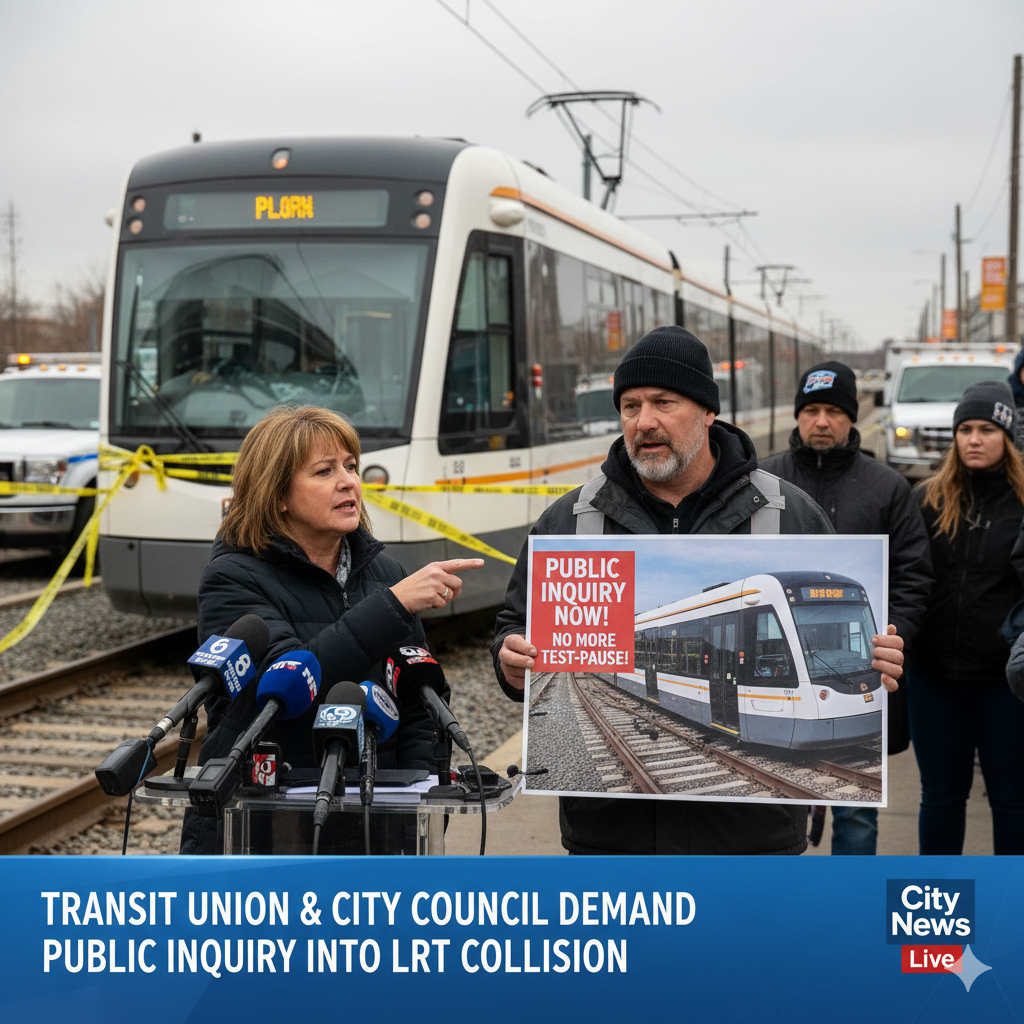
A growing chorus of transit workers and politicians is calling for a public, independent inquiry into the recently paused testing of the Eglinton Crosstown LRT — following a collision between vehicles in October. They argue that transparency and accountability are essential before the line is finally opened to the public.
What Happened: Collision and Testing Suspension
-
According to official statements, a 30-day “revenue service demonstration” (RSD) for the Eglinton Crosstown LRT began on October 7, 2025. This test is meant to simulate full service — with trains running the entire 19-kilometre, 25-station route — but without passengers.
-
On October 16, just over a week into testing, two LRT vehicles reportedly collided inside the yard at the Mount Dennis maintenance facility.
-
Following the incident, the province announced the RSD would be paused while safety reviews and investigations took place.
-
As of late 2025, the transit authority reports the LRT has now passed its final operating test and the line is moving toward “substantial completion.”
Who’s Calling for an Inquiry — and Why
Councillors and the Transit Union Speak Out
-
Josh Matlow, a Toronto city councillor, joined by ATU Local 113 (the union representing thousands of transit workers), held a news conference calling for full transparency about what went wrong.
-
Their demand: a public inquiry that would investigate the October collision, the reasons behind the test suspension, and the broader history of delays and cost overruns on the LRT project.
Voices of Concern Among Riders and Advocacy Groups
-
TTCriders, a transit advocacy group, has also called the incident a “betrayal of public trust,” demanding full disclosure of what caused the collision and how future safety will be ensured.
-
Citizens and transit users, many of whom have waited for years for this LRT line to open, are among those calling for accountability before the system goes live.
What’s at Stake: Trust, Safety, and Accountability
Safety First — Why the Pause Matters
Project officials have repeatedly stressed that the system must be safe before passengers are allowed aboard. In earlier testing phases, they uncovered system issues — including vehicle reliability and signalling software flaws — which delayed the project’s opening several times.
once the line is operational? That uncertainty is fueling demands for transparent investigation.
Years of Delays, Cost Overruns, and Limited Transparency
The Eglinton Crosstown LRT has suffered from a long history of delays and cost escalations since construction began in 2011. Initially slated for completion in 2020, the opening has been postponed multiple times.
Transparency has long been an issue: many critics argue that oversight has been weak, and that the public and city officials have been left in the dark about serious project problems. Calls for independent reviews and inquiries go back years.
Opening the LRT without fully explaining past failures — and without clear assurances that safety issues are fully addressed — risks eroding public trust and undermining confidence in the system before it even begins operation.
What Do Supporters of an Inquiry Want to Know?
A public inquiry or transparent investigation could shed light on:
-
The exact technical and human causes of the October collision. Was it a signalling error? A procedural mistake? A mechanical or software failure?
-
Whether the yard safety systems (especially the automatic train control / signalling systems) are reliable enough for daily public use.
-
What other issues have been uncovered during testing (historical and current) — including reliability, vehicle availability, track alignment, signalling flaws — and how they’ve been addressed.
-
Which institutional or contractual failures — in project management, oversight, or public-private partnership arrangements — contributed to past delays, cost overruns, or safety problems.
-
Steps to ensure transparency and accountability for future major transit projects, including clearer communication with workers, riders, and the public.
What Has the Official Response Been So Far?
-
Metrolinx — the provincial transit agency responsible for building and commissioning the Eglinton Crosstown — has stated that the RSD was paused after the incident, in the name of safety, but has not publicly released detailed findings about the collision.
-
As of December 2025, Metrolinx says the final operating tests have been completed and the system is entering “substantial completion.”
-
Despite the calls from councillors, unions, and advocates, the province has not yet launched a full public inquiry.
Why a Public Inquiry Matters — Beyond This Single Incident
Some may view the October collision as a technical hiccup — but many believe it represents systemic failure: a pattern of delays, shrinking transparency, and repeated safety or reliability issues across one of Toronto’s most ambitious — and troubled — transit projects.
If no comprehensive review is conducted:
-
Lessons may not be learned, leaving future riders and workers vulnerable
-
Public trust in transit authorities may erode, undermining confidence when the system finally opens — or in future projects
-
Weak oversight and lack of accountability could become a norm for public-private partnership projects
By contrast, a transparent inquiry could force stakeholders — agencies, contractors, government — to be honest about past mistakes, fix systemic problems, and rebuild confidence in public transit delivery.
Conclusion: A Critical Moment for Toronto’s Transit Future
As the Eglinton Crosstown LRT nears operational readiness, the pressure on authorities is growing. For many, this isn’t just about one collision or one line — it’s about whether major transit infrastructure in Toronto (and Ontario) can be built safely, reliably, and with full accountability.
The calls for a public inquiry come from city councillors, transit unions, advocacy groups, and concerned riders: all demanding that before the first passenger boards, there must be clarity, transparency, and honesty about what went wrong, why it happened, and how it will be prevented in future.
Whether the provincial government — or transit agencies like Metrolinx — respond with openness will likely shape not just the fate of Eglinton, but the broader trust in public transit moving forward.
Leave a Reply