Category: Sports

  • Maple Leafs’ Slide Deepens With Loss to NHL’s Last-Place Predators

    Maple Leafs’ Slide Deepens With Loss to NHL’s Last-Place Predators

    The Toronto Maple Leafs’ struggles continued Saturday night, as even a matchup against the National Hockey League’s lowest-ranked team failed to halt their downward spiral. Toronto fell 5–3 to the Nashville Predators at Bridgestone Arena, extending a worrying stretch in which the club has now lost four of its past five games and slipped further out of playoff positioning.

    What was supposed to be an opportunity for the Maple Leafs to reset after an embarrassing defeat in Washington instead became another reminder of a season that continues to drift off course. With a difficult road test looming Sunday night against the Dallas Stars, pressure is mounting on both the players and the coaching staff.

    Leafs Unable to Capitalize Against League’s Worst Team

    The Predators entered Saturday’s game ranked 32nd overall in the NHL standings, but they did not look like a bottom-feeder for long. While Toronto showed some early energy, the effort lacked sustainability as Nashville gradually seized control and dictated play when it mattered most.

    Toronto’s inability to maintain momentum has become a familiar theme. Despite moments of promise, the Leafs again failed to deliver a complete 60-minute performance, allowing Nashville to capitalize on breakdowns and pull away in the latter stages.

    A Promising Start That Didn’t Last

    Coming off a humbling loss to the Washington Capitals on Thursday, the Maple Leafs opened Saturday’s contest with improved urgency. Their early skating and puck movement suggested a team eager to respond.

    However, that early push faded as the game wore on. A crucial turning point came late in the second period when Predators defenceman Adam Wilsby scored in the final minute, tying the game 2–2. From that moment forward, Toronto struggled to regain control.

    Third Period Collapse Seals Toronto’s Fate

    The decisive stretch came in the third period, where Nashville exposed Toronto’s defensive lapses and lack of sustained pressure.

    Evangelista’s Highlight-Reel Goal

    Nine minutes into the third, Toronto native Luke Evangelista delivered what proved to be the game-winning goal. Skating past Morgan Rielly, Evangelista finished with a slick backhand that beat goaltender Joseph Woll, giving Nashville a 3–2 lead.

    While there was time left on the clock, the goal appeared to deflate the Leafs. Toronto generated little pushback, reinforcing concerns about the team’s resilience in high-pressure moments.

    Empty-Net Goals End the Comeback Hope

    Steven Stamkos sealed the outcome with an empty-net goal before Bobby McMann briefly gave Toronto hope by scoring late. Any momentum was immediately erased when Cole Smith added another empty-netter with just nine seconds remaining.

    The final score reflected not just one game, but a pattern of issues that continue to plague the Leafs.

    Standings Paint a Bleak Picture

    The loss further complicated Toronto’s playoff outlook. The Leafs now sit six points behind third place in the Atlantic Division and six points out of the second wildcard spot in the Eastern Conference. Perhaps most alarming, they are just one point ahead of the Columbus Blue Jackets, who occupy the conference basement.

    With the season nearing its midpoint, Toronto’s margin for error is shrinking rapidly.

    Coaching Changes Fail to Spark Turnaround

    Head coach Craig Berube made notable lineup changes in an attempt to jolt his team, but the adjustments produced little effect on the final outcome.

    Lineup Shakeup Falls Flat

    Berube opted to bench Max Domi, Steven Lorentz, and Henry Thrun, inserting Matias Maccelli, Calle Jarnkrok, and Philippe Myers. The moves, however, failed to provide the desired spark.

    Toronto also rolled out a revamped top power-play unit featuring Auston Matthews, Matthew Knies, Easton Cowan, Nick Robertson, and Morgan Rielly. With only one power-play opportunity all night, the Leafs had little chance to evaluate the impact of the change.

    A second line featuring John Tavares between William Nylander and Maccelli showed flashes, but overall, the Leafs once again had too many players fading into the background.

    Possession and Structure Remain Major Issues

    Beyond the scoreboard, the underlying numbers told a troubling story for Toronto.

    Nashville Controls Five-on-Five Play

    At five-on-five, the Predators outshot and out-chanced the Leafs, holding a significant edge in shot attempts. Over 51 minutes of even-strength play, Nashville controlled possession with a 62–42 advantage in attempts.

    Toronto’s struggles to maintain structure and win puck battles were evident throughout the night, reinforcing criticism that the team lacks a system that plays to the strengths of its top talent.

    Milestone Moment Overshadowed

    One of the few bright spots for Toronto came in the second period when John Tavares scored a milestone goal.

    Tavares Passes Beliveau

    Tavares’ tally was the 508th of his NHL career, moving him past Canadiens legend Jean Beliveau into 45th place on the league’s all-time goals list. At the time, the goal gave Toronto a 2–1 lead and appeared to offer a potential turning point.

    Instead, it became another fleeting highlight in a season filled with missed opportunities.

    Leadership Questions Grow Louder

    Before the game, Berube emphasized the need for leadership from his core players. Afterward, those words rang hollow.

    Matthews Struggles to Take Control

    Captain Auston Matthews endured another quiet night. Playing alongside Knies and Cowan, Matthews registered three shots on goal, but none seriously challenged Nashville goaltender Juuse Saros.

    At five-on-five, the Leafs were outshot 6–4 when Matthews was on the ice. More concerning is the growing sense that, during critical stretches, Toronto’s captain has been unable to elevate the team when it matters most.

    While Matthews contributed to earlier comeback wins this season, his impact has been limited during this latest slump, intensifying scrutiny in an already tense market.

    Pressure Mounts on Berube and the Core

    As losses pile up, speculation surrounding Berube’s future is becoming increasingly difficult to ignore. Should he be dismissed, it would mark the fourth head coach for a core group that includes Matthews, Tavares, Nylander, and Rielly.

    Despite years together, the group has only two first-round playoff victories to show for its tenure—an underwhelming return for a team built to contend.

    Calls for accountability are growing louder, with questions about whether meaningful change will come from behind the bench or within the locker room.

    Post-Game Optimism Rings Hollow

    In their post-game comments, Berube and Matthews attempted to strike a positive tone.

    Berube pointed to improved puck movement through the neutral zone but admitted that several goals against were “avoidable.” He maintained that motivation is not an issue, though the results suggest otherwise.

    Matthews echoed the idea of progress, saying the team’s process was better despite the loss. He spoke about mental toughness and belief, emphasizing the need to grind through adversity together.

    The performance on the ice, however, told a different story. Confidence appears fragile, and the Leafs continue to play like a team unsure of its identity.

    Conclusion: Urgency Required as Challenges Intensify

    Losing to the NHL’s last-place team has only amplified the Maple Leafs’ ongoing crisis. With defensive lapses, inconsistent leadership, and ineffective adjustments continuing to define their play, Toronto faces mounting pressure heading into a daunting matchup against the Dallas Stars.

    Unless the Leafs can find urgency, structure, and accountability—quickly—their season risks slipping further away. Saturday night in Nashville was not just another loss; it was another warning sign that time is running out.


  • A Historic Afternoon at the Bell Centre Signals a New Era for Women’s Hockey

    A Historic Afternoon at the Bell Centre Signals a New Era for Women’s Hockey

    Introduction: Anticipation Fills Montreal’s Iconic Arena

    Long before the first puck was dropped, the atmosphere inside Montreal’s Bell Centre felt different. There was a tangible hum of anticipation—an electricity that pulsed through the corridors, stands, and ice surface itself. With seating for more than 21,000 fans, the Bell Centre is the largest hockey arena in North America and is most often associated with the storied legacy of the NHL’s Montreal Canadiens. On this Saturday afternoon, however, the spotlight belonged entirely to a newer force in the hockey world: PWHL Montreal.

    Since the Professional Women’s Hockey League launched in January, Montreal’s team had rapidly become the city’s most sought-after sporting ticket. This matchup against PWHL Toronto was more than just another regular-season game—it was a defining moment for the league, the teams, and women’s hockey as a whole.

    Montreal vs. Toronto: A Rivalry Born Overnight

    A Short History, Intense Stakes

    Though PWHL Montreal and PWHL Toronto had existed for less than five months, their rivalry already carried weight. Montreal had yet to secure a victory against Toronto in four previous meetings, adding urgency to this final regular-season clash. Beyond bragging rights, playoff positioning in the six-team league was on the line, heightening the competitive tension.

    The significance of the day extended far beyond standings. This game would draw the largest crowd ever to attend a women’s hockey game in person, surpassing a record set just two months earlier when these same teams faced off at Toronto’s Scotiabank Arena. The Bell Centre was sold out in just 20 minutes—a striking indicator of how quickly the league had captured public attention.

    A League Still Taking Shape, Fans Fully Invested

    No Names, No Logos—No Problem

    Despite its rapid growth, the PWHL remained in its infancy. At the time of this game, teams did not yet have official names or logos, details sacrificed in the league’s rush to get players on the ice and games underway. For the fans packed into the Bell Centre, none of that mattered.

    The stands were awash in maroon-and-cream jerseys emblazoned simply with “Montreal,” merchandise that had been sold out online for months. Fans lined up early, some waiting patiently for the chance to purchase one at the arena. The simplicity of the jerseys reflected something deeper: pride in the city and belief in the team.

    A Visual and Musical Spectacle

    As lights dimmed, the arena glowed with maroon hues punctuated by soft purple flashes from thousands of light-up wristbands distributed to fans. A DJ filled the building with a remix of Celine Dion’s “The Power of Love,” the team’s skate-out anthem throughout its inaugural season. When the jumbotron showed players dancing and smiling in the tunnel, the roar from the crowd was deafening.

    Local Heroes Take the Ice

    Ann-Renée Desbiens: The Foundation in Goal

    The first player to emerge from the tunnel was goaltender Ann-Renée Desbiens, a native of Clermont, Quebec. While she was no stranger to high-pressure moments—having backstopped Team Canada to three world championships and an Olympic gold medal—this moment carried special meaning. This was home.

    Desbiens was one of the first players signed by general manager Danièle Sauvageau, a cornerstone around which the team was built. At the Bell Centre, in front of a record-setting crowd, she represented both elite performance and deep local roots.

    Catherine Dubois: An Unlikely Journey Back to the Ice

    Not far behind, forward Catherine Dubois skated out with a grin that spoke volumes. Only months earlier, she was working long days in Quebec City, hauling heavy cement bricks at construction sites for her family’s masonry business. At the time, Dubois believed her hockey career was over—a feeling she had experienced more than once.

    Standing on the ice at the Bell Centre, that belief felt distant. Her presence symbolized one of the league’s most compelling narratives: players who had nearly walked away from the sport now competing on its biggest stage.

    Erin Ambrose: A Full-Circle Moment

    Defender Erin Ambrose was the last to take the ice, her gaze sweeping across the stands as more than 21,000 white towels waved in unison. The sight left her visibly emotional. Growing up, Ambrose had cheered for the Toronto Maple Leafs, not Montreal. Yet the city had become a refuge for her in 2018 after she was cut from Canada’s Olympic roster.

    Montreal gave Ambrose space to rediscover her love for hockey. Being selected in the first round of the PWHL draft by Sauvageau the previous September felt like a homecoming—a moment of redemption now unfolding in front of a historic crowd.

    Leadership at the Center of It All

    Marie-Philip Poulin: The Heartbeat of Montreal

    As the team completed its warm-up laps, players gathered around Desbiens in their customary pregame huddle. At the center stood captain Marie-Philip Poulin, wearing number 29. If Desbiens was the backbone of PWHL Montreal, Poulin was undeniably its heartbeat.

    From the moment Montreal was announced as one of the league’s founding teams, Poulin was the obvious choice for captain. Known internationally as “Captain Clutch” for her timely goals for Team Canada, she carried a legacy of excellence, leadership, and composure.

    In Montreal, Poulin represents more than elite performance. She is the face of women’s hockey—a role she embraces with humility. Fans held signs bearing her name. Children leaned over railings hoping for a wave. She was the player who always made time for autographs, who remembered campers from her summer hockey programs, and who consistently redirected praise toward her teammates.

    A Deafening Welcome and a Moment to Remember

    Introductions That Shook the Building

    When player introductions began, the crowd surprised many by cheering loudly for Toronto’s roster, the noise making it difficult for players to hear their names. Standing on the blue line, Poulin wondered how loud it would become when Montreal’s turn arrived.

    As Montreal players were announced, the volume rose steadily. Each name drew a wave of applause, building toward a peak. When the announcer reached the captain, the reaction was overwhelming.

    “Number twenty-nine,” he began, nearly drowned out by cheers. “Marie-Philip Pouuuuuuuulin!”

    The roar lasted nearly 20 seconds. Poulin paused, smiling, visibly absorbing the moment. She took a deep breath, raised her stick in salute, and applauded the fans in return. For a player who had never sought the spotlight, the emotion was undeniable.

    Conclusion: More Than a Game

    This afternoon at the Bell Centre was about more than records, rivalries, or standings. It marked a turning point for women’s professional hockey—a powerful demonstration of demand, devotion, and belief. The sold-out crowd, the emotional player stories, and the overwhelming support all pointed to a future that once felt uncertain but now feels inevitable.

  • Maple Leafs’ Power Play Goes Quiet as Washington Hands Toronto Shutout Loss

    Maple Leafs’ Power Play Goes Quiet as Washington Hands Toronto Shutout Loss

    Not long ago, the Toronto Maple Leafs’ power play was regarded as one of the NHL’s most dangerous weapons. With elite scorers, quick puck movement, and confidence bordering on inevitability, opposing teams knew that even a minor infraction could tilt the game in Toronto’s favour.

    Those days feel increasingly distant.

    On Thursday night in Washington, the Leafs’ once-feared power play was again unable to deliver, playing a central role in a 4–0 shutout loss to the Capitals that exposed lingering problems with Toronto’s special teams, lineup balance, and offensive urgency. The defeat marked the Leafs’ first shutout loss of the season and underscored the growing frustration surrounding a team still searching for consistency nearly halfway through the campaign.

    A Statement Move Behind the Bench

    Head coach Craig Berube did not hide his dissatisfaction. Faced with five power-play opportunities — including three in the opening period — Berube made a rare and pointed decision: he reduced ice time for his top unit, sending stars Auston Matthews, William Nylander, John Tavares, Matthew Knies, and Morgan Rielly to the bench for extended stretches.

    Instead, Berube leaned heavily on the second unit, signaling that reputation alone would no longer dictate deployment. It was a clear message: effort, execution, and effectiveness matter more than name recognition.

    The move reflected a coach testing boundaries early in his tenure, and perhaps growing impatient with a power play that has struggled with zone entries, puck retrieval, and finishing chances.

    Power Play Problems Run Deeper Than One Night

    Toronto’s power-play struggles did not begin in Washington, nor can they be explained away as a bad night. The issues are structural and persistent.

    The Leafs repeatedly failed to gain clean entries, often resorting to predictable drop passes that Washington anticipated with ease. Once set up, puck movement slowed, shooting lanes disappeared, and Toronto found itself battling along the boards rather than creating high-danger chances in the slot.

    In contrast, the second unit — featuring Max Domi, Easton Cowan, Nicholas Roy, Bobby McMann, and defenceman Oliver Ekman-Larsson — showed flashes of urgency. While they did not score, their movement was crisper, their forecheck more aggressive, and their approach simpler. That contrast alone may force Berube to seriously consider a more balanced two-unit system going forward.

    Dennis Hildeby Deserved Better

    Lost amid the offensive frustration was a strong performance from Dennis Hildeby, who was one of the few Leafs to emerge with credit. Starting in place of Joseph Woll, Hildeby made 27 saves, keeping the game competitive far longer than the final score suggests.

    The young goaltender entered the game among the NHL leaders in save percentage in limited action, and he showed poise against a Washington team that capitalized on Toronto’s defensive lapses rather than dominating territorially.

    Hildeby was beaten first when Toronto lost key puck battles in front of the net, allowing Aliaksei Protas to open the scoring. Two more goals came off defensive breakdowns and slow line changes — the kind of mistakes that leave goaltenders exposed regardless of form.

    Capitals Execute, Leafs Falter

    Washington didn’t overwhelm Toronto with speed or volume; instead, the Capitals were efficient, opportunistic, and disciplined. They took advantage of Toronto’s mistakes and defended their own zone with structure.

    Jakob Chychrun, one of the league’s most dangerous offensive defencemen, made Toronto pay twice — once on a rebound that caught the Leafs scrambling, and again after a slow change gave him a clear shooting lane. Veteran defenceman John Carlson capped the scoring, illustrating the difference between a team that capitalizes and one that hesitates.

    Perhaps the most ironic note of the night: Toronto successfully kept Alex Ovechkin off the scoresheet. Hildeby denied him multiple times, and Ovechkin even rang a shot off the iron. Yet neutralizing one of the greatest goal scorers in NHL history mattered little when Toronto couldn’t generate offense of its own.

    Line Juggling Fails to Ignite Offense

    Berube also experimented at even strength, attempting to spark a struggling John Tavares, who has just one point in seven games and two goals in his past 15. Young forwards Easton Cowan and Nick Robertson were given opportunities alongside the veteran centre, injecting energy but not results.

    Later, Berube shuffled again, placing Cowan with Matthews and Nylander in the third period. While the effort was there, the execution was not, reinforcing a troubling theme: the Leafs can rearrange pieces, but the spark remains elusive.

    At the other end, Capitals goaltender Logan Thompson delivered a calm, efficient performance, stopping all 27 shots he faced. The shutout strengthened his case as a starter and highlighted how few truly dangerous chances Toronto generated.

    The Bigger Picture in the Standings

    The loss dropped Toronto to 15-13-5, pushing them further back in a tightly packed Eastern Conference wild-card race. While the season is far from lost, the margin for error is shrinking, and games like this — where opportunities are squandered — loom large come spring.

    Toronto has now been shut out for the first time in 70 games, a statistic that speaks to the team’s offensive depth but also makes Thursday’s result more alarming. When a team built on scoring goes silent, alarms are justified.

    A Test of Leadership and Identity

    Perhaps the most important takeaway isn’t tactical but philosophical. Berube’s willingness to bench stars on the power play suggests he is trying to establish accountability and redefine the team’s identity.

    The Leafs are at a crossroads: either recommit to hard, direct hockey that supports their skill, or continue relying on talent alone and hope it eventually clicks. The league has evolved, and opponents are no longer intimidated by Toronto’s reputation.

    What Comes Next?

    Toronto’s road trip continues, and the response will matter more than the result in Washington. Will the top power-play unit simplify its approach? Will Berube stick with a balanced special-teams setup? Will leaders like Matthews and Tavares respond with urgency?

    The answers will define not just the next few games, but the direction of the season.

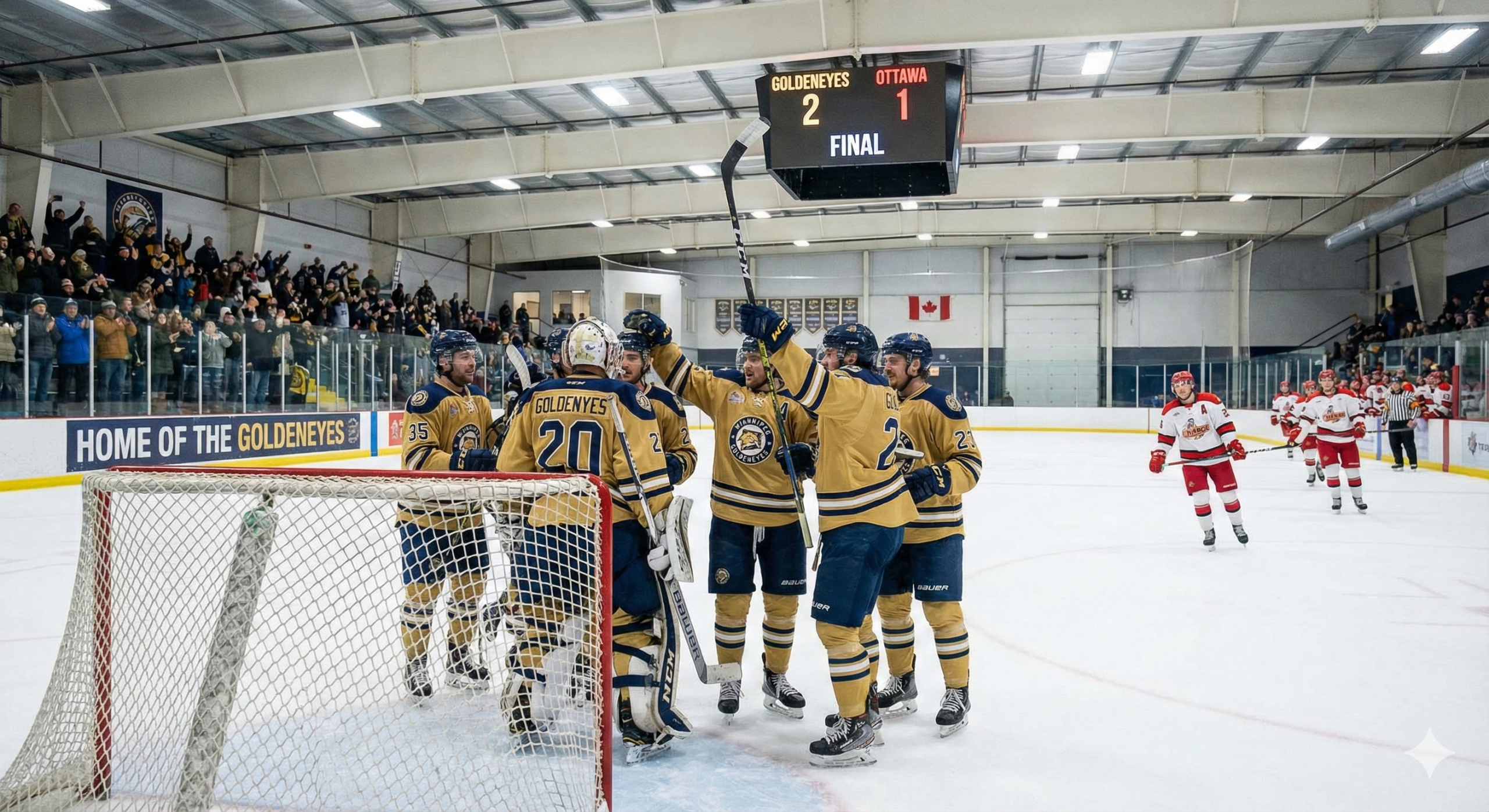
  • Goldeneyes Stay Perfect at Home with Gritty 2–1 Victory Over Ottawa Charge

    Goldeneyes Stay Perfect at Home with Gritty 2–1 Victory Over Ottawa Charge

    The Vancouver Goldeneyes continued their dominant run on home ice Tuesday night, extending their unbeaten record with a hard-fought 2–1 win over the Ottawa Charge in Professional Women’s Hockey League (PWHL) action. Backed by disciplined defence, timely scoring, and a composed performance under pressure, Vancouver once again proved why their home rink has become one of the toughest venues for visiting teams this season.

    A crucial second-period goal by Jenn Gardiner stood as the game-winner, while the Goldeneyes’ defensive structure and goaltending held firm late as Ottawa pushed for an equalizer. The result not only preserved Vancouver’s perfect home record but also reinforced the team’s growing reputation as a contender built on consistency and resilience.

    Tight, Competitive Start Sets the Tone

    From the opening faceoff, it was clear that neither side intended to give much away. Both teams came out skating with pace, establishing strong forechecks and limiting clean scoring chances in the early going.

    First Period Marked by Structure and Patience

    The opening period was defined by cautious hockey rather than offensive fireworks. Vancouver focused on puck control through the neutral zone, while Ottawa leaned on quick transitions to test the Goldeneyes’ defensive coverage.

    Both goaltenders were sharp early, tracking shots cleanly and controlling rebounds to prevent second opportunities. While chances were limited, the intensity was unmistakable, with physical battles along the boards and smart positional play dictating the flow.

    By the end of the first period, the score remained scoreless — a reflection of disciplined systems on both sides and an early indication that the game would likely hinge on small moments rather than sustained offensive pressure.

    Goldeneyes Strike First in the Second Period

    The breakthrough came midway through the second period, and it belonged to Vancouver.

    Jenn Gardiner Delivers at the Perfect Moment

    Jenn Gardiner capitalized on a brief breakdown in Ottawa’s defensive coverage, finding space in the slot and burying a well-placed shot past the Charge goaltender. The goal ignited the home crowd and gave Vancouver the momentum they had been patiently building.

    Gardiner’s tally proved to be the decisive moment of the night — not because it was flashy, but because it came at a time when both teams were struggling to generate sustained offence.

    The Goldeneyes carried renewed confidence after the goal, tightening their defensive gaps and forcing Ottawa to the perimeter whenever the Charge attempted to respond.

    Ottawa Pushes Back, but Vancouver Responds

    Ottawa refused to fade quietly, responding with increased pressure as the second period progressed.

    Physical Play and Momentum Swings

    The Charge ramped up their forecheck, testing Vancouver’s composure with aggressive puck pursuit and net-front traffic. Their persistence paid off when they managed to beat the Goldeneyes’ goaltender to even the score, injecting new energy into the contest.

    However, Vancouver responded quickly, regaining control through smart puck movement and disciplined line changes. Rather than chasing the game emotionally, the Goldeneyes settled back into their structure, a hallmark of their success this season.

    Before the period ended, Vancouver restored their one-goal lead, ensuring Gardiner’s earlier strike would ultimately stand as the game-winning goal.

    Defensive Commitment Defines the Third Period

    With a narrow lead heading into the final frame, Vancouver leaned heavily on its defensive identity.

    Lockdown Hockey on Display

    The Goldeneyes limited Ottawa’s high-danger chances by clogging shooting lanes and winning key battles in the defensive zone. Defense pairs communicated effectively, ensuring Ottawa struggled to generate clean looks from the slot.

    Vancouver’s forwards also played a critical role, tracking back responsibly and disrupting Ottawa’s breakout attempts. Every cleared puck, blocked shot, and contested faceoff added to the mounting pressure on the visiting Charge.

    Goaltending Holds Firm Under Late Pressure

    As the clock wound down, Ottawa threw everything forward in search of the equalizer.

    Calm and Composed in the Crease

    The Goldeneyes’ goaltender delivered a poised performance when it mattered most, making several key saves in the final minutes to preserve the lead. Ottawa’s best opportunities came during sustained zone time late in the game, but Vancouver’s netminder remained square to shooters and controlled rebounds efficiently.

    Even during a late push with the extra attacker, Ottawa struggled to find seams through Vancouver’s defensive box, ultimately running out of time as the Goldeneyes sealed another home victory.

    Home Ice Advantage Continues to Pay Dividends

    With the win, Vancouver remains unbeaten at home — a testament to their preparation, adaptability, and ability to manage close games.

    Confidence Growing with Every Home Win

    The Goldeneyes have shown an impressive ability to adjust their game based on circumstances, whether protecting a lead or responding to adversity. That maturity has been especially evident in home games, where they have consistently dictated pace and executed under pressure.

    Players have credited the home crowd for creating energy without forcing the team out of its structure — a balance that has allowed Vancouver to stay composed even in tense moments.

    Ottawa Shows Signs of Promise Despite Loss

    While the Charge came up short, their performance highlighted why they remain a competitive force in the league.

    Competitive Effort Falls Just Short

    Ottawa’s aggressive forecheck and willingness to battle through traffic kept the game close throughout. The Charge generated momentum at key moments but struggled to convert enough of their chances against a well-organized Vancouver side.

    The loss serves as a learning opportunity as Ottawa continues to refine its execution in tight games, particularly against teams that excel defensively.

    PWHL Spotlight on Parity and Discipline

    Tuesday’s matchup was another example of the parity developing across the PWHL, where games are often decided by execution rather than margin.

    Small Details Make the Difference

    From Gardiner’s timely goal to Vancouver’s disciplined third-period play, the game underscored how structure, patience, and attention to detail can outweigh sheer offensive volume.

    As the league continues to grow, performances like this highlight the high level of competition and tactical sophistication defining women’s professional hockey.

    Conclusion: Goldeneyes Set the Standard at Home

    The Vancouver Goldeneyes’ 2–1 victory over the Ottawa Charge was not about dominance on the scoresheet, but about control, discipline, and execution in key moments. Jenn Gardiner’s second-period goal provided the spark, while Vancouver’s collective defensive effort ensured it was enough.

    Remaining unbeaten at home, the Goldeneyes continue to establish their rink as a fortress and send a clear message to the rest of the league: earning points in Vancouver will not come easily.

    As the season progresses, games like this may prove pivotal — not only in the standings, but in defining the identity of a team built to win when it matters most.

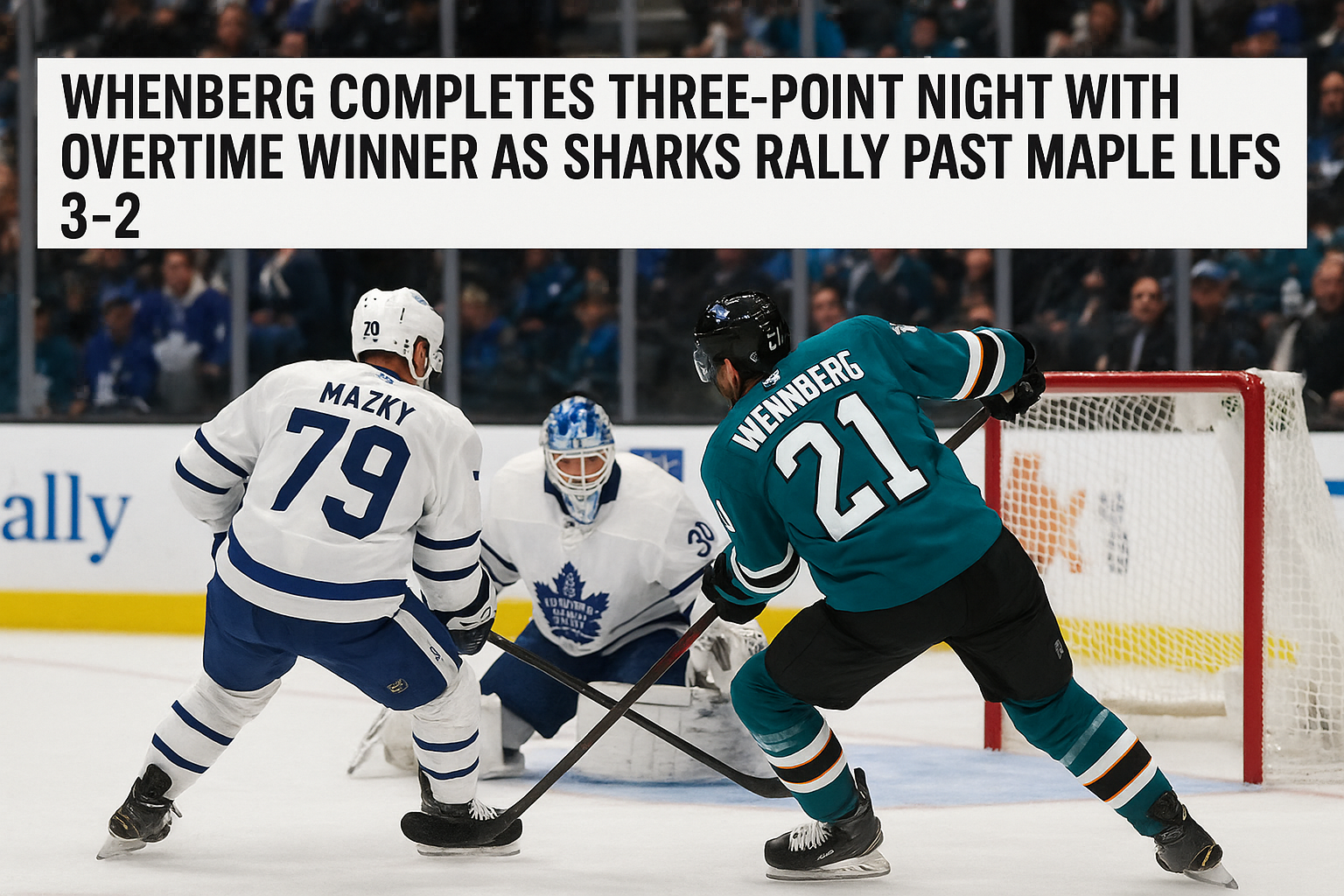
  • Wennberg Completes Three-Point Night With Overtime Winner as Sharks Rally Past Maple Leafs 3–2

    Wennberg Completes Three-Point Night With Overtime Winner as Sharks Rally Past Maple Leafs 3–2

    Introduction

    The Toronto Maple Leafs found themselves on the wrong side of a determined comeback on Thursday night, falling 3–2 in overtime to the San Jose Sharks at Scotiabank Arena. Despite holding a two-goal advantage midway through the contest, Toronto watched its lead evaporate as San Jose mounted a persistent push, capped by Alexander Wennberg’s decisive goal in the extra frame.

    Wennberg’s performance, which included a goal and two assists, propelled the Sharks to a resilient victory and pushed their season record to 15-14-3. Toronto, meanwhile, slipped to 14-11-5 in a game that highlighted both their lingering injury challenges and their difficulty closing out tight contests.


    Sharks Erase Toronto’s Early Edge

    Matthews Helps Build a Multi-Goal Lead

    Toronto opened the game with energy and efficiency, generating sustained pressure against San Jose goaltender Alex Nedeljkovic. After scoring earlier in the night, the Maple Leafs doubled their advantage in the second period when Auston Matthews buried his 13th goal of the season on the power play.

    The goal not only extended Toronto’s lead to 2–0, but also snapped a troubling slump that had seen the Maple Leafs register just two goals in their previous 28 power-play attempts. Over the past seven games, however, Matthews had maintained his scoring touch, adding his fourth goal over that stretch.

    Toronto’s strong start suggested that the home side had command of the game, but San Jose refused to go quietly.


    San Jose’s Comeback Takes Shape

    Orlov Ends Hildeby’s Shutout Streak

    With the Maple Leafs seemingly in control, the Sharks finally broke through late in the second period. Dmitry Orlov ended Toronto goaltender Dennis Hildeby’s impressive shutout streak at 132 minutes and six seconds, scoring his first goal of the season to cut the deficit to 2–1.

    The goal shifted momentum squarely toward San Jose, giving the Sharks renewed energy heading into the final frame.

    Klingberg Forces Overtime With Late Equalizer

    The Sharks continued pressing in the third period, believing a tying goal was within reach. Their persistence paid off with less than four minutes remaining in regulation.

    After an earlier bid from Barclay Goodrow was overturned due to an offside review, San Jose responded quickly as John Klingberg hammered a point shot past Hildeby to knot the game 2–2.

    Klingberg’s tally, complemented by an earlier assist, marked a standout performance for the defenseman and set the stage for an intense finish.


    Overtime Magic: Wennberg Seals the Win

    A Skillful Finish in Extra Time

    Just under three minutes into the overtime period, Alexander Wennberg delivered the finishing blow. Cutting toward the net, Wennberg showcased exceptional control by kicking the puck from his skate to his stick before lifting it past Hildeby from close range.

    The goal not only secured the victory for San Jose but also capped a three-point night for the veteran forward, who played arguably his strongest game of the season. His offensive contributions, combined with smart playmaking, were instrumental in turning the tide after Toronto’s early dominance.

    Nedeljkovic Backstops Sharks to Victory

    Sharks goaltender Alex Nedeljkovic provided a steady presence throughout the night, making 28 saves and withstanding several high-danger opportunities from Toronto’s top attackers. His timely stops allowed San Jose to remain competitive while they chipped away at the deficit.


    Leafs’ Defensive Injuries Continue to Mount

    Ekman-Larsson Exits With Injury

    Toronto’s blue line has been hit hard by injuries in recent weeks, and Thursday added another setback. Already missing top defensemen Chris Tanev (upper-body injury) and Brandon Carlo (lower-body injury), the team lost Oliver Ekman-Larsson early in the third period.

    The injury occurred during a battle along the boards when Sharks winger Adam Gaudette inadvertently fell on Ekman-Larsson’s left ankle. The veteran defenseman was unable to continue, leaving Toronto even more depleted on the back end and forcing head coach Sheldon Keefe to shorten his rotation.

    Debut of Henry Thrun

    With the Leafs stretched thin defensively, Thursday also marked the debut of Henry Thrun, who joined the lineup in place of Dakota Mermis. Thrun, acquired from San Jose in July in exchange for Ryan Reaves, stepped into a depth role. His performance drew attention given the unusual circumstances of facing his former team immediately upon entering the Maple Leafs’ lineup.


    Reaves Reflects on Return to Toronto

    A Fired-Up Response From the Veteran

    San Jose forward Ryan Reaves, who spent part of last season with Toronto before being placed on waivers, faced questions about his return. Reaves appeared motivated as he addressed his past stint with the organization.

    “They basically said that I couldn’t play in this league anymore,” Reaves said after the morning skate. “And I’m back.”

    His remarks added an emotional subplot to the game, highlighting the friction-filled ending to his Toronto tenure. Reaves appeared energized throughout the contest, pushing the pace physically and contributing to San Jose’s resolved effort.


    Key Moments That Shaped the Game

    H3: Turning Point — Wennberg’s Overtime Winner

    Wennberg’s creative foot-to-stick maneuver in overtime was the defining moment. His goal exemplified the skill and composure needed to capitalize in three-on-three play and ultimately completed San Jose’s comeback.

    H3: Critical Stat — Matthews Nears Franchise Goal Record

    With his goal in the second period, Auston Matthews reached 414 career goals, placing him just seven goals shy of passing franchise legend Mats Sundin (420) for the most goals in Toronto Maple Leafs history.

    The milestone looms large as Matthews continues to cement his standing as one of the franchise’s most prolific scorers.


    Game Takeaways

    Maple Leafs

    • The power-play goal provided brief relief after a prolonged slump.

    • Defensive injuries continue to disrupt team stability.

    • Henry Thrun’s debut added depth but also underscored the fragile state of the blue line.

    • Hildeby delivered a strong performance despite the eventual overtime loss.

    Sharks

    • Alexander Wennberg delivered one of his finest performances of the season.

    • Nedeljkovic’s resilience kept the Sharks within striking distance.

    • John Klingberg contributed significantly at both ends of the ice.

    • Ryan Reaves’ return storyline brought an emotional edge to the matchup.


    Conclusion

    Thursday’s contest showcased the unpredictability and momentum swings that define NHL hockey. The Maple Leafs appeared poised for a critical win after building a 2–0 lead, but the Sharks demonstrated grit, patience, and determination in engineering a full comeback.

    Alexander Wennberg’s overtime heroics punctuated a memorable night for San Jose, who head home with a hard-fought victory against a skilled Toronto squad. For the Maple Leafs, the loss raises continued questions about defensive depth, consistency, and their ability to protect leads as the season progresses.

    As Toronto looks ahead to its next matchup, the focus now shifts to recovery, regrouping, and solutions for a battered defensive corps—while the Sharks celebrate a statement win anchored by one of their veterans’ most impactful performances of the season.

  • Dylan Cease Calls Move to AL Champion Blue Jays “Inevitable” After Record-Breaking Deal

    Dylan Cease Calls Move to AL Champion Blue Jays “Inevitable” After Record-Breaking Deal

    Toronto Unveils Its New Ace in a Landmark Moment for the Franchise

    The Toronto Blue Jays introduced their newest star on Tuesday, formally announcing the signing of right-handed pitcher Dylan Cease — a move that instantly became one of the most talked-about transactions of the offseason. The former Cy Young finalist agreed to a massive seven-year, $210-million (US) contract, the largest free-agent deal ever awarded in Blue Jays history.

    Speaking at his introductory news conference, Cease described the decision to come to Toronto as “inevitable,” citing the team’s winning culture, recent success, and organizational direction as major reasons behind his commitment.

    With Toronto entering the new season as reigning American League champions, the acquisition of Cease reflects a franchise making an aggressive push to solidify its rotation for a sustained championship window.


    A New Era for Toronto’s Pitching Staff

    A Long-Term Investment in Stability and Star Power

    Toronto’s pursuit of starting rotation stability has been a defining storyline over recent years. The team has cycled through trades, short-term contracts, and internal development to build a competitive pitching core. Cease’s arrival marks a sharp shift into long-term, star-level investment, giving the Blue Jays a dependable innings-eater and a pitcher with elite upside.

    General managers across the league have increasingly recognized the value of power pitchers who can anchor a postseason rotation, and Cease fits that mold. His reputation as a high-velocity, high-strikeout arm with proven durability makes him a particularly valuable addition in an era when pitching depth often dictates playoff success.


    Why Cease Said Toronto Was the Right Fit

    Culture, Competitiveness, and Vision

    Cease emphasized that Toronto’s on-field success — especially its recent run to the American League title — played a crucial role in his decision. But beyond the team’s immediate achievements, he highlighted the organization’s long-term vision.

    While he did not disclose specific contractual discussions or private conversations, Cease noted that he gained “complete clarity” about the team’s direction during the free-agency process. He praised the club’s commitment to sustained excellence and its dedication to creating an environment where players can develop and thrive.

    A Growing Reputation for Player Development

    Toronto’s investment in advanced analytics, modern coaching, and individualized player development programs has earned increasing recognition across MLB. These systems, which pair data with hands-on coaching, have helped several pitchers refine their mechanics and approach in recent seasons.

    Cease acknowledged this reputation, suggesting that Toronto’s developmental infrastructure aligned perfectly with his career ambitions. Many pitchers in the league have gravitated toward organizations that offer cutting-edge tools for refining pitch shapes, optimizing performance, and maintaining long-term physical health. Toronto’s rise in this area further strengthened Cease’s confidence in his decision.


    Toronto’s Historic Free-Agent Commitment

    A Franchise Willing to Push Beyond Previous Limits

    At $210 million over seven years, Cease’s contract is the largest free-agent deal the Blue Jays have ever issued. It surpasses previous marks and signals a willingness by the front office to make bold financial commitments in pursuit of a championship.

    Big-market teams have long recognized that elite starting pitching is among the most competitive and costly areas of roster construction. By securing Cease on a long-term deal, Toronto avoids future bidding wars while locking in a premier talent during what are expected to be his prime professional years.

    An Investment Beyond the Numbers

    While the financial magnitude of the contract is significant, the club’s leadership framed the signing as a strategic investment rather than a headline-grabbing splash. With the team already positioned among the league’s elite, adding a pitcher capable of starting Games 1 or 2 of a postseason series can dramatically increase the franchise’s championship odds.

    In addition, multiyear commitments to foundational players have become increasingly common among competitive teams, offering stability that enables the front office to build complementary pieces around a core group.


    Strengthening an Already Potent Rotation

    A Rotation Built for October

    Toronto’s rotation, already regarded as one of the better assemblies in the American League, receives a substantial boost with Cease’s arrival. While the specific rotation order will evolve through the season, the club now enters the year with the rare luxury of multiple established frontline-caliber arms.

    Success in modern baseball — particularly during the postseason — relies heavily on dominant starting pitching that can neutralize elite lineups. Cease’s ability to generate swings and misses, limit hard contact, and maintain velocity deep into games makes him a natural fit for a team seeking to build a rotation capable of carrying them through October.

    Leadership and Experience in High-Pressure Moments

    Cease’s experience in high-stakes situations, including past playoff appearances, strengthens Toronto’s confidence that he will thrive under the heightened scrutiny of postseason baseball. Playoff series often hinge on a few key innings, and pitchers who remain composed in tense, high-pressure scenarios provide invaluable steadying influence.


    The Broader Impact on the Blue Jays’ Future

    Setting the Tone for the Offseason

    The Cease signing signals to the league that Toronto is not content with merely returning to the postseason — the franchise is prioritizing long-term contention and is prepared to invest accordingly. The move may also influence other players assessing Toronto as a potential destination, showcasing the organization’s willingness to commit resources to winning.

    Momentum for the Team, the Fans, and the City

    Toronto’s fan base, known for its passionate support and sellout crowds, has watched the team’s competitive resurgence with growing excitement. Adding a top-tier pitcher of Cease’s caliber fuels that momentum, generating anticipation for the upcoming season and reinforcing the belief that the Blue Jays are firmly positioned among baseball’s serious contenders.

    The city’s enthusiasm also aligns with the franchise’s broader strategy of maintaining competitive relevance while building a roster capable of headline-grabbing postseason performances.


    A Balanced Partnership for a New Era

    Cease’s Goals Aligned With the Franchise’s Vision

    Throughout his news conference, Cease repeatedly emphasized that joining the Blue Jays felt “inevitable” — not because of any single factor, but due to a combination of competitive ambition, organizational philosophy, and the opportunity to grow within a successful environment.

    In many ways, the partnership reflects a mutual alignment of goals:

    • Toronto gains a premier starting pitcher committed to contributing over the long term.

    • Cease gains a competitive home within a franchise positioned to contend for multiple postseason runs.

    Such alignment is often difficult to achieve in the high-stakes world of free agency, making Tuesday’s announcement a particularly significant moment for both parties.


    Conclusion: A Defining Move for Toronto’s Championship Pursuit

    Dylan Cease’s arrival in Toronto marks one of the most consequential acquisitions in Blue Jays history. By committing seven years and $210 million to the star right-hander, the club has sent a clear message to the league: Toronto is building for sustained excellence, and the pursuit of a championship remains at the forefront of its strategy.

    Cease now steps into a rotation with championship experience, surrounded by an organization committed to maximizing his success. For the Blue Jays, the deal represents both an investment in elite pitching and a foundational move that strengthens the team’s identity as a perennial contender.

    As the new season approaches, the excitement surrounding Toronto’s latest signing sets the stage for a year filled with high expectations — and the belief that the path to another deep postseason run begins with a pitcher who says joining the Blue Jays was “inevitable.”

  • Full Recap: These Are the Teams Heading to Canada for the FIFA 2026 World Cup

    Full Recap: These Are the Teams Heading to Canada for the FIFA 2026 World Cup

    FIFA has officially confirmed the full list of teams that will play their 2026 World Cup matches in Canada, with Toronto and Vancouver set to host an exciting mix of global football powerhouses and rising national squads. The announcement comes just one day after the high-profile match draw held in Washington, D.C.

    Toronto’s Lineup: A Mix of Elite and Emerging Nations

    Toronto’s BMO Field is set to welcome:

    • Germany

    • Côte d’Ivoire (Ivory Coast)

    • Senegal

    • Panama

    • Croatia

    • Ghana

    The city will see a diverse mix of European giants, African contenders, and Central American representation — promising some of the most dynamic group-stage atmospheres of the tournament.

    Vancouver’s Teams: European Strength Meets Oceanian and African Representation

    B.C. Place in Vancouver will host:

    • Qatar

    • Switzerland

    • Australia

    • New Zealand

    • Egypt

    • Belgium

    With Belgium and Switzerland both ranked highly in world football, and Australia and New Zealand representing Oceania, Vancouver’s matches are expected to draw massive crowds and global media attention.

    Canada’s Path: A Challenging Start

    During Friday’s draw in Washington, Canada learned it will open its campaign against the winner of a European playoff. The national team will then face Qatar and Switzerland in the group stage — setting up a challenging but promising route for the host nation.

    World Cup 2026: Key Match Locations Revealed

    Saturday’s schedule reveal has now finalized all venues across North America. Here are the major highlights:

    12:54 p.m. — World Cup Final Set for New Jersey/New York

    The 2026 FIFA World Cup Final will take place at MetLife Stadium in East Rutherford, New Jersey, on July 19.
    This venue beat out strong bids from cities across the U.S. and now prepares to host the biggest match in global sport.

    12:52 p.m. — Bronze Medal Match in Miami

    Miami’s Hard Rock Stadium will host the third-place match on July 18 at 5 p.m. ET.

    12:50 p.m. — Semi-Final Venues Confirmed

    Two semi-final matches will take place:

    • Dallas on July 14 at 3 p.m. ET

    • Atlanta on July 15 at 3 p.m. ET

    Both cities will play pivotal roles in determining which nations compete for the title.

  • Carlos Delgado Denied Yet Again as Jeff Kent Earns Hall of Fame Induction Through Contemporary Era Vote

    Carlos Delgado Denied Yet Again as Jeff Kent Earns Hall of Fame Induction Through Contemporary Era Vote

    Introduction: A Painful Near-Miss for a Toronto Icon

    For countless Toronto Blue Jays fans, Carlos Delgado’s name is synonymous with power, consistency, and loyalty. The legendary first baseman, who anchored the heart of the Jays’ lineup for more than a decade, came painfully close once again to achieving baseball’s highest personal honour on Sunday. But in the end, history repeated itself.

    Delgado fell just three votes short of gaining entry into the National Baseball Hall of Fame, missing out via the Contemporary Era Committee process. Of the 16 votes available, he received nine, while 12 were needed for induction into the Class of 2026. Instead, the nod went to former slugging second baseman Jeff Kent, the only candidate to gain enough support to secure a place in Cooperstown through this special voting route.

    Though familiar with disappointment in the Hall of Fame process, Delgado approached this moment with dignity, grace, and appreciation for even being considered again. Yet for fans and supporters who firmly believe his achievements warrant baseball immortality, the result was another bittersweet reminder that greatness does not always translate into a bronze plaque.

    The Voting Process and Final Results

    Contemporary Era Committee Chooses Just One Player

    The Contemporary Era Committee, which evaluates players whose primary impact came between 1980 and 2005, met in Orlando, Florida, ahead of Major League Baseball’s Winter Meetings. The group considered a ballot of eight distinguished former players, but was only able to agree on one clear choice for induction.

    Jeff Kent came out on top with 14 of 16 votes, falling just two shy of a unanimous selection. Delgado followed behind with nine votes, making him one of the closest candidates to earn induction without reaching the required total. Respected former New York Yankees first baseman Don Mattingly received six votes, as did Dale Murphy, while a number of other controversial but accomplished figures — including Barry Bonds, Roger Clemens, Gary Sheffield, and Fernando Valenzuela — failed to gain much traction and received fewer than five votes each.

    The results highlighted just how competitive and polarizing Hall of Fame voting can be, particularly in an era that continues to wrestle with questions about performance-enhancing drugs, character clauses, and evolving standards of greatness.

    Delgado’s Enduring Legacy in Toronto

    A Power-Hitting Cornerstone for the Blue Jays

    Carlos Delgado’s career in Toronto is deeply woven into the fabric of the franchise’s modern history. After a brief two-game cameo with the Jays as a wide-eyed 21-year-old in 1993, Delgado became a fixture in Toronto’s lineup for the next 11 seasons. His presence in the batter’s box was both feared by opponents and cherished by fans.

    Over the span of his career with the Blue Jays, Delgado established himself as one of the franchise’s all-time greats. He is the organization’s career leader in home runs (336), runs batted in (1,058), runs scored (889), and total bases (2,786). He also ranks second in games played for the team with 1,423 appearances in a Toronto uniform.

    Delgado was not just a slugger who showed flashes of brilliance. He was a model of consistency. From the late 1990s into the mid-2000s, he recorded eight straight seasons with 30 or more home runs, making him one of the most reliable power hitters in all of baseball during that stretch.

    Accolades That Define an Elite Career

    While playing for the Blue Jays, Delgado earned three Silver Slugger Awards in 1999, 2000, and 2003 — recognition given annually to the best offensive players at each position. He was also named an American League All-Star twice, in 2000 and 2003, confirming his status as one of the premier first basemen in the game.

    In 2003, Delgado came heartbreakingly close to being named the American League’s Most Valuable Player. He finished second in the MVP voting, edged out only by Yankees superstar Alex Rodriguez. That season, arguably one of the finest of his career, further cemented his status as one of baseball’s most dominant hitters.

    Even after leaving Toronto in 2004, Delgado remained productive. He spent one season with the Florida Marlins in 2005 before finishing his career with the New York Mets in 2009. Yet despite these later chapters, his heart and legacy remained firmly attached to Toronto.

    Recognition at Home: Level of Excellence

    In 2013, the Toronto Blue Jays honored Delgado by placing him on the team’s prestigious Level of Excellence, an elite category reserved for those who made a lasting and profound impact on the franchise. For many fans, that recognition alone was proof enough of his Hall of Fame stature — even if Cooperstown has yet to agree.

    Jeff Kent’s Journey From Toronto to Cooperstown

    A Hall of Fame Career Born Out of a Short Stay

    While Delgado’s misses continue to frustrate his supporters, Jeff Kent’s story concluded with a moment of validation on Sunday. Interestingly, Kent’s professional journey had humble Toronto roots. He was selected by the Blue Jays in the 20th round of the 1989 draft and played 65 games for the club in 1992.

    Though his time in Toronto was brief, he still saw his name etched onto the Blue Jays’ first World Series championship roster in 1992, earning himself a ring before being traded to the New York Mets in exchange for pitcher David Cone. That move, in retrospect, altered his career path dramatically.

    Kent went on to play 16 additional seasons in Major League Baseball, building a résumé that eventually made him the most prolific home-run-hitting second baseman in league history. He finished his career with a .290 batting average and an impressive 377 home runs — a staggering figure for someone playing such a defensively demanding position.

    In 2000, his accomplishments were formally recognized when he was named the National League’s Most Valuable Player. Over time, his consistency, durability, and historic production at second base earned him growing respect among voters.

    On Sunday, that respect finally translated into a Hall of Fame selection.

    Induction Slated for July 2026

    Kent will officially take his place among baseball’s immortals during the Hall of Fame induction ceremony in Cooperstown, New York, in July 2026. He will join the rest of the Class of 2026, which will be formally announced on January 20.

    Delgado Responds With Grace and Perspective

    In the days leading up to the vote, Delgado expressed optimism but also a grounded sense of realism. Speaking on MLB Network Radio, he reflected on the second chance that the Contemporary Era ballot had given him.

    “I had a good career, and now, ten years later, I’m getting another opportunity,” he said. “At the end of the day, that’s what matters. We all need second chances sometimes.”

    Though the outcome did not go his way, those words reflected the humility that defined Delgado as both a player and a person. For many, that character — combined with his remarkable achievements — only strengthens the belief that he belongs in Cooperstown.

    Conclusion: A Legacy That Transcends Ballots

    Carlos Delgado may have been denied entry into the Hall of Fame once more, but his place in baseball history remains secure. In Toronto, he will forever be remembered as one of the greatest hitters to ever wear a Blue Jays uniform. His numbers speak for themselves, and his impact on the city, the franchise, and generations of fans cannot be measured in votes alone.

    Meanwhile, Jeff Kent’s eventual induction highlights the long, unpredictable nature of the Hall of Fame journey, where recognition can take years — or even decades — to arrive.

  • Goldeneyes End Skid in Historic Shutout as Boreen and Maschmeyer Lead Dominant Win Over Sirens

    Goldeneyes End Skid in Historic Shutout as Boreen and Maschmeyer Lead Dominant Win Over Sirens

    The Vancouver Goldeneyes ended their early-season slump in emphatic fashion on Saturday afternoon, defeating the New York Sirens 4–0 at Pacific Coliseum. Powered by a pair of goals from forward Abby Boreen and a flawless performance from goaltender Emerance Maschmeyer, the Goldeneyes secured not only their second victory of the season but also the first regulation win and first shutout in franchise history.

    The win was a crucial momentum shift for a Vancouver team that had dropped three straight road games heading into the matchup. In front of an energized home crowd, the Goldeneyes delivered their most complete and disciplined performance to date, halting a troubling losing streak while reinforcing their identity as a team capable of executing at both ends of the ice.


    A Milestone Night for Vancouver

    Breaking a Three-Game Slide

    Entering Saturday’s game, Vancouver carried the weight of three consecutive road losses—each defeat exposing gaps in finishing ability, defensive structure, and consistency. The return to Pacific Coliseum offered a reset, and the Goldeneyes capitalized immediately.

    With the win, Vancouver improved to 1-1-0-3, remaining undefeated at home this season. The energy from the crowd and the urgency of the moment were evident early as the team took control from the opening puck drop.

    Franchise’s First Regulation Victory

    Despite earning their first-ever win earlier in the season in a shootout, Vancouver had yet to close out a regulation victory. Saturday’s clean, commanding 60-minute effort checked that milestone off the list.

    The significance wasn’t lost on players or fans. From the disciplined defensive play to clinical finishing, this game represented a turning point—a statement that Vancouver’s roster has the depth, talent, and poise to compete with the league’s top teams.


    Boreen’s Breakout Performance

    Setting the Tone Early

    Forward Abby Boreen wasted no time announcing her presence. Just minutes into the first period, Boreen fired home her second goal of the season, giving Vancouver something they had yet to experience this year: the first goal of the game.

    This early breakthrough set the tone for the night. Vancouver had struggled in previous games with slow starts and early deficits; Boreen’s timely strike shifted the pressure onto New York and energized her bench.

    A Multi-Goal Night with Confidence to Build On

    Boreen’s second goal came in the third period—a well-placed finish that capped Vancouver’s scoring and sealed her first-ever multi-goal game as a Goldeneye. Her strong play on both sides of the puck reflected the hard work she has been building toward during the season’s opening stretch.

    For a team searching for reliable offensive contributors, Boreen’s emerging confidence is a promising development. Her skill, speed, and scoring instincts were on full display, setting a blueprint for Vancouver’s forward group moving forward.


    Maschmeyer’s Masterclass in Net

    First Shutout in Franchise History

    Goaltender Emerance Maschmeyer delivered a performance that can only be described as historic. Turning aside all 28 shots she faced, Maschmeyer became the first Goldeneyes goalie ever to record a shutout.

    Her composure was evident throughout the game—whether smothering rebounds, tracking screens, or making timely stops during New York’s surges. The Sirens tested her with high-danger opportunities, but Maschmeyer met the challenge with calm, confident positioning.

    A Cornerstone Performance for the Season Ahead

    Maschmeyer’s presence has already been vital for the team this season, but this shutout elevates her impact even further. Beyond the statistics, her poise provided stability to a defensive unit that had struggled in recent matchups.

    With Vancouver now aiming to climb the standings, Maschmeyer’s reliability between the pipes could be a central factor in sustaining momentum.


    Additional Offensive Contributors Step Up

    Gardiner’s Two-Point Night

    Jenn Gardiner also made her mark, contributing both a goal and an assist. Her short-handed tally late in the first period was one of the standout moments of the game—an aggressive steal on the penalty kill followed by a composed finish that pushed Vancouver’s lead to 3–0.

    Gardiner’s play underscored Vancouver’s improved special teams execution, which had been a focal point for the coaching staff following recent losses.

    Ashton Bell Adds Key Insurance Goal

    Defender Ashton Bell added Vancouver’s second goal of the game, slipping a shot through the legs of New York goaltender Kayle Osborne. The goal gave Vancouver breathing room early and contributed to a dominant first period where the Goldeneyes outpaced New York in both energy and execution.

    Sophie Jacques Adds Two Assists

    Sophie Jacques’ two-assist performance rounded out a strong collective outing. Her passing ability and on-ice vision helped generate sustained offensive-zone pressure, something Vancouver had struggled to maintain in previous games.


    New York Struggles to Generate Momentum

    Sirens Shut Out for First Time This Season

    The New York Sirens, entering the game at 2-0-0-3, were shut out for the first time this season—a testament to Vancouver’s improved defensive structure and Maschmeyer’s stellar evening in net.

    Kayle Osborne, despite the loss, turned away 16 of 20 shots and prevented Vancouver from extending the lead even further throughout the second period.

    A Team Searching for Answers on the Road

    After falling 2–1 to Seattle earlier in the week, New York was eager to regain consistency. But after conceding three goals in the opening frame, the Sirens struggled to generate sustained offensive pressure and failed to convert their few high-quality chances.

    They now leave Vancouver facing deeper questions about scoring depth and the adjustments needed to compete through the demanding winter stretch of the season.


    A First Period That Defined the Game

    Vancouver Controls Early Play

    The Goldeneyes’ three-goal first period was the decisive factor in the matchup. From crisp puck movement to aggressive forechecking, Vancouver played with a level of confidence and urgency that had been lacking in the previous three losses.

    Their ability to overwhelm New York early forced the Sirens to chase the game—a challenge made even more difficult by Maschmeyer’s flawless goaltending.

    Scoreless Second Period Builds Tension

    Although Vancouver maintained control throughout the second period, the score remained unchanged. Both teams tightened defensively, resulting in a tactical battle that highlighted disciplined positioning and quick transitions.

    It wasn’t until Boreen’s second strike in the third that any additional scoring took place.


    Conclusion: A Defining Victory for a Team Seeking Identity

    The Vancouver Goldeneyes’ 4–0 victory was more than just a win—it was a turning point in their young franchise history. With strong performances across the lineup, a historic shutout, and a renewed sense of confidence, the team showed the type of cohesive, disciplined game they’ll need to maintain as the season progresses.

    For Vancouver fans, Saturday’s game offered a glimpse of the potential many believed this roster held. For the players, it was a statement: the Goldeneyes are capable of competing, growing, and making their presence known in the league.

    If you’d like, I can also create a news-style image, summary for social media, or SEO-optimized headline variations.

  • Munk Debate Featuring Former Israeli Leaders Draws Protests and Criticism Over Exclusion of Palestinian Voices

    Munk Debate Featuring Former Israeli Leaders Draws Protests and Criticism Over Exclusion of Palestinian Voices

    Introduction

    A major debate convened by the Munk Debates — featuring prominent former Israeli officials — was met with vocal protests, impassioned chants, and accusations of war crimes. Held under the banner of “Be it Resolved, it is in Israel’s national interest to support a two-state solution,” the event ignited deep controversy for notably excluding Palestinian perspectives. Demonstrators rallied under Palestinian flags, challenging the legitimacy of the debate and demanding representation of those most directly impacted. Police intervened and dispersed the gathering, but not before the protestors underscored their objections in stark terms.

    Protests Erupt Over Closed Door Format

    Demonstrators Speak Out

    Before the debate commenced, a crowd of protesters assembled, hoisting signs and Palestinian flags. Their unified message was clear: the debate should not proceed without Palestinian representation. One protester, Trevor Miller, described the gathering as “unacceptable,” condemning the event’s format. “We are here to speak out for the people of Palestine, everyone who suffers under imperialism,” Miller declared, underscoring the conviction driving the demonstration. The protest was passionate but ultimately short‑lived, as law enforcement moved in to break up the crowd.

    Accusations of War Crimes and Systemic Silencing

    Many protesters framed the debate as symbolic of broader systemic issues: the marginalization of Palestinian voices, and the perceived normalization of policies they consider complicit in what they described as war crimes. The chants and placards reflected a growing frustration — not just with the debate’s content, but with the process itself, which denied agency to those most impacted. For critics, the event exemplified a troubling tendency to foreground Israeli political elites while sidelining Palestinians altogether.

    Debate Format: Two‑State Solution Under the Microscope

    The Munk Debate was structured around one central motion: “Be it Resolved, it is in Israel’s national interest to support a two-state solution.” On one side of the debate were former Israeli officials advocating a prompt adoption of the two‑state framework. On the other side, speakers opposed the resolution, arguing against its political feasibility or wisdom under current circumstances.

    Proponents of the Two‑State Solution

    Among those arguing in favour were two veteran Israeli statespersons:

    • Ehud Olmert, former Prime Minister, former Finance Minister, and ex‑Mayor of Jerusalem, whose experience spans decades of Israeli politics and diplomacy.

    • Tzipi Livni, who previously served as Israel’s Justice Minister and Foreign Minister, and has long been engaged in efforts toward peace negotiations and two‑state frameworks.

    Both offered a clear rationale for supporting rapid movement toward a Palestinian-Israeli two‑state agreement. Citing demographic realities, international pressures, and long‑term security concerns, they argued that a two‑state solution remains the most viable path forward to preserving Israel’s character as a democratic and Jewish state — while addressing Palestinian aspirations for self-determination. They emphasized urgency: without meaningful negotiations and compromises, Israel risks further isolation, internal unrest, and existential long-term perils.

    Opposing Voices: Caution or Conscience?

    Challenging the motion were:

    • Michael Oren, former Israeli ambassador to the United States and ex‑Deputy Minister during former Prime Minister Benjamin Netanyahu’s second term.

    • Ayelet Shaked, Israel’s one‑time Justice Minister and Interior Minister, known for her staunch national‑security stance and advocacy for a unified Israel.

    Their opposition was rooted in concerns over security, territorial integrity, and pragmatic realism. They argued that the current conditions — ongoing violence, mutual mistrust, and political fragmentation within Palestinian leadership — rendered a two‑state agreement unworkable for now. According to them, supporting the motion prematurely could jeopardize Israel’s national security, weaken its strategic position, and risk creating a hostile neighbor state. They urged caution: better to preserve control and security than rush into an uncertain and potentially dangerous agreement.

    The Controversy Over Excluding Palestinian Voices

    Organizers’ Defense and Backlash

    In response to mounting criticism, organizers of the Munk Debate defended their decision not to include Palestinian voices. They argued that the format — a debate between two viewpoints on the motion — was designed to highlight conflicting visions within Israeli political leadership, rather than present a comprehensive regional dialogue. In their view, the event was not a negotiation or mediated peace process, but an internal deliberation over Israel’s interests. As such, they claimed that it was appropriate to limit the discussion to Israeli perspectives.

    Yet this explanation did little to appease critics. Opponents charged that by excluding Palestinians altogether, the debate effectively silenced those most affected by its outcome. To many, this was not an abstract political discussion but a conversation with real, far‑reaching consequences for millions of Palestinians whose lives, rights, and futures hang in the balance. Critics argued the format ignored basic principles of fairness, representation, and legitimacy — especially in a debate about Palestinian statehood and sovereignty.

    The Moral and Political Implications

    The uproar surrounding the debate went beyond partisan disagreement. For protestors and supporters of Palestinian rights, the issue was not simply about which Israeli perspective prevailed — but about who gets a seat in conversations that shape policy, treaties, and human lives. By allowing former Israeli officials to debate the fate of Palestinian homeland without any Palestinian voice present, organizers risked appearing hypocritical at best, callous at worst.

    Such events — when they proceed without inclusive representation — can feed into broader narratives of marginalization, inequality, and systemic denial of Palestinian agency. In the eyes of many observers, the exclusion of Palestinian voices undermined both the legitimacy of the debate and the sincerity of any resulting recommendations or conclusions.

    The Aftermath: Divided Reactions and Broader Implications

    Domestic and International Reactions

    The rapid police intervention and the high‑profile nature of the speakers ensured the debate and its controversy quickly gained media coverage and public attention. For pro‑Israel advocates supporting the two‑state solution, the debate’s format — even without Palestinian participation — offered a window into competing Israeli strategies and possible future policy directions. It underscored fractures within Israeli political thought: some leaders pushing for compromise, others resisting any territorial concession.

    Conversely, activists, human rights advocates, and Palestine solidarity groups condemned the debate as flawed and ethically unsound. To them, it was not a genuine platform for peace — but an exercise in power dynamics, where Israelis discuss the future of Palestine without any Palestinian input. Their protests — though short‑lived — sparked larger conversations about representation, legitimacy, and the role of public discourse in conflict resolution.

    Impact on the Two‑State Discourse

    The event also reignited larger debates about the viability of the two‑state solution itself. Proponents argued that internal Israeli consensus — or at least serious deliberation — might advance the prospects of policy shifts. The participation of former leaders gave weight to the idea that even Israel’s own political elite sees value in revisiting long-stalled negotiations.

    On the other hand, opponents renewed their warnings: without addressing core issues such as security, border control, settlements, refugees, and mutual trust, any agreement — even if intellectually appealing — remains fraught with danger. Their stance reinforces skepticism toward bilateral agreements conducted without broad-based support, especially if one side remains unrepresented.

    Conclusion

    The Munk Debate’s recent session became far more than an academic exercise or political conversation — it transformed into a flashpoint embodying decades‑long tensions, deep moral questions, and urgent demands for justice. While organizers defended the decision to restrict the debate to former Israeli leaders, the backlash exposed a critical fault line: the exclusion of Palestinian voices from discussions about their own future. As such, the debate illustrated how format and composition can shape not only the content, but the legitimacy of public discourse.

    For many, the protest outside the venue was a powerful reminder that any meaningful debate on statehood, sovereignty, and peace cannot omit the voices of those whose lives are on the line. Until Palestinian perspectives are given a platform equal in weight and visibility, events like this — no matter how high‑profile or intellectually rigorous — may continue to provoke anger, resentment, and accusations of injustice. The controversy surrounding this debate underscores a simple but vital truth: lasting solutions to the Israeli‑Palestinian conflict require inclusivity, representation, and the willingness to listen.